
Does Almond Milk Help Acid Reflux: 6 Evidence-Based Facts
Does almond milk help acid reflux? Learn 6 evidence-based facts on the alkaline claim, almond vs. cow's milk, the best plant milks, and how to choose a carton.
Introduction

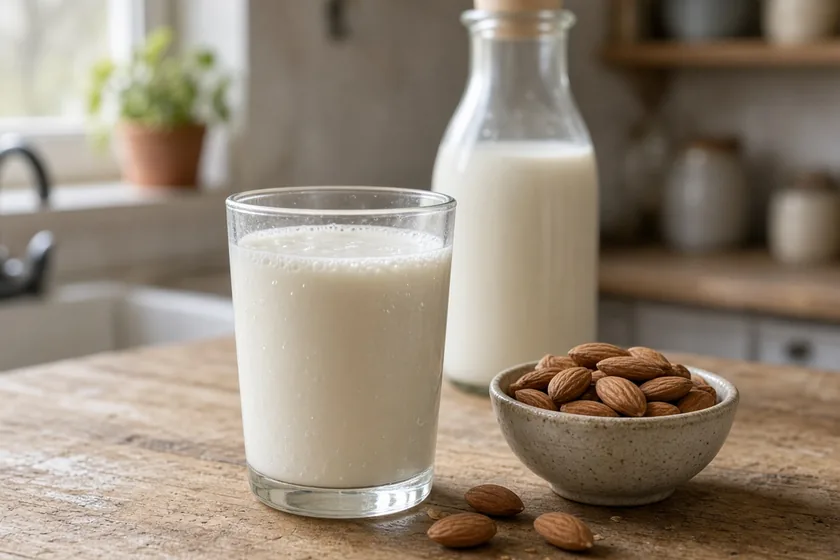
Does almond milk help acid reflux? It may be a useful lower-fat swap for whole milk or cream, but it hasn't been studied as a reflux treatment. Plain, unsweetened almond milk is much lower in fat than whole milk, and high-fat foods commonly trigger heartburn. The popular claim that its "alkaline" nature neutralizes stomach acid isn't backed by research either.
If you want to try almond milk for acid reflux, choose a plain, unsweetened, calcium-fortified carton and use it in place of whole milk or creamer. Skip chocolate, coffee, and mint flavors, and avoid big servings right before bed. Don't use it if you're allergic to tree nuts, and see a doctor if heartburn happens more than twice a week.
Below are six facts on the research, the alkaline claim, how almond milk compares with cow's milk and other plant milks, how to choose one, and who should be careful.
Fact Set 1: What the Research Says About Almond Milk and Reflux
Almond milk has a good reputation in reflux forums, but the science behind it is indirect.
Fact 1: No Study Has Tested Almond Milk for Acid Reflux
Is almond milk good for acid reflux? It can be a reasonable option to try, but we found no clinical trial that tested almond milk for heartburn or GERD. What experts offer instead is general advice about fat and drink choices.
Here's what the evidence does show:
- Fat is a known trigger. Johns Hopkins Medicine explains that common heartburn triggers relax the lower esophageal sphincter (the muscle that keeps stomach contents down) and slow digestion. High-fat foods top its list, and the NIDDK also names high-fat foods among common GERD triggers.
- Experts suggest lower-fat swaps. In a Cleveland Clinic article on coffee and reflux, a dietitian notes that higher-fat foods like whole milk or creamer can be a heartburn trigger and that a lower-fat milk or a dairy alternative, like almond or soy milk, may keep things calm. That's general advice, not proof that almond milk treats reflux.
- Milk itself isn't a clear trigger. A 2020 analysis of 48,308 women in the Nurses' Health Study II linked high intake of coffee, tea, and soda to more reflux symptoms, but found no link for milk, water, or juice. That study didn't look at almond milk.
So almond milk's main benefit is what it replaces. If whole milk, cream, or a rich latte bothers you, unsweetened almond milk is a lighter option to test. It isn't a substitute for antacids or prescription GERD medicine.
Fact 2: The "Alkaline" Claim Isn't Proven
Is almond milk alkaline? You'll often read that almond milk is alkaline and can neutralize stomach acid. The idea comes from food pH. Johns Hopkins lists higher-pH (alkaline) foods, including nuts, among foods that may help prevent heartburn.
But a general food list doesn't prove a carton of almond milk will calm heartburn:
- Almond milk is mostly water. Cleveland Clinic notes that many almond milks are diluted with water, so their nutrition depends a lot on fortification.
- Products vary. Store-bought almond milk can contain added sugar, flavorings, salt, gums, and calcium. Its pH isn't on the label, and numbers quoted online may not match your carton.
- No one has measured the effect on reflux. We found no study showing that almond milk's pH reduces heartburn or esophageal acid exposure.
Some people may find almond milk soothing, but no research shows whether it gives even temporary heartburn relief. Treat "alkaline" as a marketing idea, not a medical reason to drink more. Our guide Are Almonds Good for GERD covers whole almonds, which contain far more fat per serving than almond milk.
Fact Set 2: Almond Milk vs. Cow's Milk and Other Plant Milks
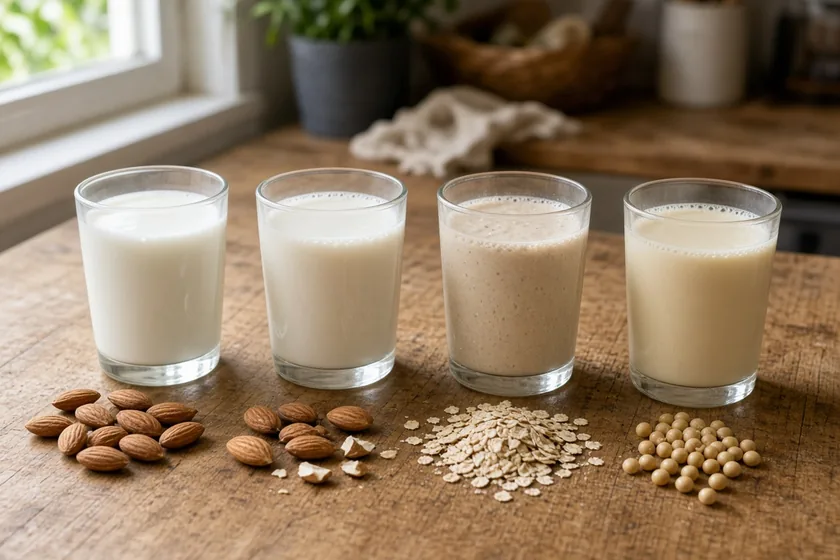
If you're choosing a milk for your coffee, cereal, or oatmeal, the type matters more than the label on the front.
Fact 3: Unsweetened Almond Milk Has Far Less Fat Than Whole Milk
Almond milk vs. cow's milk for acid reflux: The biggest difference is fat. Here's how 1 cup compares, using USDA FoodData Central records:
| Milk (1 cup) | Calories | Total fat | Protein | Total sugars | Calcium |
|---|---|---|---|---|---|
| Almond milk, unsweetened | About 39 | About 2.5 g | About 1 g | About 2 g | About 482 mg (fortified) |
| Almond milk, sweetened vanilla | About 91 | About 2.5 g | About 1 g | About 15 g | About 451 mg (fortified) |
| Whole milk (3.25%) | About 149 | About 7.9 g | About 7.7 g | About 12 g | About 276 mg |
| 2% milk | About 122 | About 4.8 g | About 8.1 g | About 12 g | About 293 mg |
| Nonfat (skim) milk | About 83 | About 0.2 g | About 8.3 g | About 12 g | About 299 mg |
Table: Approximate values from the specific USDA FoodData Central records 174832, 168751, 171265, 171267, and 171269, not averages for all products. Cow's milk sugar is naturally occurring lactose. Commercial products vary, so check the Nutrition Facts label on your carton.
A few takeaways:
- Unsweetened almond milk has about a third of the fat of whole milk and about half the fat of 2% milk. Nonfat cow's milk has even less fat.
- Almond milk has very little protein. That may matter for reflux in two ways. Protein helps you feel full, but a small 1976 study found that 240 mL of whole, low-fat, and nonfat milk all increased stomach acid secretion in 10 people. The authors pointed to milk's protein and calcium. No similar study has tested almond milk, so this is a possible difference, not a proven advantage.
- Sweetened versions add sugar. The sweetened vanilla almond milk above has about 15 grams of total sugar per cup, versus about 2 grams for unsweetened. Check the label for added sugar.
So, is almond milk better than cow's milk for acid reflux? Compared with whole milk, unsweetened almond milk is a lighter choice. Compared with nonfat milk, the difference is smaller. If dairy sits well with you, nonfat milk or low-fat yogurt can work too. For cheese choices, see Is Cheese Good for Acid Reflux.
Fact 4: Almond Milk Isn't the Only Reflux-Friendly Plant Milk
What is the best plant milk for acid reflux? There's no single winner, and no study has compared plant milks for reflux. A sensible pick is low in fat, unsweetened, and fortified. Here's how common options compare per 100 grams by weight:
| Plant milk (per 100 g) | Total fat | Protein | Carbohydrates | What to know |
|---|---|---|---|---|
| Almond, unsweetened | About 1.0 g | About 0.4 g | About 1.3 g | Low in calories and protein |
| Soy, unsweetened | About 1.6 g | About 2.9 g | About 1.7 g | Protein closest to cow's milk |
| Oat, unsweetened | About 2.7 g | About 0.8 g | About 5.1 g | Creamy; more carbs than almond |
| Rice, unsweetened | About 1.0 g | About 0.3 g | About 9.2 g | Naturally sweet; highest in carbs |
| Coconut beverage, sweetened | About 2.1 g | About 0.2 g | About 2.9 g | Almost all of its fat is saturated |
Table: Approximate values from the specific USDA FoodData Central records 174832, 175215, 2257046, 171942, and 174116. Commercial plant milks vary by brand and recipe (some oat milks add oil), so compare Nutrition Facts labels.
Cleveland Clinic notes that soy and pea milks tend to be higher in protein, while almond, rice, and coconut milks are much lower. It also points out that coconut milk's fat is saturated fat.
For reflux, unsweetened almond milk and unsweetened soy milk are both low-fat choices. Pick the one you tolerate and enjoy. If you need more protein, soy milk has the edge. If you have a nut allergy, skip almond milk.
Fact Set 3: How to Choose Almond Milk, How to Use It, and Who Should Be Careful

The carton you buy and what you mix it with can make the difference between a gentle drink and a trigger.
Fact 5: Pick Plain, Unsweetened Almond Milk and Watch the Add-Ins
Is unsweetened almond milk good for GERD? Plain, unsweetened almond milk is a reasonable one to try, since it has little or no added sugar, though reflux triggers vary. Cleveland Clinic advises choosing unsweetened plant milks and checking for calcium and vitamin D, because most dairy-free milks don't contain them naturally.
When you shop, check the label for:
- "Unsweetened" and "plain": These usually have little or no added sugar. "Original" versions often contain added sugar.
- Calcium and vitamin D: Look for fortified products if almond milk replaces cow's milk in your diet. Homemade almond milk usually isn't fortified.
- A short ingredient list: Cleveland Clinic notes that some products add oils, gums, or stabilizers. If you prefer fewer ingredients, compare labels and pick a simpler formula.
- Flavors: Chocolate and mint are on the NIDDK list of common GERD triggers. Coffee-flavored drinks may also add caffeine.
Almond milk for heartburn, used well: Try it in places where you'd normally use richer dairy:
- Oatmeal: Cook oats with almond milk instead of whole milk. See Is Oatmeal Good for Acid Reflux for toppings that tend to sit well.
- Smoothies: Blend it with a ripe banana. Our guide Are Bananas Good for Acid Reflux explains why bananas are a common pick. A little grated ginger works too; see Is Ginger Good for Acid Reflux.
- Tea and coffee: Swap whole milk or creamer for almond milk. Caffeine can still be a problem, so see Is Green Tea Good for Acid Reflux. If you sweeten it, Is Honey Good for Acid Reflux covers how much honey to use.
Portion and timing still matter. Start with about 1 cup. The NIDDK says eating meals at least 3 hours before lying down may improve nighttime symptoms, so a large latte right before bed isn't ideal. Johns Hopkins also lists carbonated drinks as a heartburn trigger, so still drinks are usually the safer pick. For more, see our guide on whether kombucha helps acid reflux.
Then test it. The 2022 ACG clinical guideline conditionally suggests avoiding foods that trigger your own GERD symptoms, rather than following a blanket list. For a week, note the type and amount of milk you used, the time, and any symptoms.
Fact 6: Almond Milk Isn't Right for Everyone
Can almond milk cause heartburn? It isn't known as a common trigger, though research is lacking, and any drink can bother some people. Sweetened or flavored versions, large servings, and drinks close to bedtime are more likely to cause trouble. If your heartburn worsens, stop and try another option.
Some people should be more careful:
- People with a tree nut allergy: The FDA lists tree nuts among the nine major food allergens in the U.S. If you're allergic to almonds, avoid almond milk.
- Babies under 1 year: The American Academy of Pediatrics says not to give infants plant-based milks, such as almond, oat, or soy beverages, in place of breast milk or formula.
- Children age 5 and younger: HealthyChildren.org (from the AAP) says most plant milks aren't nutritionally equivalent to cow's milk. It doesn't recommend plant milks in place of dairy milk, with soy milk as the exception. Talk with your pediatrician, especially if your child has allergies.
- People who rely on milk for protein: A cup of almond milk has about 1 gram of protein, compared with about 8 grams in cow's milk. Make up the difference with other foods.
When to See a Doctor

Mayo Clinic advises making an appointment if heartburn happens more than twice a week, if symptoms continue despite nonprescription medicines, or if you have trouble swallowing.
The NIDDK also advises seeing a doctor if you have symptoms that could be related to GERD complications or other serious health problems, such as:
- Chest pain
- Loss of appetite
- Persistent vomiting
- Problems swallowing or pain while swallowing
- Signs of bleeding in the digestive tract, such as vomit that contains blood or looks like coffee grounds, or stool that contains blood or looks black and tarry
- Unexplained weight loss
Emergency: Call 911 (or your local emergency number) right away if you have chest pain, especially with shortness of breath or pain in your jaw or arm. The American Heart Association notes that heartburn and heart problems can feel alike, so never assume chest pain is just reflux.
Conclusion
So, does almond milk help acid reflux? It may be a useful lower-fat replacement for whole milk, cream, or rich lattes if those drinks trigger your symptoms. Almond milk itself isn't a proven reflux treatment, and the "alkaline" claim hasn't been tested. Choose plain, unsweetened, fortified almond milk, skip chocolate and mint flavors, keep portions moderate, avoid big servings before bed, and track how you feel.
If you like almond milk in tea or coffee, read Is Green Tea Good for Acid Reflux and Is Honey Good for Acid Reflux next. For snacks, see Are Almonds Good for GERD. For meal timing and sleep position, see our GERD relief guide.
Does almond milk sit better with your reflux than cow's milk? Share your experience in the comments.
Related guides:
- Does kombucha help acid reflux
- Is bone broth good for acid reflux
Sources
- Eating, Diet, and Nutrition for GER and GERD (NIDDK)
- Symptoms and Causes of GER and GERD (NIDDK)
- GERD Diet: Foods That Help with Acid Reflux (Johns Hopkins Medicine)
- Does Coffee Cause Acid Reflux? (Cleveland Clinic)
- Plant-Based Milk Options: What To Know Before You Choose (Cleveland Clinic)
- Heartburn: Symptoms and Causes (Mayo Clinic)
- ACG Clinical Guideline for the Diagnosis and Management of Gastroesophageal Reflux Disease (American Journal of Gastroenterology, 2022)
- Mehta et al., Association Between Beverage Intake and Incidence of Gastroesophageal Reflux Symptoms (Clin Gastroenterol Hepatol, 2020)
- Ippoliti et al., The Effect of Various Forms of Milk on Gastric-Acid Secretion (Ann Intern Med, 1976)
- USDA FoodData Central nutrient records used in this article: almond milk, unsweetened 174832, almond milk, sweetened vanilla 168751, whole milk 171265, 2% milk 171267, nonfat milk 171269, soymilk, unsweetened 175215, oat milk, unsweetened 2257046, rice milk, unsweetened 171942, coconut milk beverage 174116
- Food Allergies (U.S. Food and Drug Administration)
- Recommended Drinks for Children Age 5 and Younger (HealthyChildren.org, American Academy of Pediatrics)
- Is Homemade Baby Formula Safe? (HealthyChildren.org, American Academy of Pediatrics)
- Heartburn or Heart Attack? (American Heart Association)
FAQ
1. Does almond milk help acid reflux?
It may be a useful lower-fat swap for whole milk or creamer if those bother you. No study has tested almond milk as a reflux treatment. Choose plain, unsweetened almond milk and track your symptoms.
2. Is almond milk alkaline?
It's often described that way, but its pH varies by product and isn't listed on labels. No study shows that almond milk's pH reduces heartburn, so don't rely on it to neutralize stomach acid.
3. Is almond milk better than cow's milk for acid reflux?
Compared with whole milk, unsweetened almond milk has about a third of the fat, so it may be a gentler swap if fat triggers your reflux. Nonfat cow's milk is also low in fat. Use whichever you tolerate best.
4. Can almond milk cause heartburn?
It isn't known as a common trigger, but it hasn't been studied closely and can bother some people. Sweetened or chocolate versions, large servings, and drinking it right before bed are more likely to cause problems. Stop if your symptoms get worse.
5. What is the best plant milk for acid reflux?
There's no single best option. Plain, unsweetened, fortified almond or soy milk are both low-fat choices. Soy milk has more protein. Skip almond milk if you're allergic to tree nuts.
About the author

Health Researcher and Writer
Haider Nadeem is a health researcher and the writer behind Healthy Eats Guide. He writes about health problems he faces or sees people around him face, and turns careful research into practical guides. Articles are researched and drafted with AI assistance, then fact-checked and edited by Haider using cited sources such as USDA, NIH, and peer-reviewed research.
Related blogs
Is Ginger Good for Acid Reflux: 6 Evidence-Based Facts
Is ginger good for acid reflux? Learn 6 evidence-based facts on ginger research, ginger tea, safe amounts, ginger ale, and when too much ginger causes heartburn.
15 min read

Is Green Tea Good for Acid Reflux: 6 Evidence-Based Facts
Is green tea good for acid reflux? Learn 6 evidence-based facts on caffeine, decaf green tea, herbal teas, coffee, timing, and how to test your tolerance.
13 min read

Is Popcorn Good for Acid Reflux: 6 Evidence-Based Facts
Is popcorn good for acid reflux? Learn whether air-popped, buttered, and microwave popcorn may affect GERD symptoms, plus tips on portions, toppings, and timing.
12 min read
Newsletter
Get practical nutrition guides in your inbox
Clear food-by-food advice and diet tips for everyday eating — no spam, unsubscribe anytime.