
Is Honey Good for Acid Reflux: 6 Essential Facts
Is honey good for acid reflux? Learn 6 essential facts on manuka honey research, sugar content, how much to take, warm water mixes, and who should avoid honey.
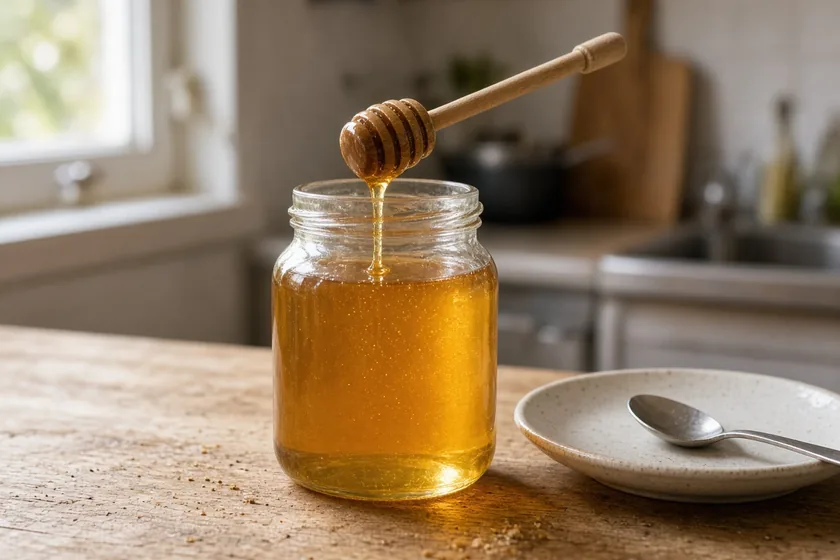
Introduction

Is honey good for acid reflux? A small amount may be fine, and some people find a spoonful soothing, but honey is not a proven treatment. One small trial of manuka honey in people with GERD reported encouraging results, yet it involved only 30 patients. Honey is also acidic and mostly sugar, so it won't suit everyone.
If you want to try honey for heartburn, start with 1 teaspoon on its own or in a warm, non-citrus drink. Have it earlier in the day, not right before bed, and keep a short symptom diary. Never give honey to a baby under 1 year old, and see a doctor if heartburn happens more than twice a week.
Below are six facts on the research, manuka honey, the "coating" idea, sugar content, how much to take, and who should be careful.
Fact Set 1: What the Research Says About Honey and Reflux
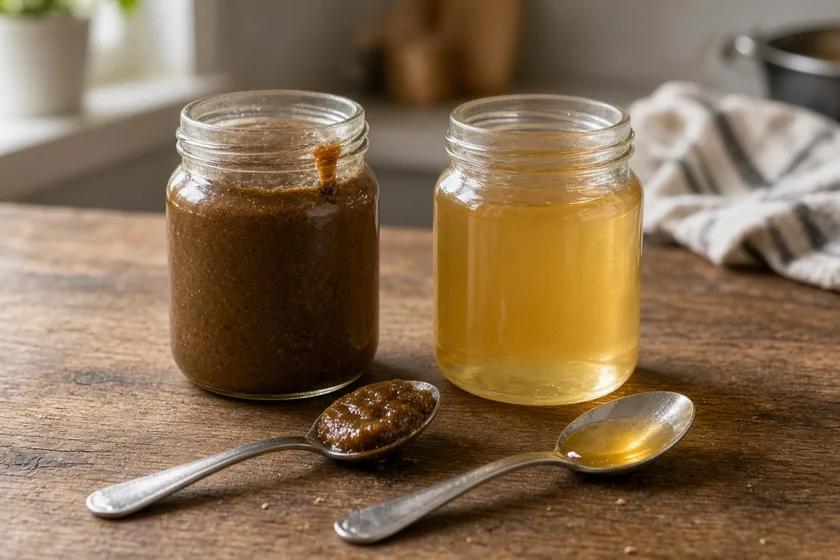
Honey has a long history as a home remedy, but the reflux research is thin.
Fact 1: Honey Isn't a Proven GERD Treatment
Can honey stop heartburn? No large, high-quality clinical trials have shown that honey treats gastroesophageal reflux disease (GERD) or reliably relieves heartburn. One small manuka honey pilot reported improvements that still need confirmation (see Fact 2). The Mayo Clinic honey overview lists research on honey for coughs, wound care, dry eyes, and some digestive problems, such as diarrhea from bacterial infections, but not reflux. Mayo Clinic adds that results can vary because quality may differ between brands. Honey sold as food must meet FDA food safety and labeling rules, but honey products aren't FDA-approved to treat medical conditions.
The idea that honey helps reflux mostly comes from lab work, theory, and personal stories. A 2013 letter in the Indian Journal of Medical Research suggested honey might help reflux esophagitis because of its antioxidant and anti-inflammatory compounds and its thick texture. That was a proposal, not a study in patients.
Honey is a food, not a substitute for antacids or prescription GERD medicine. Personal reports of relief can't separate honey's effect from placebo or symptoms that come and go, and no major GERD guideline we found recommends it.
If you want an over-the-counter option with more trial evidence, ask a pharmacist. Alginate products, which form a foam "raft" on top of stomach contents, have been tested in clinical trials. In a 2013 randomized trial of 195 adults with non-erosive reflux disease, a sodium alginate suspension was non-inferior to omeprazole for heartburn or regurgitation relief after 4 weeks.
Fact 2: Manuka Honey Has One Small, Promising Trial
Is manuka honey good for acid reflux? It may help some people, but the evidence rests on one pilot study. Manuka honey comes from the nectar of the manuka bush, found in New Zealand and Australia, and contains a compound called methylglyoxal (MGO).
In a 2024 study in Food Science & Nutrition, 30 adults with GERD took 5 grams of manuka honey or an artificial honey placebo three times a day for 4 weeks. The manuka honey was certified at 400 mg/kg MGO or more. Here is what the researchers reported:
| Outcome after 4 weeks | Manuka honey group (15 people) | Placebo group (15 people) |
|---|---|---|
| Patients reporting symptom improvement | 100% | 40% |
| Improvement seen on endoscopy | 73.3% | 33.3% |
| Improvement seen in tissue samples | 73.3% | 20% |
Table: Results reported by Gośliński et al., Food Science & Nutrition, 2024. Small pilot study; results not yet repeated.
These numbers look striking, but the limits matter:
- Small size: 15 people per group is too few to draw firm conclusions.
- Most were on medicine: About 80% of participants kept taking acid-reducing drugs such as proton pump inhibitors (PPIs). Honey was an add-on, not a replacement.
- One brand, one dose: The results may not apply to other honeys or lower-grade manuka products.
- No repeat yet: The authors called it a pilot study and said larger studies are needed.
A separate 2017 randomized phase II trial tested manuka honey in 163 people having chemoradiation for lung cancer. Neither liquid honey nor honey lozenges led to a significant improvement in the primary endpoint, patient-reported pain on swallowing at 4 weeks, compared with standard supportive care. That was radiation damage, not reflux, but promise in one setting doesn't always carry over.
Fact Set 2: How Honey Might Help, and How It Might Backfire
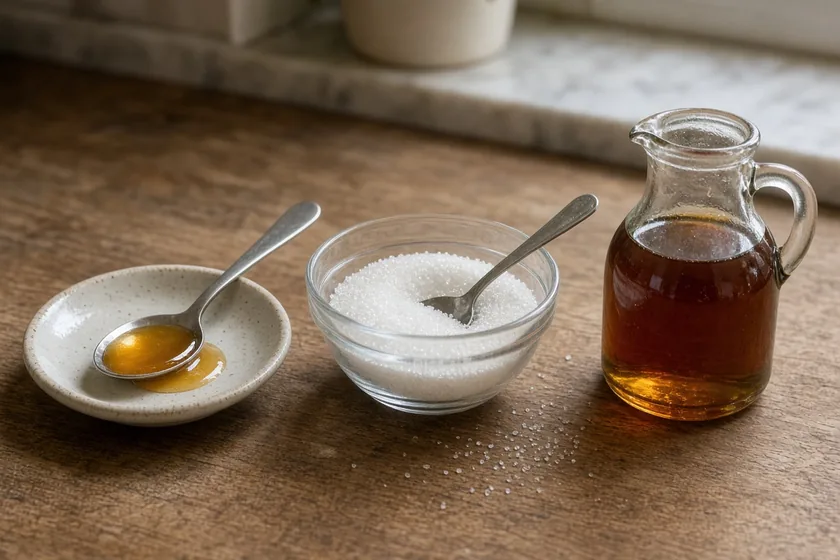
Honey's texture may soothe, but its sugar and acidity can work against you.
Fact 3: The "Coating" Idea Is Plausible, but Unproven
Honey is thick and sticky. Researchers have suggested that this lets it cling to the esophagus lining a little longer than water would, which may explain why a spoonful feels soothing. The manuka study authors offered the same explanation, along with honey's antioxidant compounds.
Honey also appears in some reflux products sold as medical devices. A 2022 lab study tested one such liquid, which combines honey with sodium hyaluronate (a form of hyaluronic acid), chondroitin sulfate, aloe vera gel, maltodextrin, and xanthan gum, on lab-grown human esophageal tissue. It formed a temporary protective film that reduced how much of a test substance passed through. However:
- It was a lab model, not a study in people with reflux.
- It tested a multi-ingredient formula, so lab findings can't show how much honey, or any single ingredient, contributes.
- One author was an adviser to the product's maker.
Plain honey from your kitchen isn't the same as that formula. And when you stir honey into hot tea or water, it thins out, so any coating effect is likely weaker.
Honey may also ease a sore throat or cough. Mayo Clinic says honey may lessen coughs in children aged 1 and older, though it hasn't been shown to beat cough medicines in adults. Reflux can itself cause a chronic cough or hoarseness, according to the NIDDK, so a cough that keeps coming back is worth mentioning to your doctor.
Fact 4: Honey Is Acidic and Mostly Sugar, Which Can Bother Some People
Can honey make acid reflux worse? It can for some people. Honey is naturally acidic: a review of honey's properties puts its pH between 3.2 and 4.5. A low pH doesn't automatically mean heartburn, since stomach acid is far stronger, but it's one reason honey isn't the "alkaline" remedy some sites claim.
Honey is also about 82% sugar by weight, according to USDA data. Here is how its sugar content compares with other common sweeteners:
| Sweetener | Serving | Calories | Total sugars | Fat |
|---|---|---|---|---|
| Honey | 1 teaspoon (about 7 g) | About 21 | About 5.7 g | 0 g |
| Honey | 1 tablespoon (21 g) | About 64 | About 17.2 g | 0 g |
| Granulated sugar | 1 teaspoon (4.2 g) | About 16 | About 4.2 g | 0 g |
| Maple syrup | 1 tablespoon (20 g) | About 52 | About 12.1 g | 0 g |
Table: Approximate values calculated from USDA FoodData Central records for honey (FDC 169640), granulated sugar (FDC 169655), and maple syrup (FDC 169661). A teaspoon of honey was estimated as one-third of a tablespoon.
Honey's lack of fat is a plus, since high-fat foods are on the NIDDK list of common GERD triggers. Sugar isn't on that list, and a 2019 Taiwanese study of 1,837 adults found that adding sugar to tea or coffee wasn't linked to reflux symptoms. Still, in the manuka trial's diet interviews, 20 of 30 participants named sweets as one of their own triggers, so tolerance varies.
The American Heart Association counts honey as an added sugar. Its limits of about 6 teaspoons a day for most women and about 9 for most men apply to total added sugars from all sources, honey included. For more on limits, see our guide to daily sugar intake.
Fact Set 3: How Much Honey, How to Take It, and Who Should Be Careful

If you'd like to try honey, the amount, the mix, and the timing all matter.
Fact 5: Start With 1 Teaspoon, and Watch What You Mix It With
How much honey should you take for acid reflux? There's no established dose. The manuka trial used 5 grams, a little under 1 teaspoon, three times a day. A practical start is 1 teaspoon once a day, then see how you feel over a few days.
Is honey in warm water good for acid reflux? It may feel soothing, and warm water on its own is unlikely to trigger symptoms. No study has tested honey water for GERD, though. Some common add-ins can work against you:
- Lemon: Citrus is on the NIDDK and Mayo Clinic trigger lists, so the popular "honey lemon water" may be a poor choice during a flare.
- Peppermint tea: Mint is a common trigger, too.
- Caffeinated tea or coffee: Caffeine can trigger heartburn in some people. If you sweeten tea with honey, a lower-caffeine cup may be gentler. See Is Green Tea Good for Acid Reflux for how tea types compare.
- Ginger tea: Johns Hopkins Medicine suggests sipping ginger tea when you feel heartburn coming on. Want a deeper dive into ginger? Our guide, Is Ginger Good for Acid Reflux, covers the research, safe amounts, and when ginger can cause heartburn.
Warm milk with honey is another common option. Cleveland Clinic suggests stirring a tablespoon of honey into warm milk as a natural remedy for heartburn during pregnancy. Johns Hopkins notes that the fat in milk can aggravate reflux, while nonfat milk may give temporary relief, so a low-fat or nonfat milk is the safer pick. For a dairy-free version, many people use almond milk. Want a deeper dive into almond milk? Our guide, Does Almond Milk Help Acid Reflux, compares it with cow's milk and other plant milks.
Timing matters, too. The NIDDK says eating meals at least 3 hours before lying down may improve nighttime symptoms, so a honey drink right before bed may not be ideal. Honey also works well drizzled on plain oatmeal or yogurt. Our guides to oatmeal and yogurt for acid reflux cover these breakfasts.
Finally, test it. The 2022 ACG clinical guideline conditionally suggests avoiding individual foods that trigger your GERD symptoms, based on low-quality evidence, rather than following a blanket list. Note the amount of honey, what you mixed it with, the time, and any symptoms for a week.
Fact 6: Honey Isn't Safe for Babies, and Some Adults Should Be Careful
Honey is generally safe for adults and children over 1, according to Mayo Clinic, but a few groups need extra care:
- Babies under 1 year: Never give honey, not even a taste. Mayo Clinic warns it can cause infant botulism, a rare but serious illness. Reflux in infants needs a pediatrician's advice, not home remedies.
- People with diabetes: A tablespoon has about 17 grams of carbohydrate, so it raises blood sugar like other sugars. Ask your care team how it fits your plan.
- People with bee pollen allergies: Mayo Clinic notes that honey may contain bee pollen, and allergic reactions, though rare, can be serious.
- People taking phenytoin: Mayo Clinic lists this seizure medicine as a possible interaction.
- Manuka honey or honey supplements: Ask your doctor or pharmacist before taking them several times a day, especially alongside GERD medicine.
Mayo Clinic also notes that too much honey can cause diarrhea because of its high sugar content.
When to See a Doctor

Mayo Clinic advises making an appointment if heartburn happens more than twice a week, if symptoms continue despite nonprescription medicines, or if you have trouble swallowing. Johns Hopkins Medicine also suggests seeing a doctor if you have heartburn two or more times a week and diet changes haven't helped. MedlinePlus notes that GERD can also cause a dry cough or hoarse voice.
The NIDDK also advises seeing a doctor for symptoms that could be related to GERD complications or other serious health problems:
- Problems swallowing or pain while swallowing
- Persistent vomiting or loss of appetite
- Blood in the vomit, or vomit that looks like coffee grounds
- Blood in the stool, or stool that looks black and tarry
- Weight loss you cannot explain
Emergency: Call 911 (or your local emergency number) right away if you have chest pain, especially with shortness of breath or pain in your jaw or arm. The American Heart Association notes that heartburn and heart problems can feel alike, so never assume chest pain is just reflux.
Conclusion
So, is honey good for acid reflux? A teaspoon may be fine and may feel soothing, but honey isn't a proven treatment. The best evidence, a small manuka honey pilot, is promising but unconfirmed, and most of its participants were also taking acid-reducing medicine. Honey is acidic and mostly sugar, so keep the amount small and skip lemon and mint mixes during a flare. Avoid it right before bed, and never give it to babies under 1.
If you sweeten tea with honey, read Is Green Tea Good for Acid Reflux next. For gentle breakfast ideas, see Is Oatmeal Good for Acid Reflux and Are Bananas Good for Acid Reflux. For meal timing and sleep position, see our GERD relief guide.
Does a spoonful of honey help your heartburn, or does it make it worse? Share your experience in the comments.
Related guides:
- Is ginger good for acid reflux
- Does almond milk help acid reflux
- Does kombucha help acid reflux
- Is bone broth good for acid reflux
Sources
- Eating, Diet, and Nutrition for GER and GERD (NIDDK)
- Symptoms and Causes of GER and GERD (NIDDK)
- Honey (Mayo Clinic)
- Heartburn: Symptoms and Causes (Mayo Clinic)
- Heartburn During Pregnancy (Cleveland Clinic)
- GERD Diet: Foods That Help with Acid Reflux (Johns Hopkins Medicine)
- ACG Clinical Guideline for the Diagnosis and Management of Gastroesophageal Reflux Disease (American Journal of Gastroenterology, 2022)
- Gośliński et al., Application of Manuka Honey in Treatment Patients With GERD (Food Sci Nutr, 2024)
- Fogh et al., Prophylactic Manuka Honey for Chemoradiation-Induced Esophagitis (Int J Radiat Oncol Biol Phys, 2017)
- Math et al., Honey: A Nutrient With Medicinal Property in Reflux (Indian J Med Res, 2013)
- Ceriotti et al., Liquid Formulations for GERD in a Reconstructed Oesophageal Epithelium Model (Med Devices, 2022)
- Chiu et al., Sodium Alginate Suspension vs. Omeprazole in Non-Erosive Reflux Disease (Aliment Pharmacol Ther, 2013)
- Wei et al., Tea and Coffee in GERD (Tzu Chi Med J, 2019)
- Mandal and Mandal, Honey: Its Medicinal Property and Antibacterial Activity (Asian Pac J Trop Biomed, 2011)
- USDA FoodData Central nutrient records used in this article: honey 169640, sugars, granulated 169655, syrups, maple 169661
- Added Sugars (American Heart Association)
- Gastroesophageal Reflux Disease (MedlinePlus)
- Heartburn or Heart Attack? (American Heart Association)
FAQ
1. Is honey good for acid reflux?
A small amount may be fine and may feel soothing, but honey isn't a proven treatment. One small manuka honey trial was promising. Start with 1 teaspoon and track your symptoms.
2. Can honey make acid reflux worse?
It can for some people. Honey is acidic and mostly sugar, and some people with GERD say sweets trigger their symptoms. Mixing it with lemon, mint, or caffeine may also add triggers.
3. Is manuka honey better than regular honey for GERD?
Possibly, but it isn't proven. The only GERD trial used certified manuka honey in 30 patients, most of whom were also on acid-reducing medicine. No study compares manuka with regular honey for reflux.
4. How much honey should you take for acid reflux?
There's no established dose. The manuka trial used 5 grams, a little under 1 teaspoon, three times a day. Starting with 1 teaspoon a day keeps the added sugar low.
5. Is honey in warm water good for acid reflux?
It may feel soothing, but no study has tested it for GERD. Skip the lemon if citrus triggers your symptoms, and avoid drinking it right before bed.
About the author

Health Researcher and Writer
Haider Nadeem is a health researcher and the writer behind Healthy Eats Guide. He writes about health problems he faces or sees people around him face, and turns careful research into practical guides. Articles are researched and drafted with AI assistance, then fact-checked and edited by Haider using cited sources such as USDA, NIH, and peer-reviewed research.
Related blogs

GERD Relief: 7 Proven Tips to Manage Flare-Ups
GERD relief that works: 7 proven tips covering meal timing, trigger foods, weight, sleep position, medicines and surgery, plus warning signs to act on.
9 min read

Is Green Tea Good for Acid Reflux: 6 Evidence-Based Facts
Is green tea good for acid reflux? Learn 6 evidence-based facts on caffeine, decaf green tea, herbal teas, coffee, timing, and how to test your tolerance.
13 min read
Are Pretzels Good for Acid Reflux: 5 Essential Facts
Are pretzels good for acid reflux? See why a plain, low-fat handful often sits well, how salt, soft pretzels, and chocolate coatings compare, and when this snack may still trigger heartburn.
12 min read
Newsletter
Get practical nutrition guides in your inbox
Clear food-by-food advice and diet tips for everyday eating — no spam, unsubscribe anytime.