
Is Ginger Good for Acid Reflux: 6 Evidence-Based Facts
Is ginger good for acid reflux? Learn 6 evidence-based facts on ginger research, ginger tea, safe amounts, ginger ale, and when too much ginger causes heartburn.
Introduction

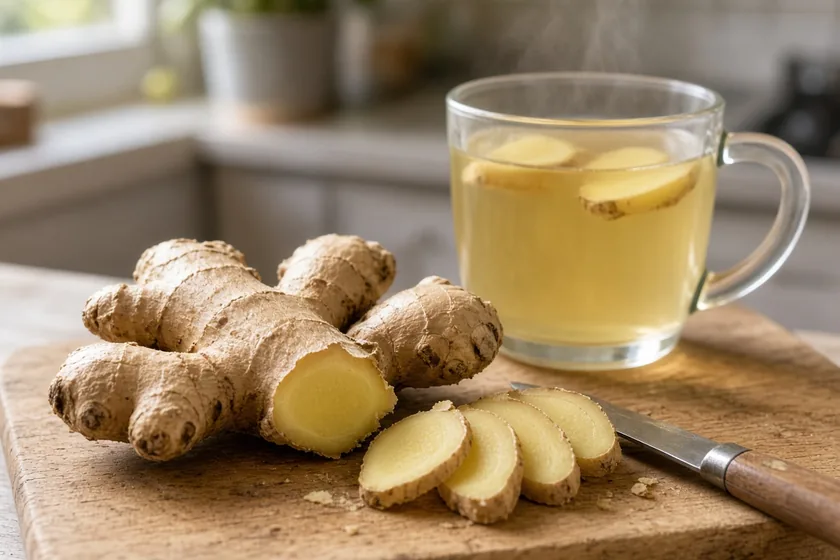
Is ginger good for acid reflux? A small amount of ginger may help some people, and a mild cup of ginger tea is a common home remedy. But ginger isn't a proven GERD treatment. The most encouraging data come from small trials of ginger supplements, mostly in people with indigestion rather than diagnosed GERD. Large amounts of ginger can also cause heartburn.
If you want to try ginger for acid reflux, start with a mild tea made from a few thin slices of fresh ginger. Skip lemon, mint, and fizzy ginger ale, and avoid it right before bed. Talk to your doctor before taking ginger supplements, especially if you take a blood thinner, and see a doctor if heartburn happens more than twice a week.
Below are six facts on the research, how ginger affects digestion, when it backfires, how much to use, and who should be careful.
Fact Set 1: What the Research Says About Ginger and Reflux
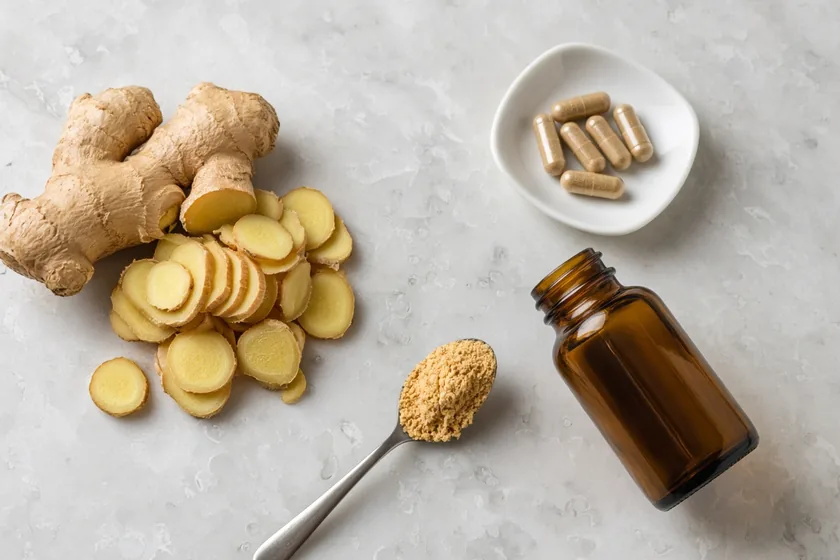
Ginger has a long history in folk medicine, but research on ginger for reflux is still limited.
Fact 1: Ginger Isn't a Proven GERD Treatment, but Early Supplement Data Are Promising
Does ginger help acid reflux? It might, but the proof is thin. According to the NCCIH, people have traditionally used ginger for indigestion and stomach discomfort. Today, it's mostly studied for nausea, and many ginger studies haven't been high quality.
The best reflux evidence comes from a 2022 systematic review and meta-analysis of diet and supplement approaches for GERD symptoms. It pooled 2 studies of ginger-containing supplements in adults with GERD or functional dyspepsia (ongoing indigestion with no clear cause). Compared with placebo, these supplements were linked to higher odds of symptom improvement. Still, the authors concluded that evidence to guide diet changes for GERD is limited in scope and quality.
Here is why that finding doesn't mean a ginger snack will fix heartburn:
- They tested supplements, not food. For example, a 2015 trial of a ginger supplement in 126 people with functional dyspepsia used capsules with 20 mg of standardized ginger extract plus 100 mg of artichoke extract. Participants took 2 capsules a day, before lunch and dinner, for 4 weeks (40 mg of ginger extract and 200 mg of artichoke extract daily). Products like this aren't the same as ginger from your kitchen.
- Ginger wasn't tested alone. Because that supplement combined ginger with artichoke, the trial can't show how much of the benefit, if any, came from ginger.
- Not everyone had diagnosed GERD. Some trials enrolled people with functional dyspepsia. Indigestion and reflux overlap, but they aren't the same condition.
- The evidence base is small. Two studies can't settle whether ginger works for everyone.
Ginger is a food and a supplement, not a substitute for antacids or prescription GERD medicine. Cleveland Clinic notes that ginger supplements aren't FDA-approved to treat any medical condition.
Fact 2: Ginger May Help Your Stomach Empty Faster
One reason researchers are interested in ginger is its effect on stomach emptying. Johns Hopkins Medicine explains that common heartburn triggers delay digestion and let food sit in the stomach longer. A stomach that empties faster may, in theory, leave less to push back up.
Two small trials from the same research group measured this with ultrasound after people took 1.2 grams of ginger in capsules, then ate a light soup:
| Study | Who took part | Gastric half-emptying time | Symptom change |
|---|---|---|---|
| Wu et al., 2008 | 24 healthy adults | About 13 minutes with ginger vs. about 27 minutes with placebo | No significant difference |
| Hu et al., 2011 | 11 adults with functional dyspepsia | About 12 minutes with ginger vs. about 16 minutes with placebo (medians) | No significant difference |
Table: Results reported in the two studies. Half-emptying time is how long it takes for half of a meal to leave the stomach. Neither study included people with diagnosed GERD.
Ginger sped up stomach emptying in both studies, but symptoms didn't change. Both were small, single-dose motility studies that didn't measure reflux. So, faster emptying is a plausible way ginger could help, not direct evidence that it eases heartburn.
Fact Set 2: How Ginger Can Help, and When It Can Backfire
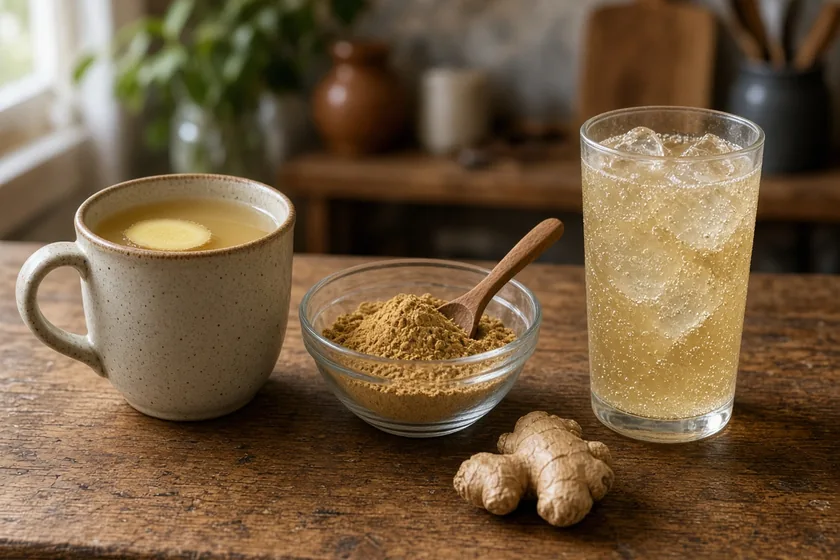
Ginger's strongest evidence is for nausea in pregnancy, and the form you choose matters a lot.
Fact 3: Ginger Is Best Known for Nausea, Not Heartburn
Ginger's best-studied use is nausea, but the evidence depends on the cause. The NCCIH says ginger may help with nausea and vomiting in pregnancy, but most studies haven't shown it helps motion sickness, and it's uncertain whether it helps nausea after surgery or chemotherapy. A 2014 meta-analysis of 12 trials in 1,278 pregnant women found that ginger eased nausea compared with placebo, though the evidence was low quality. A 2019 review of clinical trials on ginger and digestive problems said that divided daily doses of up to about 1,500 mg appear helpful for nausea relief. It also said evidence for other digestive conditions is limited.
This matters because reflux can come with nausea, burping, or an upset stomach. If nausea is part of your symptoms, ginger may feel helpful even if it doesn't change the acid reaching your esophagus.
Ginger contains compounds called gingerols. Cleveland Clinic says gingerol has antioxidant properties and reduces inflammation, and Johns Hopkins describes ginger as anti-inflammatory and a useful digestive aid. Most of that research comes from lab and supplement studies, not from people with reflux. For more on foods studied for inflammation, see our guide to anti-inflammatory foods. For nausea that makes eating hard, see what to eat when you have no appetite.
Fact 4: Too Much Ginger Can Cause Heartburn
Can too much ginger cause heartburn? Yes. The NCCIH lists heartburn, abdominal discomfort, diarrhea, and mouth and throat irritation as possible side effects of ginger taken by mouth. Cleveland Clinic adds that high-dose ginger supplements can cause nausea and reflux.
In a 2025 open-label trial, 47 adults with functional dyspepsia took 1,080 mg of ginger a day for 8 weeks. About 1 in 8 participants (12.8%) reported heartburn. The side effects were mild, and no one had to stop. The trial excluded people with diagnosed GERD, so it can't tell us how often ginger causes heartburn in people with reflux. Still, it's a reminder that ginger doesn't suit everyone.
The form of ginger matters, too. Here is how common options compare for someone with reflux:
| Form of ginger | What to know | Reflux-friendly tip |
|---|---|---|
| Fresh ginger root | Strong, pungent flavor; easy to control the amount | Start with a few thin slices or a small grated amount |
| Ginger tea | Johns Hopkins suggests sipping it when heartburn starts | Keep it mild, plain, and caffeine-free |
| Ground ginger | Dried and more concentrated by weight than fresh | Use a pinch in oatmeal, soups, or smoothies |
| Ginger ale | Usually carbonated and sugary, and often has little real ginger | Best skipped during a flare |
| Ginger chews or candied ginger | Coated in or made with sugar | Treat as a sweet, in small amounts |
| Ginger supplements | Concentrated doses; not FDA-approved to treat conditions | Ask your doctor or pharmacist first |
Table: Summary based on Johns Hopkins Medicine, Cleveland Clinic, NCCIH, and USDA FoodData Central.
Is ginger ale good for acid reflux? Usually not. Cleveland Clinic says most ginger ale may contain little or no real ginger, and a Cleveland Clinic family physician notes that most commercial ginger ales have at least 10 teaspoons of sugar. Sugar content varies by brand and serving size, so check the label. Johns Hopkins lists carbonated beverages as a heartburn trigger. Ginger kombucha is fizzy, too. For more, see our guide on whether kombucha helps acid reflux.
Fact Set 3: How Much Ginger, How to Use It, and Who Should Be Careful

If you'd like to try ginger, small amounts, plain preparations, and good timing give you the best chance.
Fact 5: Start With a Small Amount, Such as a Mild Cup of Ginger Tea
How much ginger should you take for acid reflux? There's no established dose for reflux. Research doses vary widely, from 40 mg of ginger extract a day in the 2015 ginger and artichoke trial to about 1 to 1.5 grams a day in many nausea studies. Those were measured supplements, so they don't convert neatly to kitchen amounts.
For reference, USDA FoodData Central lists 1 teaspoon of fresh ginger root at about 2 grams and 1 teaspoon of ground ginger at about 1.8 grams (FDC 170926). Fresh ginger is mostly water, so a teaspoon of ground ginger is far stronger than a teaspoon of fresh.
Is ginger tea good for heartburn? It may help some people, and Johns Hopkins suggests sipping ginger tea when heartburn is coming on. No trial has tested homemade ginger tea for GERD, though. To keep it gentle:
- Keep it mild: Steep a few thin slices of peeled fresh ginger in hot water for about 5 to 10 minutes, then strain. Make it weaker if it tastes spicy.
- Skip lemon and mint: Citrus and mint are on the NIDDK list of common GERD triggers.
- Watch the caffeine: Blending ginger with black or green tea adds caffeine. See Is Green Tea Good for Acid Reflux for how tea types compare.
- Go easy on sweeteners: If you add honey, a teaspoon is plenty. Our guide, Is Honey Good for Acid Reflux, covers the research.
Is ginger root good for acid reflux in meals? A little grated ginger can add flavor to foods that are usually easier on reflux. Try it in oatmeal, a smoothie with bananas, or a broth-based soup, which Johns Hopkins lists among watery foods. For more, see our guide on whether bone broth helps acid reflux. Many people also blend ginger smoothies with almond milk. Want a deeper dive into almond milk? Our guide, Does Almond Milk Help Acid Reflux, compares it with cow's milk and other plant milks.
Timing matters, too. The NIDDK says eating meals at least 3 hours before lying down may improve nighttime symptoms, so a large mug right before bed may not be ideal.
Finally, test it. The 2022 ACG clinical guideline conditionally suggests avoiding individual foods that trigger your GERD symptoms, rather than following a blanket list. For a week, note how much ginger you had, the form, the time, and any symptoms.
Fact 6: Some People Should Check With a Doctor Before Using Ginger
Ginger in normal food amounts is fine for most people, but extra care is wise in a few situations:
- People taking blood thinners: Cleveland Clinic warns that high doses of ginger can interact with blood-thinning medicine.
- People with gallstones, bleeding problems, diabetes, or low blood sugar: Cleveland Clinic advises telling your care team about these conditions before using a ginger supplement.
- Pregnancy and breastfeeding: The NCCIH says ginger supplements may be safe during pregnancy, but you should check with your health care provider first. Little is known about safety during breastfeeding.
- Anyone taking regular medicine: The NCCIH advises talking with your provider before using ginger or any herbal product, because some herbs and medicines interact.
- Supplement shoppers: Ginger supplements aren't FDA-approved, and Cleveland Clinic notes they may contain ingredients that aren't listed. Choose products carefully and follow the label.
If ginger seems to make your heartburn worse, stop and try a different approach.
When to See a Doctor

Mayo Clinic advises making an appointment if heartburn happens more than twice a week, if symptoms continue despite nonprescription medicines, or if you have trouble swallowing. Johns Hopkins Medicine also suggests seeing a doctor if you have heartburn two or more times a week and diet changes haven't helped.
The NIDDK also advises seeing a doctor for symptoms that could be related to GERD complications or other serious health problems:
- Problems swallowing or pain while swallowing
- Persistent vomiting or loss of appetite
- Blood in the vomit, or vomit that looks like coffee grounds
- Blood in the stool, or stool that looks black and tarry
- Weight loss you cannot explain
Emergency: Call 911 (or your local emergency number) right away if you have chest pain, especially with shortness of breath or pain in your jaw or arm. The American Heart Association notes that heartburn and heart problems can feel alike, so never assume chest pain is just reflux.
Conclusion
So, is ginger good for acid reflux? It may help some people, especially when nausea or a slow, heavy stomach is part of the problem. But it isn't a proven treatment. The best evidence comes from small supplement trials, often with other ingredients and mostly in people with indigestion. Ginger can also cause heartburn, especially in large doses. Start with a mild, plain ginger tea or a little grated ginger in meals, skip fizzy ginger ale, avoid big servings before bed, and track how you feel.
If you like ginger tea, read Is Green Tea Good for Acid Reflux and Is Honey Good for Acid Reflux next. For gentle breakfast ideas, see Is Oatmeal Good for Acid Reflux. For meal timing and sleep position, see our GERD relief guide.
Does ginger tea calm your heartburn, or does it make it worse? Share your experience in the comments.
Related guides:
- Does almond milk help acid reflux
- Does kombucha help acid reflux
- Is bone broth good for acid reflux
Sources
- Ginger: Usefulness and Safety (NCCIH)
- Eating, Diet, and Nutrition for GER and GERD (NIDDK)
- Symptoms and Causes of GER and GERD (NIDDK)
- GERD Diet: Foods That Help with Acid Reflux (Johns Hopkins Medicine)
- Health Benefits of Ginger (Cleveland Clinic)
- Ginger: Dietary Supplement (Cleveland Clinic)
- Does Ginger Ale Really Help With Nausea? (Cleveland Clinic)
- Heartburn: Symptoms and Causes (Mayo Clinic)
- ACG Clinical Guideline for the Diagnosis and Management of Gastroesophageal Reflux Disease (American Journal of Gastroenterology, 2022)
- Martin et al., Dietary, Nutraceutical, and Probiotic Interventions for GERD Symptoms: Systematic Review and Meta-Analysis (Clin Nutr ESPEN, 2022)
- Giacosa et al., Ginger and Artichoke Extract Supplementation in Functional Dyspepsia (Evid Based Complement Alternat Med, 2015)
- Wu et al., Effects of Ginger on Gastric Emptying and Motility in Healthy Humans (Eur J Gastroenterol Hepatol, 2008)
- Hu et al., Effect of Ginger on Gastric Motility and Symptoms of Functional Dyspepsia (World J Gastroenterol, 2011)
- Aregawi and Zoltan, Adverse Effects and Tolerability of Ginger Supplementation in Functional Dyspepsia (Curr Ther Res Clin Exp, 2025)
- Viljoen et al., Ginger for Pregnancy-Associated Nausea and Vomiting: Systematic Review and Meta-Analysis (Nutr J, 2014)
- Nikkhah Bodagh et al., Ginger in Gastrointestinal Disorders: A Systematic Review of Clinical Trials (Food Sci Nutr, 2019)
- USDA FoodData Central nutrient records used in this article: ginger root, raw 169231, spices, ginger, ground 170926
- Heartburn or Heart Attack? (American Heart Association)
FAQ
1. Is ginger good for acid reflux?
It may help some people, but it isn't a proven treatment. Small trials of ginger-containing supplements were promising, mostly in people with indigestion. Start with a mild ginger tea and track your symptoms.
2. Is ginger tea good for heartburn?
It may soothe some people, and Johns Hopkins suggests sipping it when heartburn starts. No trial has tested homemade ginger tea for GERD. Keep it mild and skip lemon, mint, and caffeinated tea blends.
3. Can too much ginger cause heartburn?
Yes. The NCCIH lists heartburn as a possible side effect of ginger, and Cleveland Clinic says high-dose supplements can cause reflux. Use small amounts, and stop if your symptoms get worse.
4. How much ginger should you take for acid reflux?
There's no established dose for reflux. Nausea studies often used about 1 to 1.5 grams of ginger a day as supplements. In food, a few thin slices of fresh ginger in tea is a gentle place to start.
5. Is ginger ale good for acid reflux?
Usually not. Most ginger ale is carbonated and sugary, and Cleveland Clinic says it often contains little or no real ginger. Carbonated drinks are a common heartburn trigger, so plain ginger tea is a better choice.
About the author

Health Researcher and Writer
Haider Nadeem is a health researcher and the writer behind Healthy Eats Guide. He writes about health problems he faces or sees people around him face, and turns careful research into practical guides. Articles are researched and drafted with AI assistance, then fact-checked and edited by Haider using cited sources such as USDA, NIH, and peer-reviewed research.
Related blogs

Is Green Tea Good for Acid Reflux: 6 Evidence-Based Facts
Is green tea good for acid reflux? Learn 6 evidence-based facts on caffeine, decaf green tea, herbal teas, coffee, timing, and how to test your tolerance.
13 min read

Is Popcorn Good for Acid Reflux: 6 Evidence-Based Facts
Is popcorn good for acid reflux? Learn whether air-popped, buttered, and microwave popcorn may affect GERD symptoms, plus tips on portions, toppings, and timing.
12 min read

GERD Relief: 7 Proven Tips to Manage Flare-Ups
GERD relief that works: 7 proven tips covering meal timing, trigger foods, weight, sleep position, medicines and surgery, plus warning signs to act on.
9 min read
Newsletter
Get practical nutrition guides in your inbox
Clear food-by-food advice and diet tips for everyday eating — no spam, unsubscribe anytime.