
Are Blueberries Good for GERD: 5 Evidence-Based Facts
Are blueberries good for GERD? See how their pH compares with other fruits, plus fiber, frozen vs. dried berries, oatmeal pairings, and portion tips.
Introduction

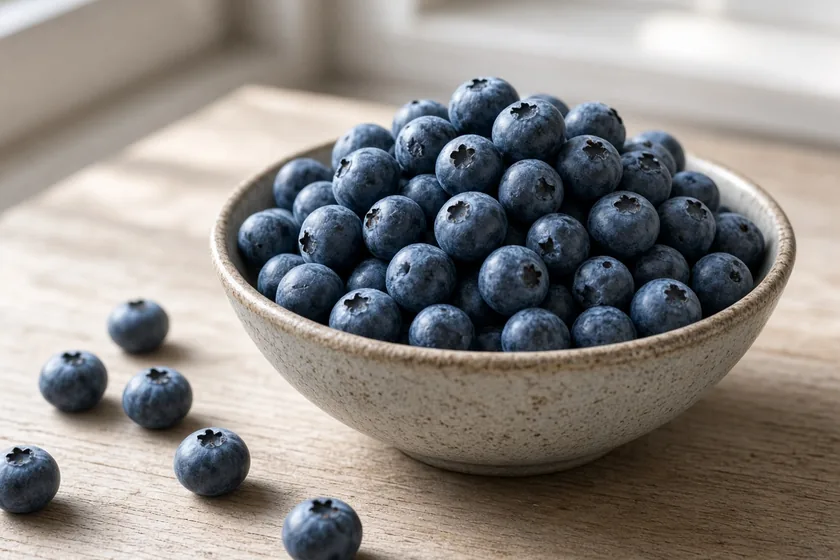
Are blueberries good for GERD? They can be for some people. Blueberries are low in fat, offer some fiber, and are easy to eat in small amounts. But they're also one of the more acidic fruits, with a lower pH than bananas, melons, and the Florida oranges on the FDA list. They may not suit everyone, and they don't treat reflux.
Blueberries may be okay for GERD if you tolerate them, especially plain, unsweetened berries in a small portion eaten well before bed. If acidic fruits bother you, go slowly and watch your response.
This guide covers five facts: blueberry acidity, why pH alone can't predict heartburn, nutrition, frozen versus dried berries, and portions.
Fact Set 1: Are Blueberries Acidic?
Acidity usually comes up first.
Fact 1: Blueberries Are More Acidic Than Bananas, Melons, or Mango
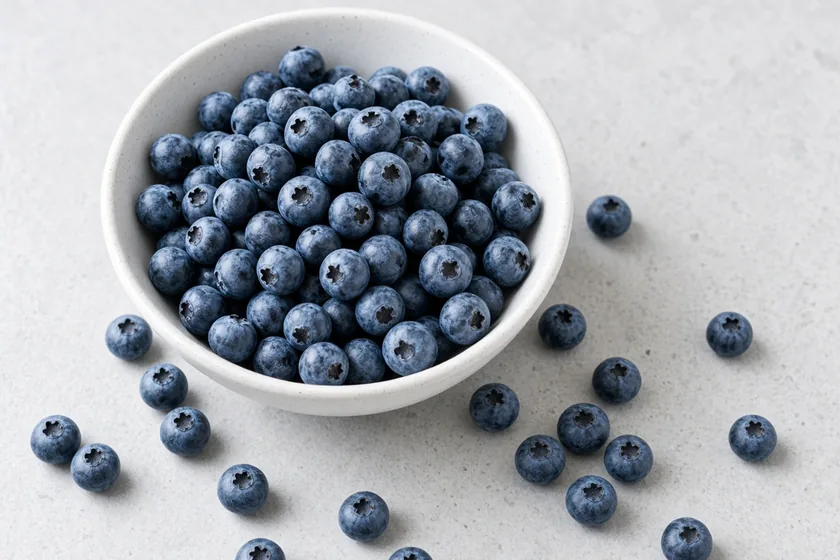
Are blueberries acidic? Yes. An archived FDA reference list of approximate food pH values puts Maine blueberries at about 3.12 to 3.33 and frozen blueberries at about 3.11 to 3.22. These are older lab figures, and real berries vary, but they're a useful benchmark.
| Food (FDA approximate pH list) | Approx. pH | How it compares with blueberries |
|---|---|---|
| Lemon juice | 2.00 to 2.60 | More acidic |
| Strawberries | 3.00 to 3.90 | Similar range |
| Blueberries, Maine | 3.12 to 3.33 | Reference |
| Blueberries, frozen | 3.11 to 3.22 | About the same |
| Raspberries | 3.22 to 3.95 | Similar or slightly less acidic |
| Oranges, Florida | 3.69 to 4.34 | Less acidic |
| Mangoes, ripe | 3.40 to 4.80 | Less acidic |
| Bananas | 4.50 to 5.20 | Much less acidic |
| Watermelon | 5.18 to 5.60 | Much less acidic |
| Oatmeal, cooked | 6.20 to 6.60 | Close to neutral |
Table: Approximate pH ranges from the FDA's archived list of food pH values. Lower numbers mean more acidic. Actual values vary with variety, ripeness, and storage.
On pH alone, blueberries sit with the other berries, below the Florida oranges on the FDA list. That measurement describes the fruit's acidity, not whether it will trigger your reflux. pH is a logarithmic scale, so a one-point drop means roughly ten times more hydrogen-ion activity.
The NIDDK lists acidic foods, such as citrus fruits and tomatoes, among those commonly linked to GERD symptoms. Blueberries aren't on that list by name, so their effect on your symptoms depends on your own tolerance.
Fact 2: pH Alone Can't Predict Whether Blueberries Cause Heartburn
Can blueberries cause heartburn? They can for some people, but a pH number won't tell you who. Measured blueberry pH varies a lot among cultivars. In a 2025 analysis of 61 blueberry cultivars grown in North Carolina, fruit pH ranged from about 3.0 to 4.5 at harvest. Citric acid was the main acid in highbush varieties, while quinic acid dominated in rabbiteye types. The average pH rose slightly during six weeks of cold storage.
Those numbers describe the fruit, not individual reflux symptoms. Johns Hopkins Medicine says foods with a low pH are more likely to cause reflux, while the 2022 ACG clinical guideline suggests avoiding your own "trigger foods," a conditional recommendation based on low-level evidence, rather than automatically dropping entire food groups.
How much you eat, what you pair it with, and when you eat it often matter as much as the berry itself.
Fact Set 2: What Blueberries Offer Nutritionally
Fat and fiber belong in the nutrition picture, but neither one decides whether you'll get reflux.
Fact 3: Blueberries Are Low in Fat and Offer Fiber, but Antioxidants Don't Treat Reflux
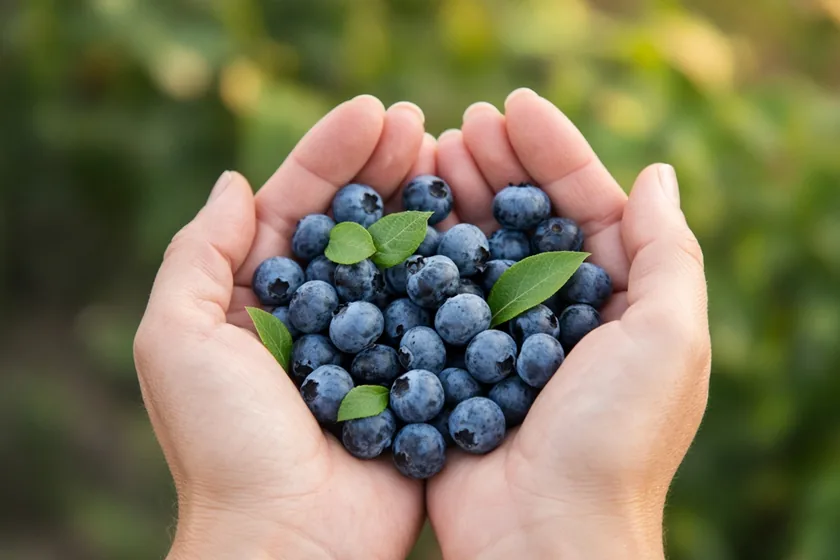
According to USDA FoodData Central, one cup of raw blueberries (148 grams) has about 84 calories, 0.5 grams of fat, 3.6 grams of fiber, and 14.7 grams of natural sugar. Roughly 84% of the fruit's weight is water.
Blueberries contain very little fat, so they may be a reasonable option if high-fat foods trigger your reflux. Johns Hopkins lists fried food, fast food, and fatty meats among the worst heartburn culprits, and notes that fiber-rich foods help you feel full, so you're less likely to overeat.
Blueberries are also famous for their antioxidants, especially the deep blue pigments called anthocyanins. A March 2020 review in Advances in Nutrition discussed observational findings linking about one-third cup of blueberries a day with a lower risk of cardiovascular disease and type 2 diabetes. They also said more human clinical evidence is still needed.
That research didn't study GERD. No good evidence shows that blueberry antioxidants calm heartburn or heal the esophagus. So are blueberries ok for acid reflux because they're "superfoods"? Not exactly. They're a reasonable fruit choice if you tolerate them, not a treatment.
Fact Set 3: Frozen Berries, Pairings, and Portions
Fact 4: Frozen Unsweetened Blueberries Work Like Fresh, but Dried and Sweetened Versions Differ
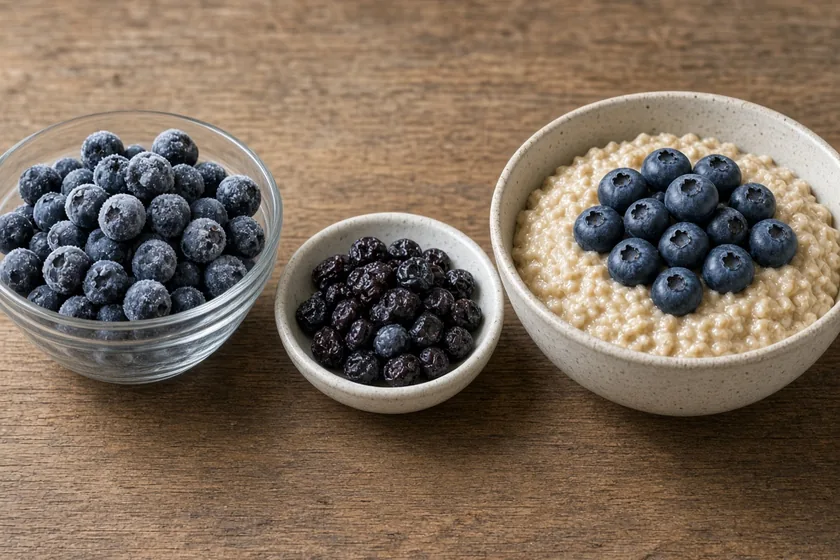
Are frozen blueberries good for acid reflux? Plain frozen blueberries are a lot like fresh ones. Their pH range on the FDA list is nearly identical, and USDA data show similar calories, fat, and fiber. The Advances in Nutrition review notes that individual quick freezing can help blueberries retain vitamin C and anthocyanins; one cited study found about a 12% anthocyanin loss after 10 months at −18°C (about 0°F).
Water content, concentration, and added sugar account for the bigger differences. The table compares 100 grams of each form, including sweetened dried blueberries.
| Blueberry form (per 100 g) | Calories | Water | Fat | Fiber | Total sugars |
|---|---|---|---|---|---|
| Fresh blueberries, raw | About 57 | About 84 g | About 0.3 g | About 2.4 g | About 10.0 g |
| Frozen, unsweetened | About 51 | About 87 g | About 0.6 g | About 2.7 g | About 8.5 g |
| Frozen, sweetened | About 85 | About 77 g | About 0.1 g | About 2.2 g | About 19.7 g |
| Dried, sweetened | About 317 | About 15 g | About 2.5 g | About 7.5 g | About 67.5 g |
Table: Approximate values from USDA FoodData Central records for raw blueberries (FDC 171711), frozen unsweetened blueberries (FDC 173950), frozen sweetened blueberries (FDC 173951), and sweetened dried blueberries (FDC 168158). Brands vary, so check the label.
- Sweetened dried blueberries contain more than five times the calories of fresh blueberries per 100 grams, so check the portion size and the nutrition label.
- Blueberry muffins, pies, and pastries usually bring butter, oil, and sugar along with the fruit. The fat may matter more for reflux than the berries do.
- Blueberry juice blends and smoothies depend on the add-ins. Orange juice adds citrus, and full-fat dairy adds fat, which Johns Hopkins notes can aggravate reflux.
The Dietary Guidelines for Americans, 2025-2030 encourage eating fruit in its whole form and say frozen, dried, or canned fruits with no or very limited added sugars can be good options. Plain frozen blueberries fit that well.
If you also have IBS, Monash University lists blueberries among its lower-FODMAP fruit choices, unlike mango or watermelon. That relates to bloating, not reflux.
Fact 5: Start Small, Pair Wisely, and Keep a Food Diary
How many blueberries can you eat with acid reflux? There's no official limit for GERD. A practical starting point, not a medical serving size, is about half a cup, then adjust based on how you feel. The 2025–2030 Dietary Guidelines recommend 2 daily fruit servings for a 2,000-calorie eating pattern, with needs varying by calorie level, so blueberries can share the day with other fruits you tolerate.
Blueberries and oatmeal for GERD is a popular combination. Johns Hopkins lists oatmeal among the high-fiber foods that may help prevent heartburn, and the FDA list puts cooked oatmeal near neutral, at about 6.20 to 6.60. Oatmeal's pH alone doesn't prove it will improve your reflux. Cook it with water or a milk you tolerate, then top it with a modest spoonful of berries rather than a heaping cup.
These habits are worth trying:
- Mind the clock. The NIDDK says eating meals at least 3 hours before lying down may improve nighttime symptoms. The ACG suggests avoiding meals within 2 to 3 hours of bedtime.
- Keep portions modest. Johns Hopkins recommends small, frequent meals instead of big, heavy ones.
- Pair berries with foods you already tolerate. Low-fat yogurt is one option for some people; our guide on yogurt and acid reflux explains which types tend to sit best.
- Limit citrus mix-ins if they trigger your symptoms. Lemon zest and orange juice may not suit people who are sensitive to acidic foods.
- Use a food diary. Write down the amount, the form (fresh, frozen, or baked), the time, and any symptoms for a week or two.
A food diary makes it easier to connect what you ate, how much, when you ate, and any symptoms that followed. If plain berries sit fine but muffins don't, the berries probably aren't the problem.
When to See a Doctor

Johns Hopkins Medicine advises seeing a doctor when heartburn shows up at least twice a week and shifting what or how you eat hasn't brought relief. MedlinePlus notes that GERD can also cause a dry cough, a hoarse voice, or trouble swallowing.
Also see your doctor if symptoms keep returning, disturb your sleep, or don't improve with lifestyle changes or nonprescription medicine.
The NIDDK also lists symptoms that need prompt medical attention:
- Problems swallowing or pain while swallowing
- Persistent vomiting or loss of appetite
- Blood in the vomit, or vomit that looks like coffee grounds
- Blood in the stool, or stool that looks black and tarry
- Weight loss you cannot explain
Diet changes work best alongside medical care, not instead of it.
Emergency: Call 911 (or your local emergency number) right away if you have chest pain, especially with shortness of breath or pain in your jaw or arm. Heart problems can feel like heartburn, so never assume chest pain is just reflux.
Conclusion
So, are blueberries good for GERD? The five facts come down to this. Blueberries have a lower pH than bananas, melons, mangoes, and the Florida oranges listed in the FDA reference. Their pH varies by variety and storage, and pH alone can't predict your symptoms. They're low in fat with some fiber, but their antioxidants don't treat reflux. Plain frozen berries work much like fresh, while dried and sweetened versions differ. And small portions, smart pairings, and a food diary matter most.
Is blueberry good for acid reflux, then? For many people, a modest serving of plain berries fits into a reflux-friendly diet. If acidic fruits bother you, start small, eat them well before bed, and let your own symptom patterns guide you. No single fruit treats reflux.
Want to compare other fruits? See Are Bananas Good for Acid Reflux, Is Watermelon Good for Acid Reflux, and Is Mango Good for Acid Reflux. For meal timing and sleep position, see our GERD relief guide. For a far more acidic tropical fruit, see Is Pineapple Good for Acid Reflux.
Do blueberries sit well with your reflux, or do you save them for oatmeal mornings only? Share what works for you in the comments.
Sources
- Eating, Diet, and Nutrition for GER and GERD (NIDDK)
- Symptoms and Causes of GER and GERD (NIDDK)
- GERD Diet: Foods That Help with Acid Reflux (Johns Hopkins Medicine)
- ACG Clinical Guideline for the Diagnosis and Management of Gastroesophageal Reflux Disease (American Journal of Gastroenterology, 2022)
- Approximate pH of Foods and Food Products (U.S. FDA, archived)
- USDA FoodData Central nutrient records used in the tables: blueberries, raw 171711, blueberries, frozen, unsweetened 173950, blueberries, frozen, sweetened 173951, blueberries, dried, sweetened 168158
- Postharvest Fruit Chemistry Changes in 61 Blueberry Cultivars After Six Weeks of Cold Storage (Acta Horticulturae, 2025)
- Recent Research on the Health Benefits of Blueberries and Their Anthocyanins (Advances in Nutrition, 2020)
- High and Low FODMAP Foods (Monash University FODMAP)
- Dietary Guidelines for Americans, 2025-2030 (USDA and HHS)
- Gastroesophageal Reflux Disease (MedlinePlus)
- Heartburn or Heart Attack? (American Heart Association)
FAQ
1. Are blueberries good for GERD?
They can be for people who tolerate them. Blueberries are low in fat and offer some fiber, but they have a lower pH than bananas or melons. Start with a small portion of plain berries and watch how you feel.
2. Are blueberries acidic?
Yes. The FDA's approximate pH list puts Maine blueberries at about 3.12 to 3.33, a lower pH than bananas, melons, and the Florida oranges in the same reference. Acidity varies by variety and storage, and pH alone can't predict your symptoms.
3. Can blueberries cause heartburn?
They can trigger symptoms in some people. A heavy meal, or eating shortly before you lie down, can also make reflux worse, and muffins, pies, or smoothies with citrus or high-fat ingredients may be harder to tolerate than plain berries. A meal-and-symptom diary can make those links clearer.
4. Are frozen blueberries good for acid reflux?
Plain frozen blueberries are much like fresh ones, with a similar pH and similar calories, fat, and fiber. Choose unsweetened bags, since sweetened frozen blueberries have more than twice the sugar per 100 grams.
5. How many blueberries can you eat with acid reflux?
There's no official blueberry limit for GERD. Starting with about half a cup is a practical way to see how you tolerate them, not a medically established serving size. If you have nighttime reflux, try finishing meals at least 3 hours before lying down.
About the author

Health Researcher and Writer
Haider Nadeem is a health researcher and the writer behind Healthy Eats Guide. He writes about health problems he faces or sees people around him face, and turns careful research into practical guides. Articles are researched and drafted with AI assistance, then fact-checked and edited by Haider using cited sources such as USDA, NIH, and peer-reviewed research.
Related blogs

GERD Relief: 7 Proven Tips to Manage Flare-Ups
GERD relief that works: 7 proven tips covering meal timing, trigger foods, weight, sleep position, medicines and surgery, plus warning signs to act on.
9 min read
Is Avocado Good for GERD: 6 Proven Facts
Is avocado good for GERD? See how fat, fiber, portion size, and guacamole add-ins may affect reflux, and learn how to enjoy avocado with fewer flare-ups.
11 min read
Is Cottage Cheese Good for GERD: 6 Essential Facts
Is cottage cheese good for GERD? Learn how fat, sodium, acidity, portions, and pairings may affect reflux, and how to test your own tolerance.
11 min read
Newsletter
Get practical nutrition guides in your inbox
Clear food-by-food advice and diet tips for everyday eating — no spam, unsubscribe anytime.