
Is Watermelon Good for Acid Reflux: 5 Essential Facts
Is watermelon good for acid reflux? Learn how its acidity, water content, portion size, juice, and late-night timing may affect GERD, plus how other melons compare.
By Healthy Eats Guide Team
Published
12 min read
Introduction

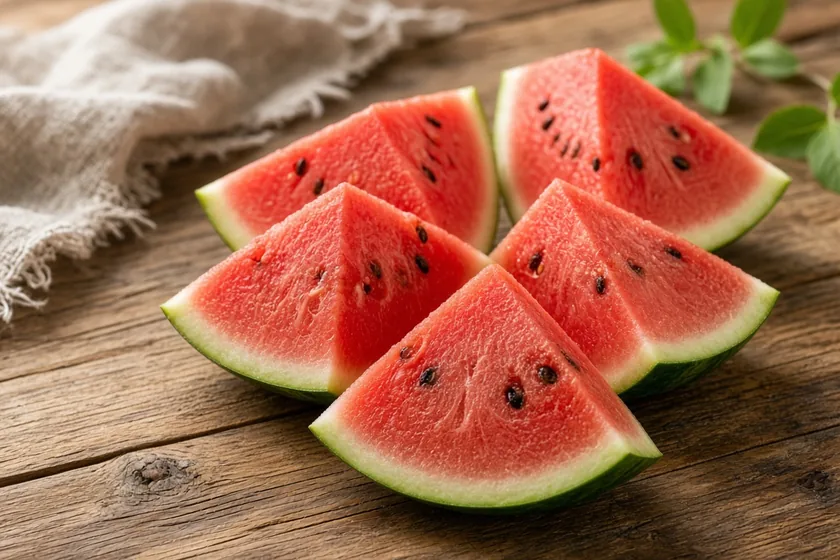
Is watermelon good for acid reflux? For many people, it can be a comfortable choice because it's mostly water and almost fat-free. It's also less acidic than citrus, but that alone can't predict whether it will trigger your symptoms. It doesn't treat reflux, and a big bowl late at night can still cause trouble.
It's a hot afternoon, and someone sets out a plate of cold watermelon wedges. But if heartburn is part of your life, you might pause and wonder whether that sweet, juicy fruit will come back to bite you later.
Here's the short version. Watermelon for GERD may suit people who tolerate it well, especially in modest portions. It's often grouped with low-acid fruits on reflux-friendly food lists, but it isn't guaranteed to be safe. Still, food triggers are personal, and how much you eat matters as much as what you eat.
This guide covers five facts. You'll learn whether watermelon is acidic or alkaline, why its water content matters, how portion size and timing play a role, whether watermelon juice is a smart swap, and which melons for acid reflux are usually easiest on the stomach.
Fact Set 1: Why Watermelon Is Usually a Gentle Fruit
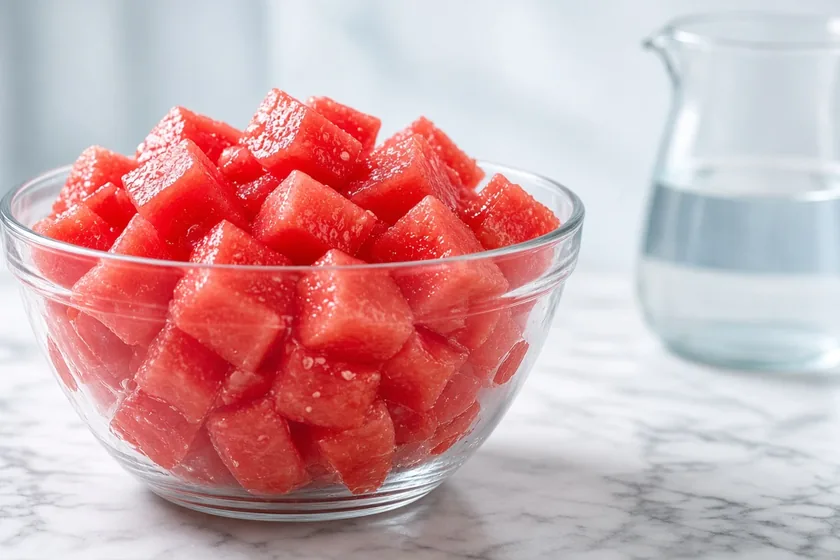
Strong acidity and high fat are two common reasons a food bothers reflux. Watermelon is low in both, which is why it often appears on lists of foods to try.
Fact 1: Watermelon Is Mildly Acidic, but Far Gentler Than Citrus
Is watermelon acidic or alkaline? You'll often read that watermelon is "alkaline." Johns Hopkins Medicine does list melons among alkaline foods in its GERD diet guide. Lab measurements give a more exact answer. An archived FDA reference list of approximate food pH values puts watermelon at about 5.18 to 5.60, which is mildly acidic.
The useful part is the comparison. On that same list, lemon juice sits around 2.0 to 2.6. pH works on a logarithmic scale, so every one-point drop marks roughly a tenfold jump in acid activity. So watermelon is far less acidic than lemon juice. Still, pH alone doesn't decide how a food affects reflux.
That matters because the NIDDK lists acidic foods, such as citrus fruits and tomatoes, among the foods most often linked to GERD symptoms. Watermelon isn't in that group.
One caution, though. Watermelon doesn't neutralize stomach acid in any proven way. Being less acidic than citrus doesn't guarantee that watermelon won't irritate, because food triggers vary from person to person. Your own sensitivity, the portion, and the rest of the meal all play a part.
Fact 2: Watermelon Is Mostly Water and Almost Fat-Free
High-fat foods are a classic reflux complaint. Watermelon barely registers here. According to USDA FoodData Central, one cup of diced watermelon (152 grams) has about 46 calories, about 0.2 grams of fat, and about 139 grams of water. That works out to roughly 91% water by weight.
Johns Hopkins Medicine also lists watermelon among "watery foods" that may help some people with heartburn, suggesting that water-rich foods can dilute stomach acid. That's a proposed benefit, not proof that watermelon treats GERD or neutralizes acid. The key benefit is simpler. A cup of watermelon is a light, low-fat snack that can stand in for chips or a slice of pizza. Johns Hopkins lists fried foods, processed snacks, and pizza among common heartburn culprits.
Watermelon is a relatively low-fiber fruit, with about 0.6 grams per cup, compared with about 1.4 grams in a cup of cantaloupe. If you want a more filling snack, pair a modest portion with something filling and low in fat, such as plain low-fat yogurt. Our guide on yogurt and acid reflux explains which types tend to sit best.
Fact Set 2: Portions, Timing, and Watermelon Juice
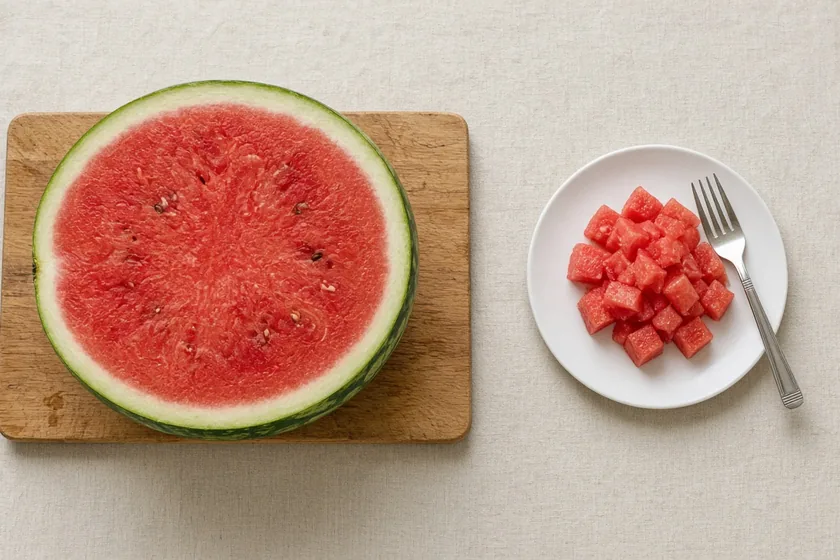
A light fruit can still cause problems if you eat a lot, eat it late, or drink it instead of chewing it.
Fact 3: Big Portions and Late-Night Bowls Can Backfire
Can watermelon cause heartburn? It can for some people. Watermelon is low in fat and acid, but it's easy to eat a lot of it. Half a melon at a cookout can fill your stomach with a large volume of food in one sitting, and a very full stomach is a common reflux trigger. Johns Hopkins suggests eating small, frequent meals instead of big, heavy ones.
Bloating is another factor. Monash University, which tests foods for FODMAPs (certain carbohydrates that some people digest poorly), lists watermelon among fruits high in excess fructose. People with IBS or trouble absorbing fructose may get gas and bloating after eating a lot of it. That discomfort can occur alongside reflux, but FODMAP data doesn't show that watermelon directly worsens GERD.
Is it okay to eat watermelon at night with acid reflux? Timing matters more than the fruit itself. The NIDDK says that eating meals at least 3 hours before lying down may improve nighttime symptoms. Mayo Clinic gives the same 3-hour advice.
If you want watermelon in the evening, try these simple habits:
- Eat it earlier. Enjoy it after dinner, not right before bed.
- Keep the portion modest. About one cup is a practical trial amount, not an official GERD serving. See how you feel.
- Skip the "dessert stack." Watermelon after a large, fatty meal adds more volume to a full stomach.
- Notice patterns. Jot down how much you ate, when, and whether symptoms followed.
Fact 4: Watermelon Juice Isn't the Same as the Fruit
Is watermelon juice good for acid reflux? Plain watermelon juice is likely less acidic than citrus juices, since the whole fruit is. Still, its exact acidity varies with the fruit and how it's made. Some people find a small glass refreshing. Still, there's no good evidence that it soothes or treats reflux.
Juice also changes the portion math. A tall glass can hold the juice of several cups of fruit, and you can drink it in under a minute. Drinking that much quickly puts a lot of volume into your stomach at once, which may bother people whose reflux flares after large meals or drinks. The Dietary Guidelines for Americans, 2025-2030 encourage eating fruits in their whole form and say you should consume 100% fruit juice in limited portions or dilute it with water.
Check labels and recipes too. Store-bought "watermelon" drinks and agua fresca often include lime or lemon juice, mint, or added sugar. Citrus and mint both appear on the NIDDK list of common GERD triggers. Sparkling watermelon drinks add carbonation, which Johns Hopkins also lists as a possible heartburn trigger.
If you enjoy watermelon juice, keep it simple:
- Choose plain juice with no citrus, mint, or fizz.
- Pour a small glass, or dilute it with water.
- Drink it with a meal or snack rather than in a big gulp before bed.
- Notice how you feel afterward, and compare it with eating the whole fruit.
Fact Set 3: How Other Melons Compare
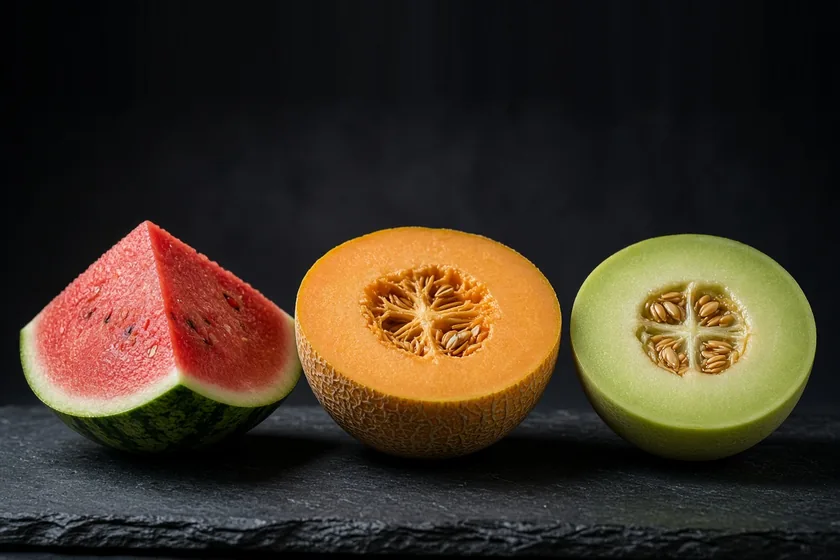
If you like variety, it helps to know how cantaloupe and honeydew stack up. Here's the last fact, with a side-by-side look.
Fact 5: Cantaloupe and Honeydew Are Also Gentle Options
Which melons are best for acid reflux? There's no single winner. Watermelon, cantaloupe, and honeydew are all water-rich fruits with very little fat, and their approximate pH values are higher than those of citrus fruits. On the FDA list, cantaloupe and honeydew are slightly less acidic than watermelon.
The table below compares one cup of each melon using USDA data.
| Melon (1 cup, diced) | Weight | Calories | Water | Fat | Fiber | Approx. pH (FDA list) |
|---|---|---|---|---|---|---|
| Watermelon | 152 g | About 46 | About 139 g | About 0.2 g | About 0.6 g | 5.18 to 5.60 |
| Cantaloupe | 156 g | About 53 | About 141 g | About 0.3 g | About 1.4 g | 6.13 to 6.58 |
| Honeydew | 170 g | About 61 | About 153 g | About 0.2 g | About 1.4 g | 6.00 to 6.67 |
Table: Approximate values calculated from USDA FoodData Central records for raw watermelon (FDC 167765), cantaloupe (FDC 169092), and honeydew (FDC 169911). pH ranges come from the FDA's approximate pH list. Actual values vary with ripeness and variety.
A few practical takeaways stand out:
- Watermelon is about 91% water and very low in fat, so it's a refreshing, hydrating pick on a hot day.
- Cantaloupe has a bit more fiber, and Monash lists it among low-FODMAP fruit alternatives. It may suit people who bloat after watermelon.
- Honeydew is similar to cantaloupe and works well in a mixed fruit cup.
Small differences in pH don't prove which melon is best for GERD. This table compares nutrients and approximate acidity, not results in people with reflux. Your own tolerance, portion size, timing, and what else is on the plate are more useful guides.
How much fruit fits in a day? The Dietary Guidelines set a goal of about 2 servings of fruit per day for a 2,000-calorie eating pattern, adjusted to your own calorie needs. One cup of melon can count toward that goal.
When to See a Doctor

Choosing gentler snacks can help with mild reflux. Some symptoms, though, need a professional look. Johns Hopkins Medicine advises seeing a doctor if you have heartburn two or more times a week and changes to your diet or eating pattern haven't helped. MedlinePlus also notes that GERD can cause a dry cough, a hoarse voice, or trouble swallowing.
See your doctor if you have:
- Heartburn that keeps coming back or wakes you at night
- Symptoms that don't improve with diet changes or nonprescription medicine
- A long-lasting cough or hoarse voice, which can have several causes
Get prompt medical care for warning signs such as:
- Trouble swallowing or pain when swallowing
- Persistent vomiting
- Throwing up blood, or vomit that looks like dark coffee grounds
- Black, tarry, or bloody stools
- Weight loss you can't explain
Diet changes work best alongside medical care, not instead of it.
Emergency: Call 911 (or your local emergency number) right away if you have chest pain or pressure, especially with shortness of breath, sweating, or discomfort that moves into your arm, jaw, or back. Heart attack symptoms can feel like heartburn, so never assume chest pain is just reflux.
Conclusion
So, is watermelon good for acid reflux? Here are the five facts in short. Watermelon is mildly acidic but much less acidic than citrus. It's mostly water and almost fat-free. Big portions and late-night bowls can still cause trouble. Juice isn't the same as the whole fruit. And cantaloupe and honeydew are gentle options too.
For many people, watermelon for GERD can be a good alternative to fatty or strongly acidic snacks, as long as they tolerate it well. Try a modest portion, avoid eating close to bedtime, and let your own symptom patterns show whether watermelon suits you. No single food treats reflux, but small, steady choices can help.
Want to compare another gentle fruit? Our guide Are Bananas Good for Acid Reflux covers ripeness, portions, and smoothie add-ins. For broader habits like meal timing and sleep position, see our guide to GERD relief. Curious about a sweeter tropical option? See Is Mango Good for Acid Reflux for how ripe mango compares on acidity, portions, and timing. Guides on pineapple and blueberries are coming soon.
Does watermelon sit well with your reflux, or do you prefer cantaloupe or honeydew? Share what works for you in the comments.
Sources
- Eating, Diet, and Nutrition for GER and GERD (NIDDK)
- GERD Diet: Foods That Help with Acid Reflux (Johns Hopkins Medicine)
- Gastroesophageal Reflux Disease: Diagnosis and Treatment (Mayo Clinic)
- Approximate pH of Foods and Food Products (U.S. FDA, archived)
- USDA FoodData Central nutrient records used in the table: watermelon, raw 167765, cantaloupe, raw 169092, honeydew, raw 169911
- High and Low FODMAP Foods (Monash University FODMAP)
- Dietary Guidelines for Americans, 2025-2030 (USDA and HHS)
- Gastroesophageal Reflux Disease (MedlinePlus)
FAQ
These quick answers cover the questions people ask most often about watermelon and reflux.
1. Is watermelon good for acid reflux?
For many people, it can be. Watermelon is mostly water, almost fat-free, and less acidic than citrus, though tolerance varies. It doesn't treat reflux, and large portions or late-night bowls can still trigger symptoms.
2. Can watermelon cause heartburn?
It can for some people. Eating a large amount at once fills the stomach, and its excess fructose can cause bloating in sensitive people. Start with about one cup and watch how you feel.
3. Is watermelon acidic or alkaline?
Watermelon is mildly acidic, with an approximate pH of 5.18 to 5.60 on the FDA's list. That's far less acidic than lemon juice, though pH alone doesn't predict whether it will trigger your symptoms.
4. Is it okay to eat watermelon at night with acid reflux?
A small portion is fine for many people, but timing matters. Aim to leave at least 3 hours between your last bite and lying down, and skip watermelon right after a large, heavy dinner.
5. Which melons are best for acid reflux?
No melon is proven best. Watermelon, cantaloupe, and honeydew are all low-fat, water-rich, and less acidic than citrus. Cantaloupe may suit people who bloat after watermelon. Pick the one you tolerate best.
About the author
Healthy Eats Guide Team
Editorial Team
The Healthy Eats Guide editorial team researches and writes practical health and wellness content focused on clarity, sourcing, and everyday usefulness.
Related blogs
Is Mango Good for Acid Reflux: 5 Essential Facts
Is mango good for acid reflux? Learn how ripe mango's pH compares with other fruits, plus how ripeness, portions, dried mango, juice, and timing may affect GERD.
12 min read

Are Bananas Good for Acid Reflux: 6 Essential Facts
Are bananas good for acid reflux? See how ripeness, portion size, and smoothie add-ins shape bananas for GERD, and why a banana is a snack, not a treatment.
12 min read
Is Olive Oil Good for Acid Reflux: 6 Essential Facts
Is olive oil good for acid reflux? See how fat, EVOO, butter swaps, and frying may affect GERD, and why portion tolerance matters more than brand.
11 min read
Newsletter
Get practical health guides in your inbox
Occasional updates with clear nutrition, habits, and wellness reading — no spam, unsubscribe anytime.