
Is Olive Oil Good for Acid Reflux: 6 Essential Facts
Is olive oil good for acid reflux? See how fat, EVOO, butter swaps, and frying may affect GERD, and why portion tolerance matters more than brand.
By Healthy Eats Guide Team
Published
11 min read

Introduction
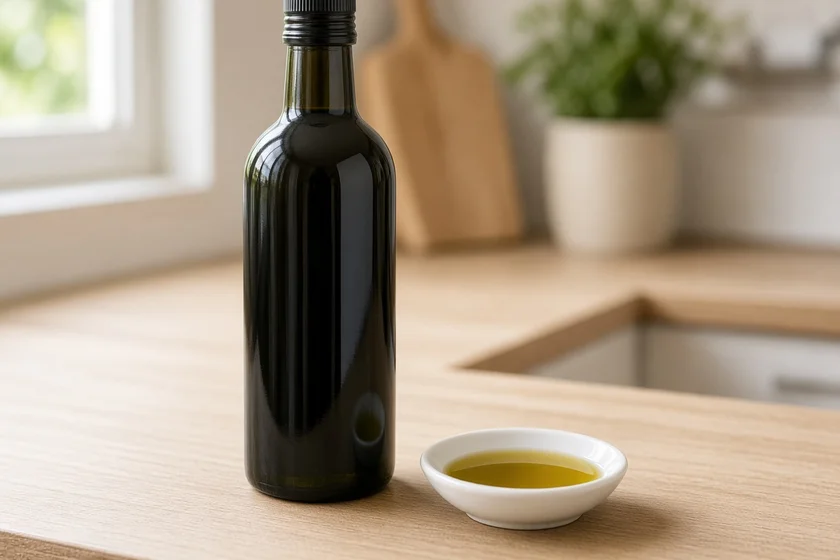
You've heard that olive oil is one of the healthier fats, so you drizzle a little on salad or toast instead of butter. Then the familiar burn shows up. Was the oil the problem, or was it the rest of the meal? If you're asking, "Is olive oil good for acid reflux?", you're not alone.
Olive oil sits in a gray area for people with GERD. It's rich in unsaturated fat and a staple of the Mediterranean diet, which many people associate with better long-term health. At the same time, dietary fat is one of the most common reflux concerns, and olive oil is still a high-fat food.
This guide covers six practical facts. You'll learn how olive oil compares with butter, whether extra virgin olive oil is any different for reflux, and why personal tolerance matters more than a fixed serving rule.
Fact Set 1: Fat Content and Reflux Risk
Olive oil's reputation comes from its fat profile, not from being low in fat. Understanding that difference is the first step if you're deciding whether olive oil is good for GERD in your own kitchen.
Fact 1: Olive Oil Is Still a High-Fat Food
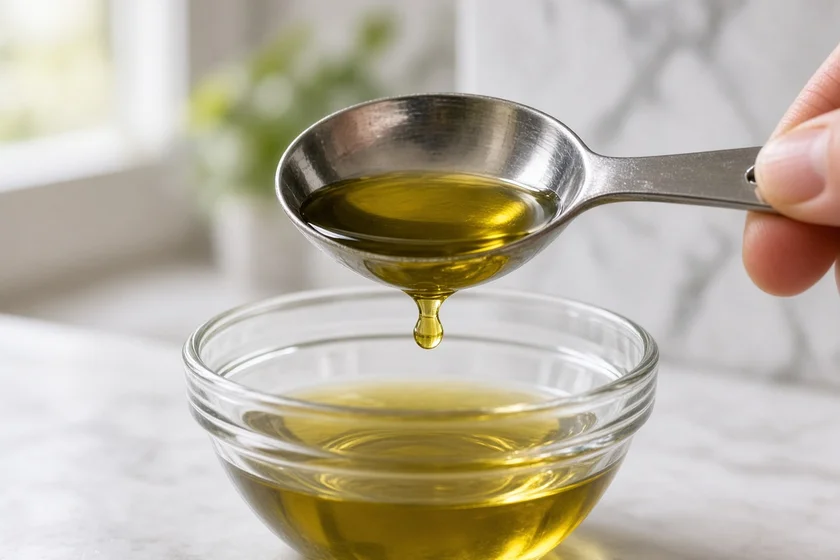
According to USDA FoodData Central, one tablespoon of olive oil (about 13.5 grams) has about 119 calories and about 13.5 grams of fat. Almost all of that fat is unsaturated, and a large share is monounsaturated. Heart-health groups such as the American Heart Association often prefer unsaturated fats over saturated fats for cardiovascular reasons.
For reflux, the amount of fat still matters. The NIDDK lists high-fat foods among foods commonly linked to GERD symptoms. Clinical evidence on dietary fat and GERD is mixed and often equivocal, and proposed mechanisms such as slower stomach emptying are not universal effects in every person. Responses vary widely.
So, is olive oil okay for acid reflux? For many people, a personally tolerated amount is fine. A large pour, especially on top of other fatty foods, may not be.
Fact 2: Extra Virgin Olive Oil Is About Processing Standards, Not Lower Fat
Is extra virgin olive oil good for GERD? Extra virgin olive oil (EVOO) is a virgin grade made only through pressing or similar physical extraction, without chemical refining, and it must meet quality standards for acidity and sensory traits. It often keeps more of the olive's natural phenolic compounds, though those amounts vary with variety, harvest, and handling. That stronger flavor is why cooks often prefer it for dressings and finishing.
What many stores label simply as "olive oil" is typically refined olive oil mixed with some virgin olive oil. In terms of fat grams per tablespoon, EVOO is still a high-fat oil, similar to other olive oils. Phenolic compounds have been studied for general inflammation-related questions in labs and animals, but that work does not show that EVOO treats GERD in people. Think of EVOO as a quality choice for taste and cooking standards, not as a reflux remedy.
Fact Set 2: How Olive Oil Compares and How Much to Use
People often swap olive oil for butter hoping it will sit better. Others wonder how much is safe. These next two facts put those questions in practical terms.
Fact 3: Olive Oil vs Butter Is Mostly a Fat-Quality Swap for Heart Health
Olive oil vs butter for acid reflux is a common comparison. Butter carries more saturated fat per spoonful, while olive oil is richer in unsaturated fat. For cardiovascular health, that swap often makes sense. For GERD, both are concentrated fats, and the unsaturated-versus-saturated advantage is a general heart-health point, not a proven GERD benefit.
Here's a simple side-by-side based on USDA FoodData Central records for one tablespoon-sized serving.
| Fat Source (about 1 Tbsp) | Approx. Calories | Approx. Total Fat | Fat Profile Notes |
|---|---|---|---|
| Olive oil (13.5 g) | About 119 | About 13.5 g | Nearly all fat, mostly unsaturated |
| Butter (14.2 g) | About 102 | About 11.5 g | Contains water, higher saturated fat |
| 80%-fat tub margarine (example, 14 g) | About 102 | About 11.2 g | Fat level varies by product |
Table: USDA FoodData Central reference values. Olive oil FDC 171413, butter FDC 173410, 80%-fat margarine FDC 171432, and a reduced-fat tub margarine example FDC 2710160. Brands and formulas vary.
Butter has a little less fat per spoonful mainly because it contains water, while olive oil is nearly all fat and more concentrated. Some tub margarines are reduced-fat products near the 60% fat range. One USDA example lists about 75 calories and about 8.4 grams of fat per 14 grams, and labels vary by brand. If high-fat meals trigger your heartburn, swapping butter for olive oil may help your overall diet without solving reflux on its own. Using less of either is often the more relevant change.
A simple kitchen example helps. Finish roasted carrots with a light drizzle of olive oil, instead of melting a large pat of butter into a pan of vegetables. You still get flavor, and you keep the total fat lower than a heavy sauté.
Fact 4: There Is No Established GERD-Safe Serving of Olive Oil
How much olive oil is safe with acid reflux? There is no established GERD-safe serving size. What matters is the amount you personally tolerate, in the context of the whole meal.
Can olive oil cause heartburn? It can for some people, especially in larger amounts or when it's part of a heavy meal. A food and symptom diary can help you spot repeated patterns with portion size, cooking method, and timing. A diary is not a diagnosis, and there is no fixed number of days that proves anything on its own.
Fried foods can take on a substantial amount of added fat, though absorption varies with the food, temperature, and method. Frying is not a proven universal GERD trigger, and fried foods are not an automatic problem for everyone. Oven roasting or air frying can help you manage how much oil you add. Those methods are cooking choices, not GERD treatments.
Fact Set 3: Claims, Cooking Style, and Timing
Online tips sometimes say olive oil coats the throat or "heals" reflux. Cooking style and meal timing usually matter more than those claims. These last two facts keep expectations realistic.
Fact 5: Olive Oil Is Not a Proven Heartburn Treatment
Does olive oil help with acid reflux? Some people say a spoonful soothes them, but there is no strong clinical evidence that olive oil treats GERD or stops heartburn. GERD guidelines from the American College of Gastroenterology (ACG) focus on proven therapies, lifestyle steps, and avoiding personal triggers. They do not list olive oil as a treatment.
That does not make olive oil a "bad" food. It can still fit a balanced diet if you tolerate it. Just do not count on it as medicine. Swallowing oil on an empty stomach is a tip that circulates online, yet it has no solid backing as a GERD therapy and may upset some people. If your symptoms are frequent or disruptive, talk with your doctor about options that have clearer evidence.
Fact 6: How and When You Use It Often Matter More Than the Brand
A light drizzle on salad or steamed vegetables is a different meal from bread dipped in a large pool of oil, or foods cooked until they soak it up. Keep portions within what you tolerate, and avoid stacking olive oil with other rich foods in the same sitting if that pattern bothers you.
Timing also counts. The ACG suggests, as a conditional recommendation based on limited evidence, avoiding meals within about two to three hours of bedtime. Separately, the NIDDK notes that if you have GERD symptoms at night or when lying down, eating meals at least three hours before you lie down or go to bed may improve symptoms. What matters most is that gap relative to lying down, not whether the meal is breakfast or dinner. There is no separate evidence that olive oil itself is uniquely problematic at night beyond its fat load and your own triggers.
If you want a gentler plate, roast vegetables with a light amount of olive oil, add a lean protein, and skip the extra dunking oil at the table. Writing down the amount, how you cooked with it, what else you ate, and how you felt later can show repeated patterns more clearly than guesswork.

When to See a Doctor
Diet tweaks can help with mild reflux, but some symptoms need medical attention.
Book a routine visit with your doctor if you have:
- Persistent heartburn that disrupts sleep or daily life, which warrants medical evaluation
- An ongoing need for nonprescription heartburn medicine
- Symptoms that keep coming back even after diet changes
- A sour taste, hoarse voice, or cough that won't go away, which can have several causes besides GERD
Twice-weekly heartburn is sometimes used as a practical prompt to seek care, but it is not a diagnostic threshold on its own.
Seek prompt medical care for warning symptoms such as:
- Difficulty swallowing or a sensation that food is getting stuck
- Pain when swallowing
- Weight loss you can't explain
- Persistent nausea or vomiting
Long-standing GERD can be associated with problems such as inflammation or narrowing of the esophagus, or a condition called Barrett's esophagus. Those complications are not inevitable. A doctor can confirm what's going on and talk through treatment options with you.
Emergency: Call 911 (or your local emergency number) right away if you have chest pain or pressure, especially with shortness of breath, sweating, or pain spreading to your arm, jaw, or back. Heart attack symptoms can feel like heartburn, so never assume it's just reflux. Also get emergency care if you vomit blood, pass black or tarry stools, or can't swallow liquids.
Conclusion
So, is olive oil good for acid reflux? For many people, a personally tolerated amount can fit into a reflux-aware diet. It's rich in unsaturated fat and often a better everyday choice than butter for general heart health. It is still a high-fat food, though, and larger amounts or heavily oiled preparations may trigger symptoms in some people.
Use amounts you tolerate, keep the rest of the meal in mind, and leave enough time before lying down if nighttime symptoms are an issue. Let your own repeated patterns guide you.
For a wider look at food choices and heartburn, read our guide, Is Cheese Good for Acid Reflux?

Have an olive oil habit that sits well with your reflux? Share it in the comments to help other readers.
Sources
- Eating, Diet, and Nutrition for GER and GERD (NIDDK)
- ACG Clinical Guideline for the Diagnosis and Management of Gastroesophageal Reflux Disease (PMC)
- Olive Oils: Designations and Definitions (International Olive Council)
- Fats in Foods (American Heart Association)
- USDA FoodData Central nutrient records used in the table: olive oil 171413, butter 173410, 80%-fat margarine 171432, tub margarine example 2710160
- Gastroesophageal Reflux Disease (MedlinePlus)
FAQ
These quick answers cover the questions people ask most often about olive oil and reflux.
1. Is olive oil good for GERD?
It can be in amounts you tolerate. Olive oil is high in unsaturated fat, but it is still a high-fat food, so large servings may trigger symptoms for some people.
2. Does olive oil help with acid reflux?
There is no strong evidence that olive oil treats GERD or stops heartburn. It may fit a balanced diet, but it is not a proven reflux therapy.
3. Can olive oil cause heartburn?
Yes, for some people. Larger amounts, meals high in added fat, and eating close to lying down are more likely to cause trouble in people who are sensitive to those patterns.
4. Is extra virgin olive oil good for GERD?
EVOO is mechanically extracted without chemical refining and must meet quality standards, but it has a similar fat content to other olive oils. Choose it for taste and grade if you like it, not as a GERD treatment.
5. How much olive oil is safe with acid reflux?
There is no established GERD-safe serving. Use personally tolerated portions and watch for repeated symptom patterns with the rest of the meal and timing.
About the author
Healthy Eats Guide Team
Editorial Team
The Healthy Eats Guide editorial team researches and writes practical health and wellness content focused on clarity, sourcing, and everyday usefulness.
Related blogs
Is Avocado Good for GERD: 6 Proven Facts
Is avocado good for GERD? See how fat, fiber, portion size, and guacamole add-ins may affect reflux, and learn how to enjoy avocado with fewer flare-ups.
11 min read
Is Yogurt Good for Acid Reflux: 7 Proven Facts
Is yogurt good for acid reflux? Learn how fat, Greek styles, live cultures, and toppings may affect yogurt for GERD, and find the bowl that suits you.
11 min read
Is Cottage Cheese Good for GERD: 6 Essential Facts
Is cottage cheese good for GERD? Learn how fat, sodium, acidity, portions, and pairings may affect reflux, and how to test your own tolerance.
11 min read
Newsletter
Get practical health guides in your inbox
Occasional updates with clear nutrition, habits, and wellness reading — no spam, unsubscribe anytime.