
Is Pineapple Good for Acid Reflux: 6 Essential Facts
Is pineapple good for acid reflux? Compare its pH with other fruits, see what bromelain can't do, and learn how juice, canned pineapple, and portions differ.
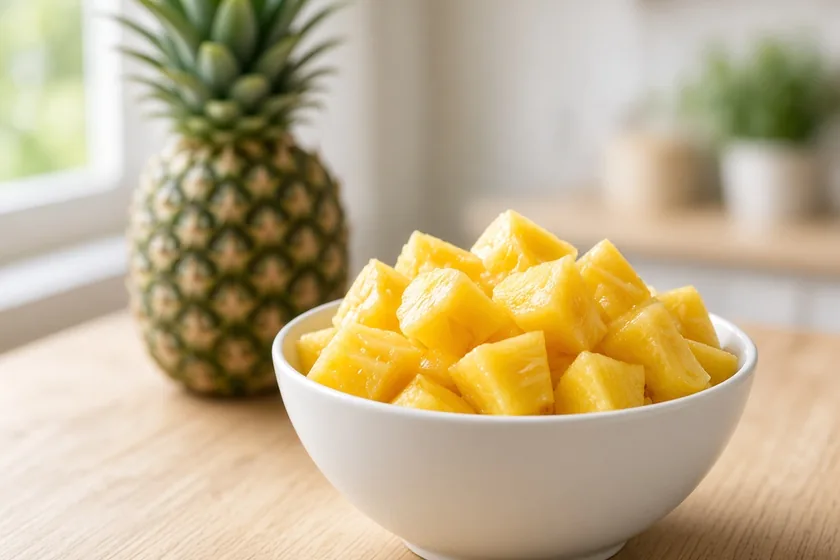
Introduction

Is pineapple good for acid reflux? Pineapple is sweet and almost fat-free, but it's also quite acidic. On an archived FDA reference list, its pH range overlaps with oranges, though similar acidity doesn't mean the same reflux risk.
Pineapple isn't a reflux remedy, and it may trigger symptoms in people sensitive to acidic foods. If you tolerate it, try a small portion of fresh or juice-packed pineapple with a meal, well before bedtime.
And bromelain, the enzyme in pineapple, hasn't been shown to help heartburn.
This guide covers six facts: pineapple's acidity, why tolerance varies, what bromelain can and can't do, pineapple's nutrition, how juice and canned fruit compare, and how to test your own response.
Fact Set 1: How Acidic Is Pineapple?
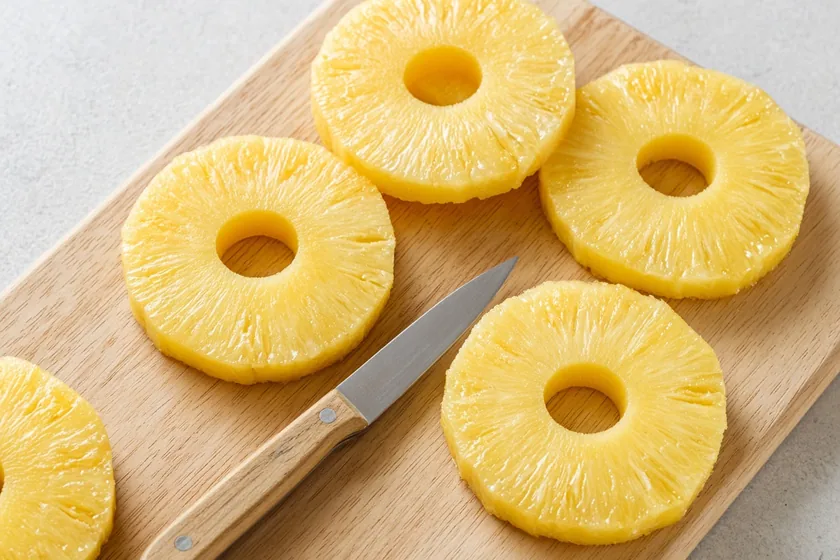
Acidity is the first thing to check, and pineapple has plenty of it.
Fact 1: Pineapple Is One of the More Acidic Fruits
Is pineapple too acidic for acid reflux? It can be. An archived FDA list of approximate food pH values puts fresh pineapple at about 3.20 to 4.00. That's close to grapefruit and Florida oranges, and far more acidic than bananas or watermelon.
| Food (FDA approximate pH list) | Approx. pH | How it compares with pineapple |
|---|---|---|
| Lemon juice | 2.00 to 2.60 | Much more acidic |
| Grapefruit | 3.00 to 3.75 | Similar or slightly more acidic |
| Pineapple, fresh | 3.20 to 4.00 | Reference |
| Pineapple juice, canned | 3.30 to 3.60 | Similar range |
| Pineapple, canned | 3.35 to 4.10 | About the same |
| Mangoes, ripe | 3.40 to 4.80 | Similar or less acidic |
| Oranges, Florida | 3.69 to 4.34 | Similar or slightly less acidic |
| Tomatoes | 4.30 to 4.90 | Less acidic |
| Bananas | 4.50 to 5.20 | Much less acidic |
| Watermelon | 5.18 to 5.60 | Much less acidic |
Table: Approximate pH ranges from the FDA's archived list of food pH values. Lower numbers mean more acidic. Actual values vary with variety, ripeness, and processing.
The pH scale is logarithmic, so pineapple at pH 3.5 has about ten times the hydrogen-ion activity of a banana at pH 4.5. That's chemistry, not a symptom forecast.
Johns Hopkins Medicine says foods with a low pH are more likely to cause reflux. Cleveland Clinic adds that acidic foods can irritate the esophagus. An acidic food may sting an already sore esophagus without making more stomach contents back up.
Fact 2: Citric Acid Explains the Bite, but pH Can't Predict Your Symptoms
Pineapple's tangy taste comes mostly from citric acid, the same acid that makes lemons sour. In a study of 26 pineapple genotypes grown in China, citric acid was the principal organic acid. Its level ranged from about 1.14 to 5.78 mg per gram of fruit, a roughly fivefold spread. So a very tart pineapple may bother you while a sweeter one doesn't.
Can pineapple cause heartburn? Yes, for some people, but pH can't tell you who. Fresh tomatoes generally have a higher pH than pineapple, yet they're commonly linked to GERD symptoms.
The NIDDK lists acidic foods, such as citrus fruits and tomatoes, among foods commonly linked to GERD symptoms. Pineapple isn't named. The 2022 ACG clinical guideline suggests avoiding your own trigger foods, a conditional recommendation based on low-level evidence. That's why personal testing matters more than any chart.
Fact Set 2: Bromelain, Vitamin C, and What Pineapple Can't Do
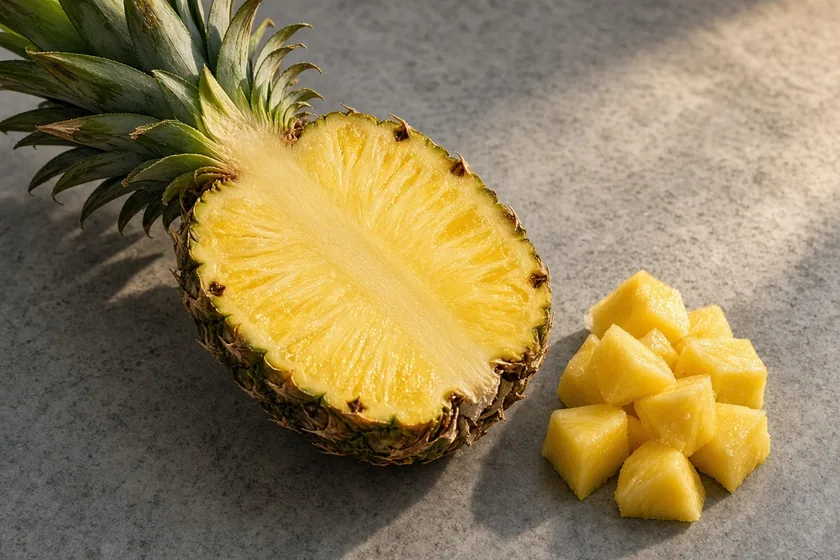
Pineapple gets credit online for "helping digestion." Here's what the evidence says.
Fact 3: Bromelain Doesn't Treat Acid Reflux
Does bromelain help acid reflux? There's no good evidence that it does. Bromelain is a group of enzymes in the pineapple stem and fruit that break down proteins. The National Center for Complementary and Integrative Health (NCCIH) says only a small number of studies have tested oral bromelain, mainly for sinusitis and for pain and swelling after wisdom tooth removal.
A 2023 systematic review and meta-analysis of bromelain included 54 articles in its review and 39 in its meta-analysis. It found possible benefits for sinusitis and a small reduction in pain. It didn't report evidence of benefit for GERD or heartburn.
Does pineapple help heartburn? There's no good clinical evidence that eating it does. Breaking down protein isn't the same as calming acid that's backing up into your esophagus. Supplement studies also don't apply directly to eating the fruit.
Thinking about bromelain supplements? Keep these points in mind:
- Side effects: NCCIH says the most common reported problems are stomach upset and diarrhea. The meta-analysis also listed flatulence and nausea.
- Medicines: NCCIH advises talking with your health care provider before using bromelain if you take any medicine.
Fact 4: Pineapple Is Low in Fat and High in Vitamin C, but That Isn't a Treatment
According to USDA FoodData Central, one cup of raw pineapple chunks (165 grams) has about 83 calories, 0.2 grams of fat, 2.3 grams of fiber, and 16 grams of natural sugar. It also provides about 79 milligrams of vitamin C. About 86% of the fruit's weight is water.
Pineapple is naturally low in fat, unlike pineapple pizza or upside-down cake. That matters because Johns Hopkins and Cleveland Clinic both name high-fat and fried foods as common heartburn triggers.
Vitamin C is a useful nutrient, but it isn't a reflux treatment. Some bottled juices add extra, so check the label. If fatty meals are your main trigger, pineapple may be easier than rich desserts. If acidic foods are your trigger, it may not be.
Fact Set 3: Juice, Canned Pineapple, and Portions
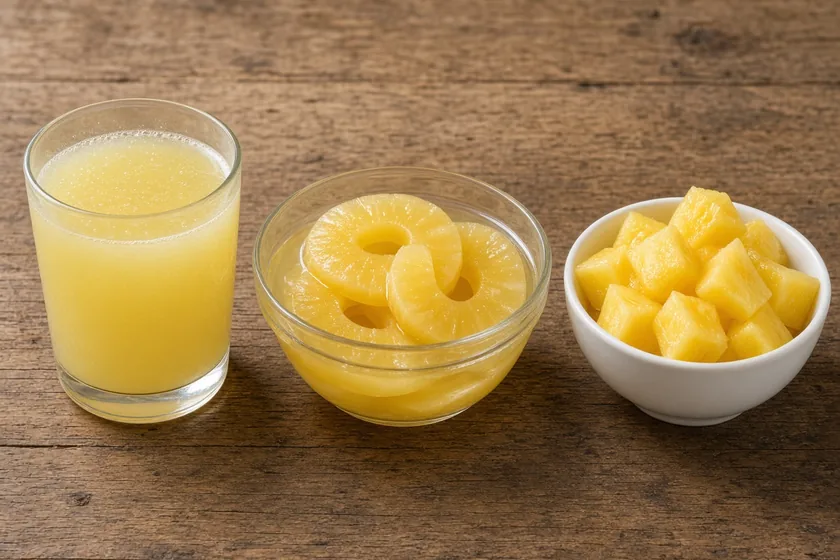
How you eat pineapple can matter almost as much as whether you eat it at all.
Fact 5: Pineapple Juice and Canned Pineapple Aren't the Same as Fresh
Is pineapple juice good for acid reflux? It isn't a proven remedy, and tolerance varies. The FDA list puts canned pineapple juice at about 3.30 to 3.60, so it's just as acidic. One cup (250 grams) of unsweetened juice has about 25 grams of sugar and almost no fiber, according to USDA data.
Is canned pineapple OK for GERD? Its pH range, about 3.35 to 4.10 on the FDA list, overlaps with fresh. The packing liquid mainly changes sugar and calories, not acidity.
| Pineapple form (per 100 g) | Calories | Water | Fat | Fiber | Total sugars | Vitamin C |
|---|---|---|---|---|---|---|
| Fresh, raw | About 50 | About 86 g | About 0.1 g | About 1.4 g | About 9.9 g | About 48 mg |
| Canned, water-packed | About 32 | About 91 g | About 0.1 g | About 0.8 g | About 7.5 g | About 8 mg |
| Canned, juice-packed | About 60 | About 84 g | About 0.1 g | About 0.8 g | About 14.5 g | About 10 mg |
| Canned, heavy syrup | About 78 | About 79 g | About 0.1 g | About 0.8 g | About 16.9 g | About 7 mg |
| Juice, unsweetened (no added vitamin C) | About 53 | About 86 g | About 0.1 g | About 0.2 g | About 10.0 g | About 10 mg |
Table: Approximate USDA FoodData Central values: raw (FDC 169124), water-packed (FDC 169125), juice-packed (FDC 169126), heavy syrup (FDC 169944), and unsweetened juice (FDC 169947). Canned values include the packing liquid. Brands vary, so check the label.
A few practical takeaways:
- Canned pineapple has little active bromelain. The heat of canning breaks down the enzyme. A University of Georgia Extension lesson uses this to show why canned pineapple lets gelatin set while fresh doesn't. It's still just as acidic.
- Water-packed cans are the best pick if you want to limit sugar. Juice-packed and heavy-syrup cans have more, so compare labels.
- Juice works best in small amounts. The Dietary Guidelines for Americans, 2025-2030 advise drinking 100% fruit juice in limited portions or diluting it with water.
Fact 6: Start Small, Pair It With a Meal, and Track Your Symptoms
How much pineapple can you eat with acid reflux? There's no official limit for GERD. As a practical starting point, try about half a cup of fresh or juice-packed chunks. That's an example, not a medical serving size. The 2025-2030 Dietary Guidelines suggest 2 fruit servings a day for a 2,000-calorie pattern, which leaves room for other fruits too.
These habits help:
- Start small, with a meal. Try a few chunks alongside a meal, not a big bowl on its own.
- Mind the clock. The NIDDK says eating meals at least 3 hours before lying down may improve nighttime symptoms. The ACG suggests avoiding meals within 2 to 3 hours of bedtime.
- Keep portions modest. Johns Hopkins recommends small, frequent meals instead of big, heavy ones.
- Pair it with gentler foods. Bananas and melons have a higher pH and may sit better for some people, as may low-fat yogurt.
- Skip extra triggers. Pineapple with citrus juice, mint, spicy salsa, or a fatty pizza stacks several possible triggers at once.
A food diary ties it together. Note the form, amount, time, and symptoms for a week or two. If plain pineapple sits fine but pineapple salsa doesn't, the chili or onion may be the problem.
When to See a Doctor

Johns Hopkins Medicine advises seeing a doctor if you have heartburn two or more times a week and diet changes haven't helped. MedlinePlus notes that GERD can also cause a dry cough, hoarseness, or trouble swallowing.
The NIDDK lists symptoms that need prompt medical attention:
- Problems swallowing or pain while swallowing
- Persistent vomiting or loss of appetite
- Blood in the vomit, or vomit that looks like coffee grounds
- Blood in the stool, or stool that looks black and tarry
- Weight loss you cannot explain
Emergency: Call 911 (or your local emergency number) right away if you have chest pain, especially with shortness of breath or pain in your jaw or arm. The American Heart Association notes that heartburn and heart problems can feel alike, so never assume chest pain is just reflux.
Conclusion
So, is pineapple good for acid reflux? Here are the six facts in brief. Pineapple is more acidic than many fruits, mostly from citric acid, but acidity alone can't predict your symptoms. Bromelain has no proven benefit for heartburn. Pineapple is low in fat, but its vitamin C isn't a treatment, and juice and canned fruit stay acidic. And a small, well-timed portion plus a food diary will tell you more than any chart.
Is pineapple good for heartburn or GERD specifically? It's not a remedy and may bother people sensitive to acidic foods, but it isn't harmful for everyone. If you tolerate it, a modest serving with a meal can still fit a reflux-friendly diet.
Compare other fruits in Are Bananas Good for Acid Reflux, Is Watermelon Good for Acid Reflux, Is Mango Good for Acid Reflux, and Are Blueberries Good for GERD. For meal timing and sleep position, see our GERD relief guide.
Have you noticed whether fresh pineapple, canned pineapple, or pineapple juice affects your reflux differently? Share your experience in the comments.
Sources
- Eating, Diet, and Nutrition for GER and GERD (NIDDK)
- Symptoms and Causes of GER and GERD (NIDDK)
- GERD Diet: Foods That Help with Acid Reflux (Johns Hopkins Medicine)
- GERD Diet: Foods To Eat and Avoid (Cleveland Clinic)
- ACG Clinical Guideline for the Diagnosis and Management of Gastroesophageal Reflux Disease (American Journal of Gastroenterology, 2022)
- Approximate pH of Foods and Food Products (U.S. FDA, archived)
- Physico-Chemical Properties, Antioxidant Activity and Mineral Contents of Pineapple Genotypes Grown in China (Molecules, 2014)
- Bromelain: Usefulness and Safety (NCCIH)
- Efficacy and Safety of Bromelain: A Systematic Review and Meta-Analysis (Nutrition and Health, 2023)
- USDA FoodData Central nutrient records used in this article: pineapple, raw 169124, canned, water pack 169125, canned, juice pack 169126, canned, heavy syrup pack 169944, pineapple juice, unsweetened 169947
- Tropical Fruit Gelatin Lab (University of Georgia Extension)
- Dietary Guidelines for Americans, 2025-2030 (USDA and HHS)
- Gastroesophageal Reflux Disease (MedlinePlus)
- Heartburn or Heart Attack? (American Heart Association)
FAQ
1. Is pineapple good for GERD?
It isn't a GERD remedy, and it may trigger symptoms in people sensitive to acidic foods. Its pH is about 3.20 to 4.00, close to oranges. If you tolerate it, try a small portion with a meal, well before bed.
2. Is pineapple juice good for acid reflux?
It isn't a proven remedy, and its acidity may bother some people. Canned pineapple juice has a pH of about 3.30 to 3.60, almost no fiber, and about 25 grams of sugar per cup. If you tolerate it, keep the glass small or dilute it with water.
3. Does bromelain help acid reflux?
There's no good evidence that it does. Oral bromelain research has focused on sinusitis and wisdom tooth surgery, not GERD. Supplements can cause stomach upset and diarrhea, so talk with your doctor first if you take any medicine.
4. Is canned pineapple OK for GERD?
Canned pineapple is about as acidic as fresh, with a pH of roughly 3.35 to 4.10. Water-packed cans have the least sugar. Canning breaks down bromelain but doesn't lower the fruit's acidity.
5. Can pineapple cause heartburn?
Yes, for some people, but its pH alone can't predict who will react. Large portions or meals with other personal triggers, like spicy or fatty foods, may also play a part. A food diary helps show whether pineapple is really your trigger.
About the author

Health Researcher and Writer
Haider Nadeem is a health researcher and the writer behind Healthy Eats Guide. He writes about health problems he faces or sees people around him face, and turns careful research into practical guides. Articles are researched and drafted with AI assistance, then fact-checked and edited by Haider using cited sources such as USDA, NIH, and peer-reviewed research.
Related blogs

GERD Relief: 7 Proven Tips to Manage Flare-Ups
GERD relief that works: 7 proven tips covering meal timing, trigger foods, weight, sleep position, medicines and surgery, plus warning signs to act on.
9 min read
Is Mango Good for Acid Reflux: 5 Essential Facts
Is mango good for acid reflux? Learn how ripe mango's pH compares with other fruits, plus how ripeness, portions, dried mango, juice, and timing may affect GERD.
12 min read
Is Watermelon Good for Acid Reflux: 5 Essential Facts
Is watermelon good for acid reflux? Learn how its acidity, water content, portion size, juice, and late-night timing may affect GERD, plus how other melons compare.
12 min read
Newsletter
Get practical nutrition guides in your inbox
Clear food-by-food advice and diet tips for everyday eating — no spam, unsubscribe anytime.