
Is Almond Flour Low FODMAP: 7 Proven Facts
Is almond flour low FODMAP? Learn the tested serving size, why GOS limits portions, and how to bake with almond flour without triggering IBS symptoms.
By Healthy Eats Guide Team
Published
12 min read

Introduction
You've finally found a muffin recipe that skips wheat, and the first ingredient is two cups of almond flour. If you live with irritable bowel syndrome (IBS), a quiet question follows: Is almond flour low FODMAP, or will this muffin cost you an afternoon of bloating?
The honest answer is "it depends on how much you eat." Almond flour has a measured almond flour FODMAP content that stays low in small portions and rises as the serving grows. That one detail explains why some people bake with it happily while others swear it wrecks their gut.
This guide covers seven facts from laboratory testing and clinical guidance. You'll learn where the limit sits, what actually changes as portions grow, how to plan a whole recipe around that number, and when your symptoms deserve a doctor's attention rather than another ingredient swap.
Fact Set 1: What Almond Flour Is and How FODMAPs Show Up
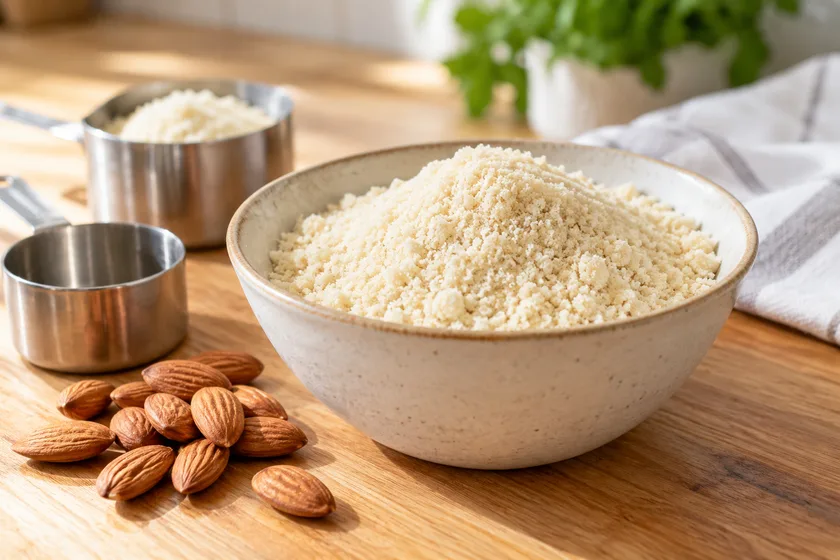
Almond flour looks simple. It is just almonds ground into a fine powder, typically after the skins are removed. Almond meal is typically the coarser cousin made from whole almonds with skins on. The two are close relatives, but you shouldn't assume they always share identical FODMAP ratings or serving sizes. For your gut, what matters isn't the texture but the carbohydrates the nut brings with it.
Fact 1: Almond Flour Contains FODMAPs, Just Not Many in Small Amounts
Does almond flour contain FODMAPs? Yes. Almonds contain galacto-oligosaccharides (GOS), an important FODMAP and a fermentable carbohydrate most people cannot fully digest. In someone with IBS, those undigested carbs reach the colon, and the bacteria living there break them down, releasing gas as a byproduct.
That doesn't make almond flour off limits. A small amount of GOS passes without trouble for most people, and it only becomes a problem as the dose rises. Think of it like a dimmer switch, not an on/off button.
Fact 2: The Tested Low FODMAP Serving Is About a Quarter Cup
Monash University, whose team developed the low FODMAP diet, lists almond meal at 1/4 cup (24 grams) as a low FODMAP serving in its published guidance. Larger portions contain more FODMAPs, so they may be more likely to cause symptoms. The app is the best place to find the exact point where almond meal becomes moderate or high. Whole almonds follow a similar idea: Monash lists 10 almonds with skin (12 grams) as low FODMAP, and bigger handfuls may push the load higher.
So how much almond flour is low in FODMAPs? The documented reference point is about a quarter cup (24 grams) of almond meal per sitting. Monash updates its ratings as foods are retested, so check the current figure in the official Monash FODMAP app before you plan around it, especially for almond flour, which may be listed separately.
Want a deeper dive into what almond flour is and how FODMAPs show up in it? A dedicated guide is coming soon.
Fact Set 2: Why Serving Size Changes Everything
Most FODMAP confusion comes from treating foods as simply "safe" or "unsafe." The diet was never designed that way. Each food has a FODMAP threshold, the point at which fermentable carbs are likely to trigger symptoms, and portion size pushes you over it. Almond flour is one of the clearest examples of that principle.
Fact 3: Portion Size Matters More Than the Ingredient Itself
Why does serving size matter with almond flour? Because FODMAP content, including GOS, rises with the amount you eat. A quarter cup brings a small GOS load your gut can usually handle. Double it, and you've roughly doubled the FODMAP load, which is often enough to cause gas, cramping, or loose stools in sensitive people.
Here's a common mistake. Someone eats a single almond flour pancake with no trouble, then has three at brunch and assumes almond flour "stopped working." Nothing changed about the flour. The portion did.
Fact 4: FODMAPs Stack Across a Meal
Your gut doesn't count foods one at a time. It responds to the total FODMAP load of everything eaten in a short window. A modest serving of almond flour plus a drizzle of honey, a handful of cashews, and a splash of regular milk can add up to a high-FODMAP plate, even if each piece looked fine on its own.
This is called FODMAP stacking. Spacing meals and snacks apart can help. Monash notes that a gap of about two to three hours may be enough for many people. This isn't a strict rule, and it matters most if you still have symptoms while eating low FODMAP servings. Keeping other high-FODMAP ingredients off the same plate can also help the almond flour portion stay comfortable.
Want a deeper dive into serving size and FODMAP thresholds? A dedicated guide is coming soon.
Fact Set 3: Using Almond Flour in Low FODMAP Baking
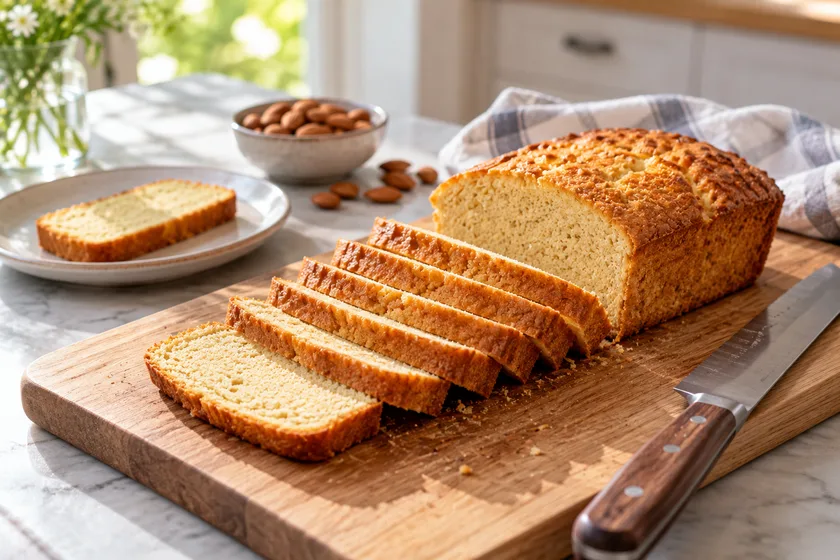
Almond flour earns its spot in low FODMAP baking because it adds moisture, richness, and a tender crumb that many rice-based blends lack. It is also naturally gluten-free, which appeals to people who avoid wheat. Still, gluten-free and low FODMAP aren't the same thing, and good results come from matching the recipe to the tested serving.
Fact 5: Divide the Recipe, Then Check the Slice
Can you eat almond flour on a low FODMAP diet? You can, as long as each portion you eat contains about a quarter cup or less. The math is easy: divide the total almond flour in a recipe by the number of servings. A loaf that uses 2 cups of almond flour needs to be cut into at least 8 equal slices to keep the almond flour in each one near the tested quarter-cup serving. That math covers the almond flour only. Other ingredients in the recipe, such as sweeteners, dairy, or dried fruit, add their own FODMAPs and need checking too.
Bold rule of thumb: count servings before you preheat the oven. If a recipe makes six muffins with two cups of almond flour, each muffin carries about a third of a cup. That's beyond the tested low serving, so either make smaller muffins or eat half of one.
Fact 6: Blending Flours Stretches the Almond Flour Further
Mixing almond flour with other low FODMAP flours lets you keep the flavor while lowering the dose. Rice, buckwheat, sorghum, and quinoa flours, plus starches such as tapioca or potato, are often useful low FODMAP alternatives at appropriate portions. Check each one in the Monash app, since serving sizes differ. Also read labels on gluten-free blends and mixes, because some contain high-FODMAP additions such as inulin, chickpea flour, or apple concentrate. Swapping half the almond flour for a suitable rice-based blend often keeps cakes moist while cutting the almond portion per slice.
If you're comparing what flour is best for a low FODMAP diet, the table below gives a starting point based on published Monash-derived data. Always confirm portions in the current app, since ratings are updated and servings vary by ingredient.
| Flour | Typical Low FODMAP Status | Main FODMAP to Watch |
|---|---|---|
| Almond meal | Low at 1/4 cup (24 g), larger portions may be higher | GOS is an important one |
| Rice flour | Low at appropriate portions, check the app | None significant at tested servings |
| Buckwheat flour | Low at appropriate portions, check the app | None significant at tested servings |
| Sorghum flour | Low at appropriate portions, check the app | None significant at tested servings |
| Wheat flour | High at typical portions | Fructans |
| Coconut flour | Check the Monash app for a tested serving | Confirm in the app |
Table 1: How common baking flours compare on a low FODMAP diet.

Fact 7: Almond Flour Brings Nutrition, but It Is Calorie Dense
Almond flour supplies protein, fiber, vitamin E, and magnesium, along with mostly unsaturated fat. According to USDA nutrient data, a quarter cup (about 28 grams) provides roughly 160 to 165 calories, about 6 grams of protein, 3 grams of fiber, 8 milligrams of vitamin E, and 76 milligrams of magnesium. Note that this 28-gram nutrition serving is a little larger than the 24-gram Monash low FODMAP serving. Either way, it carries noticeably more calories than the same volume of wheat flour. That density is part of why baked goods made with it feel so satisfying.
The flip side is that it's easy to overeat. Nut flours also raise concerns for anyone with a tree nut allergy, which is separate from FODMAPs and can be serious. If you react to almonds in any form, skip almond flour completely.
Want a deeper dive into low FODMAP baking with almond flour? A dedicated guide is coming soon.
When to See a Doctor
Gut symptoms are common, but some patterns need medical attention before you start changing your diet. Talk with a doctor if you have:
- Ongoing bloating, belly pain, or changes in bowel habits lasting more than a few weeks
- Unintended weight loss
- Blood in your stool or black stools
- Symptoms that wake you up at night
- Close relatives who have had celiac disease, colon cancer, or inflammatory bowel disease
- New bowel symptoms at age 45 or older (the ACG guideline uses 45, while some guidance uses 50)
Symptoms like these shouldn't simply be blamed on IBS without an evaluation. A doctor can rule out conditions such as celiac disease or inflammatory bowel disease before you begin a restrictive diet. It's also wise to start the low FODMAP diet with support from a dietitian rather than on your own.
Emergency: Call 911 (or your local emergency number) if you have severe abdominal pain, vomiting blood, heavy rectal bleeding, or signs of a severe allergic reaction after eating almonds, such as swelling of the lips or throat, trouble breathing, or fainting.
Conclusion
So, is almond flour low FODMAP? In a quarter-cup portion (24 grams of almond meal), yes. Above that, the FODMAP load rises, and symptoms become more likely. Knowing the almond flour serving size, dividing recipes into enough portions, and blending it with other low FODMAP flours lets you keep almond flour in your kitchen without guessing.
Focus on the whole meal, not just one ingredient, and check the latest ratings in the Monash app.
The low FODMAP diet is meant to be a short learning process, not a permanent restriction. Clinical guidance describes three phases: a brief, temporary elimination of high-FODMAP foods, a careful reintroduction of each FODMAP group, and then a personalized long-term diet. The elimination phase usually lasts only a few weeks, and staying in it too long can narrow your diet more than needed.
During reintroduction, you test GOS as one of the groups. If you tolerate it well, you may be able to increase your almond flour servings. If it turns out to be a trigger, you'll know to stick to about a quarter cup. A registered dietitian familiar with the diet can guide you through this process.

If constipation is part of your picture, our guide to how to relieve constipation offers more ideas, and our high-fiber breakfast foods list can help you plan mornings. People with reflux may also find our GERD relief tips useful alongside these changes.
Have you tried baking with almond flour on a low FODMAP plan? Share what worked for you in the comments.
Related guides coming soon:
- What almond flour is and how FODMAPs show up in it
- Why serving size changes the FODMAP load
- Using almond flour in low FODMAP baking
Sources
- Starting the FODMAP Diet (Monash University)
- Eating, Diet, and Nutrition for Irritable Bowel Syndrome (NIDDK)
- ACG Clinical Guideline: Management of Irritable Bowel Syndrome (PubMed)
- Irritable Bowel Syndrome (MedlinePlus)
- FoodData Central (USDA)
FAQ
These short answers cover the most common questions people ask when they first try almond flour on a low FODMAP plan.
1. Is almond flour low FODMAP?
Yes, in small portions. Monash lists almond meal at 1/4 cup (24 grams) as low FODMAP. Larger portions carry more FODMAPs, so check the Monash app for current ratings.
2. Is almond meal different from almond flour for FODMAPs?
They're closely related. Almond meal typically includes the skins and is coarser, while almond flour is typically blanched. Don't assume identical ratings, so check each in the Monash app.
3. Is almond milk low FODMAP too?
Almond milk is generally low FODMAP at a tested serving, though the serving size depends on the product. Check the Monash app and pick a brand without high-FODMAP additives like inulin.
4. Why do I react to almond flour even in small amounts?
Other ingredients in the meal may be adding FODMAPs, or you may be especially sensitive to GOS. A dietitian can help you test this during reintroduction.
About the author
Healthy Eats Guide Team
Editorial Team
The Healthy Eats Guide editorial team researches and writes practical health and wellness content focused on clarity, sourcing, and everyday usefulness.
Related blogs

Is Bone Broth Healthy: 8 Essential Benefits to Know
Is bone broth healthy? Learn 8 essential bone broth benefits, from fluids to protein, what science supports, and how to choose a low-sodium cup. Read more.
13 min read

Heart Failure Diet: 10 Essential Foods for Better Heart Health
A heart failure diet built on 10 essential low-sodium foods, plus label-reading tips, potassium and fluid cautions, a sample meal plan and warning signs to report.
16 min read

Best Diet for Arthritis: 7 Essential Foods for Joint Health
The best diet for arthritis: 7 joint-friendly foods, what to limit, how weight and inflammation affect joints, a sample meal plan and when to see a doctor.
9 min read
Newsletter
Get practical health guides in your inbox
Occasional updates with clear nutrition, habits, and wellness reading — no spam, unsubscribe anytime.