
Foods That Cause Gout Flare-Ups: 10 Essential Diet Tips
Learn which foods and drinks can trigger gout flare-ups, what to eat instead, how diet fits with urate-lowering medicine, and when gout pain needs a doctor.

Introduction

A gout attack can arrive overnight: a joint, often the big toe, becomes hot, swollen and so tender that even a bedsheet hurts. The cause is too much uric acid in the bloodstream, which can settle as sharp, needle-like crystals inside and around the joints. What you eat and drink is not the only cause, since genes, kidney function, body weight and some medicines matter a great deal, but diet can push uric acid higher and set off a flare.
This guide covers the ten foods and drinks most often linked to gout flare-ups, the swaps that help, how diet fits with medical treatment, and the warning signs that mean you should see a doctor.
Why This Topic Matters
Among adults, no type of inflammatory arthritis is more common than gout. It affects men more often than women, and risk in women rises after menopause. Repeated flares can damage joints over time and lead to tophi, which are lumps of urate crystals under the skin. High uric acid is also linked to kidney stones, and people with gout more often have high blood pressure, diabetes, kidney disease and heart disease.
Diet changes alone usually lower uric acid only modestly. For people with frequent flares, medicine is the main treatment. Still, smart food choices reduce triggers, support a healthy weight and improve heart health, so they are worth the effort.
Understanding Gout and Purine-Rich Foods
Purines are natural compounds in body cells and in many foods. Uric acid is the waste product left when the body breaks purines down. Normally the kidneys clear most of it in urine. If the body makes too much, or the kidneys remove too little, levels rise. Above about 6.8 mg/dL, uric acid can start to form crystals.
The Role of Uric Acid in Gout
Crystals can sit quietly in a joint for a long time. A flare starts when the immune system reacts to them, often after a sudden change in uric acid levels. Common triggers include a heavy meal rich in meat or seafood, a night of drinking, dehydration, illness, surgery, and starting or changing some medicines, such as certain diuretics.
How a Gout-Friendly Diet Helps
Not all purines act the same way. Purines from meat and seafood are linked to higher gout risk, while purine-rich vegetables such as spinach, mushrooms, peas and asparagus do not appear to raise risk. That is why current advice focuses on limiting animal purines, alcohol and added fructose rather than avoiding every purine-containing food.
Core Strategy: 10 Foods to Avoid for Gout
The American College of Rheumatology's 2020 gout guideline suggests limiting purine intake, alcohol and high-fructose corn syrup. Here are the main foods and drinks to cut back on.
1. Red Meat (Beef, Lamb, Pork)
Red meat is fairly high in purines, and large portions are tied to higher uric acid and more frequent attacks. You do not need to cut it out entirely. Limit servings to roughly a deck of cards in size and have it on fewer days of the week.
2. Shellfish (Shrimp, Lobster, Mussels)
Shrimp, lobster, crab, mussels and scallops carry a high purine load. Many people with gout notice flares after seafood-heavy meals. Save them for occasional, modest servings.
3. Organ Meats (Liver, Kidneys, etc.)
Liver, kidneys, sweetbreads and similar organ meats are among the richest purine sources of all. They are best avoided if you have gout.
4. Alcohol (Especially Beer)
Alcohol raises uric acid production and makes it harder for the kidneys to clear it. Beer is the worst offender because it also contains purines from yeast, and spirits are linked to higher risk too. Wine appears less harmful in studies, but any heavy drinking can trigger a flare. Avoid alcohol during an attack and keep intake low otherwise.
5. Sugary Beverages (Soda, Sweetened Drinks)
Fructose is unusual among sugars because breaking it down speeds up uric acid production. Regular soda, sweetened teas, energy drinks and other drinks with high-fructose corn syrup are linked to a higher gout risk. Large amounts of fruit juice add a lot of fructose as well. Whole fruit is a better choice.
6. Processed Meats (Sausages, Hot Dogs, Bacon)
Processed meats are made from red meat and often contain added organ meat, salt and fat. They also add to weight gain and heart risk. Choose them rarely.
7. Rethinking Dairy: Choose Low-Fat Options
Older advice often warned against dairy, but research shows the opposite for many people. Low-fat milk and yogurt are linked to a lower risk of gout in observational studies and may help the body clear uric acid. The evidence is not strong enough for the ACR guideline to make a formal dairy recommendation, and dairy does not replace medicine. Full-fat dairy has not been shown to raise gout risk directly, but it is high in saturated fat, so low-fat versions are the better everyday choice for heart health.
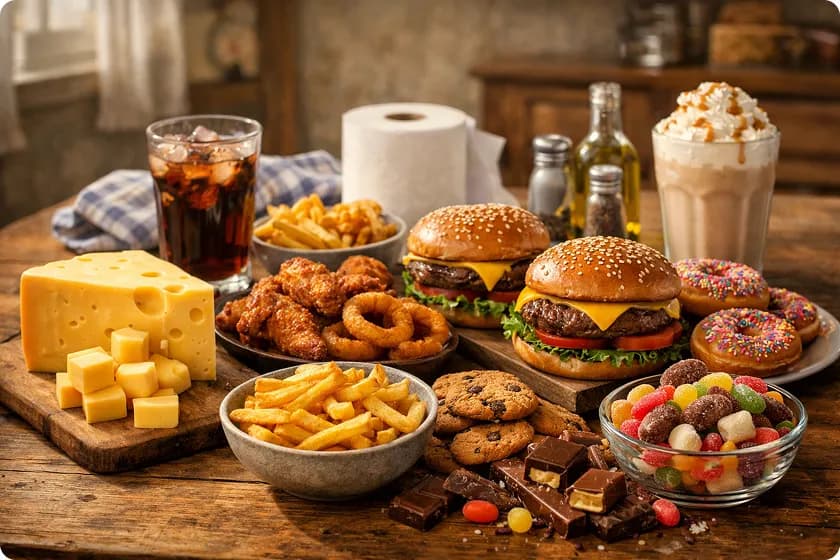
8. Fried and Heavy Fast Foods
Fried foods are not especially high in purines, but frequent high-calorie meals add to weight gain, and excess weight is a strong risk factor for gout. Fast-food meals also often combine red or processed meat with sugary drinks. Baking, grilling and steaming are better choices.
9. Certain Fish (Sardines, Anchovies, Mackerel)
Sardines, anchovies, herring, mackerel and trout are higher in purines than many other fish. Fish still offers heart benefits, so you do not need to avoid it entirely. Pick lower-purine options such as salmon or cod and keep portions moderate.
10. Refined Carbs and Sweets (White Bread, Pastries)
White bread, pastries and sweets contain few purines. Even so, eating a lot of sugar and refined flour is tied to weight gain and insulin resistance, and both push uric acid up. Whole grains, beans and lentils are better staples.
Foods That Can Help
| Choose More Often | Why It Helps |
|---|---|
| Vegetables, including spinach and mushrooms | Vegetable purines do not appear to raise gout risk |
| Low-fat milk and yogurt | Linked to lower uric acid and lower gout risk |
| Whole grains, beans and lentils | Fiber-rich and helpful for weight control |
| Water | Helps the kidneys clear uric acid |
| Coffee, in moderation | Linked to lower gout risk in observational studies |
| Cherries | Some studies link them to fewer flares, though evidence is limited |
Table 1: Foods and drinks that fit well in a gout-friendly diet.
Studies of the DASH diet, an eating plan built on fruit, vegetables, whole grains and low-fat dairy, found it brings uric acid down a little. Our guide to the best diet for arthritis and our list of anti-inflammatory foods offer more meal ideas.
Weight, Exercise and Gout
Losing excess weight lowers uric acid and can reduce flares. Aim for gradual loss through regular activity and smaller portions. Crash diets and fasting can briefly raise uric acid and set off an attack. Gentle activities like walking, cycling and swimming are kind to your joints and good for your heart. Rest the affected joint during a flare, then return to activity as pain eases. For a steady approach, see our workout plan to lose weight.
Diet and Medicine Work Together
The ACR guideline recommends urate-lowering medicine, with allopurinol as the usual first choice, for people with two or more flares a year, tophi or joint damage seen on X-rays. Treatment aims to hold uric acid under 6 mg/dL. During a flare, doctors may prescribe colchicine, an NSAID or a steroid. Flares can happen during the first months of urate-lowering treatment, so doctors usually prescribe a preventive anti-inflammatory medicine for the first three to six months. Allopurinol is normally started at a low dose and raised step by step, with blood tests guiding the dose. Keep taking your medicine even during an attack unless your doctor tells you otherwise. Diet supports treatment but rarely replaces it for people with frequent attacks.
When to See a Doctor
See a doctor if:
- You have a first episode of sudden, severe joint pain and swelling
- Flares are happening more often or lasting longer
- You notice lumps under the skin near joints
- You have a history of kidney stones or blood in your urine
- Gout medicine causes side effects such as a rash or stomach problems
Emergency: Call 911 (or your local emergency number) or go to an emergency department if a hot, swollen joint comes with a high fever, chills or feeling very unwell, since this can signal a joint infection. Seek urgent care too for a rash with fever, blistering skin or swelling of the face after starting a new gout medicine.
Conclusion
The usual dietary culprits behind gout flares are organ meats, red and processed meats, shellfish, some oily fish, alcohol (beer in particular) and fructose-sweetened drinks. Building meals around vegetables, whole grains, beans and low-fat dairy, drinking plenty of water and managing your weight can reduce flares. For people with frequent attacks, these habits work best alongside urate-lowering medicine that keeps uric acid below 6 mg/dL.
Sources
- 2020 American College of Rheumatology Guideline for the Management of Gout (PMC)
- Gout (NIAMS, National Institutes of Health)
- Gout (CDC)
- Gout: Diet (Mayo Clinic)
- Gout Low-Purine Diet (Cleveland Clinic)
FAQ
1. What food should I avoid for gout?
Limit organ meats, red and processed meats, shellfish, sardines and anchovies, beer and other alcohol, and drinks sweetened with high-fructose corn syrup.
2. Is butter bad for gout?
Butter is low in purines and does not directly trigger gout, but it is high in saturated fat. Use it sparingly and choose olive oil more often for heart health.
3. Is ham bad for gout?
Ham is a processed red meat with a moderate to high purine content. Eat it only occasionally and in small portions.
4. Is cheese bad for gout?
No. Cheese is low in purines, and dairy is linked to a lower gout risk. Low-fat options are the better choice for heart health.
5. Are tomatoes good for gout?
Tomatoes are low in purines and fit a balanced diet. A few people report that they trigger flares, so note any pattern in a food diary.
About the author

Health Researcher and Writer
Haider Nadeem is a health researcher and the writer behind Healthy Eats Guide. He writes about health problems he faces or sees people around him face, and turns careful research into practical guides. Articles are researched and drafted with AI assistance, then fact-checked and edited by Haider using cited sources such as USDA, NIH, and peer-reviewed research.
Related blogs

Diet for Diverticulitis Flare-Up: 7 Gentle Foods and a Plan
What to eat during a diverticulitis flare-up: clear liquids, low-fiber recovery foods, when to add fiber back, 7 gentle foods and warning signs to watch.
9 min read
10 Foods That Cause Constipation
10 foods that cause constipation, from cheese and fast food to white bread and unripe bananas, why they can slow digestion and a simple high-fiber swap for each.
10 min read
Heart Failure Diet: 10 Foods for Better Heart Health
A heart failure diet built on 10 essential low-sodium foods, plus label-reading tips, potassium and fluid cautions, a sample meal plan and warning signs to report.
16 min read
Newsletter
Get practical nutrition guides in your inbox
Clear food-by-food advice and diet tips for everyday eating — no spam, unsubscribe anytime.