
10 Foods That Cause Constipation
10 foods that cause constipation, from cheese and fast food to white bread and unripe bananas, why they can slow digestion and a simple high-fiber swap for each.
Introduction

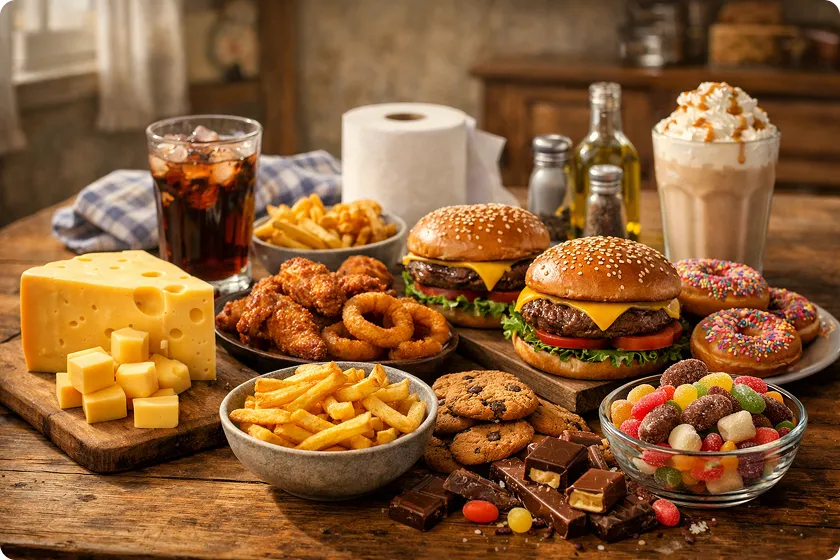
Are you dealing with constipation and wondering which foods might be part of the problem? Diet is one of the most common causes, and one of the easiest to change. If you are constipated, NIDDK suggests cutting back on low-fiber foods, including chips, fast food, meat, and ready-made or processed meals (NIDDK).
This guide lists 10 foods that cause constipation or make it worse, explains why each one can slow things down, and gives a simple swap for each. It focuses on food. If you want to understand the condition itself, including its types and medical causes, read our guide to what constipation is. For fluids, activity, toilet habits, and laxatives, see our full guide to relieving constipation.
Why Some Foods Cause Constipation
Most constipating foods share one feature: they are low in fiber. Fiber makes stool bulkier and helps it retain water, which keeps it soft and easier to pass. NIDDK puts adult fiber needs at 22 to 34 grams daily, depending on age and sex (NIDDK), and many people fall well short.
The main issue is usually a low-fiber eating pattern rather than a single food, and foods such as dairy only affect some people. A meal of cheese, white bread, and processed meat may leave little room for vegetables, fruit, whole grains and legumes. A small portion of any food on this list is unlikely to cause trouble if you eat plenty of fiber at other meals and drink enough fluids. Mayo Clinic's prevention advice reflects this: eat more high-fiber foods and fewer low-fiber foods, such as processed foods, dairy, and meats (Mayo Clinic).
People also react differently. Dairy, for example, constipates some people but not others, so a short food diary can help you spot your own triggers.
Dairy and Creamy Foods
1. Cheese and Full-Fat Dairy
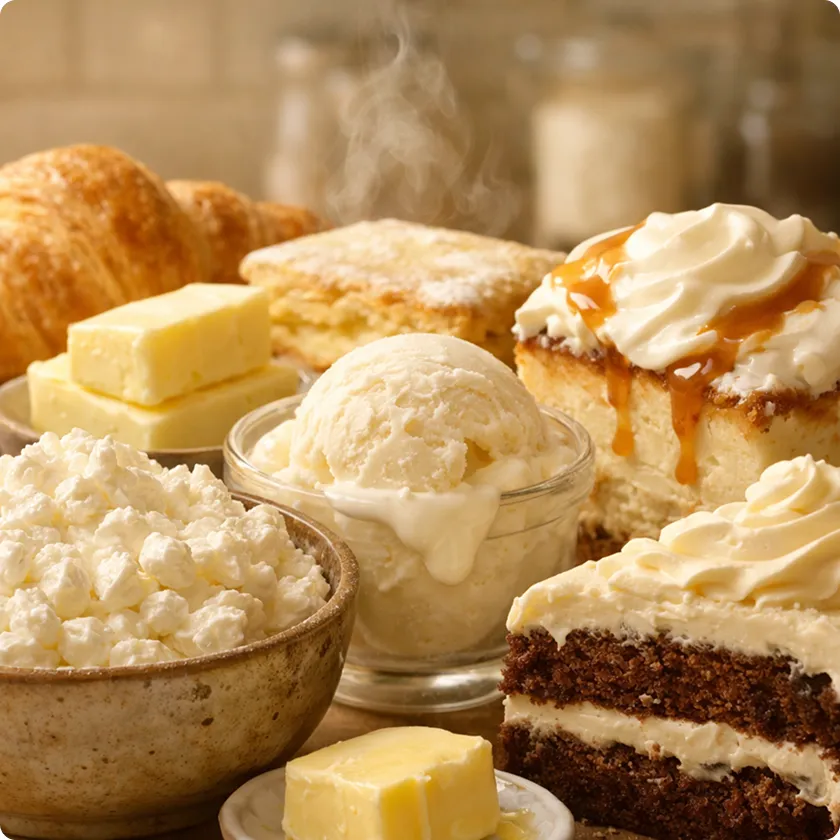
Cheese contains no fiber, and it is easy to eat a lot of it in dishes such as pizza, pasta bakes and cheeseburgers. Cleveland Clinic notes that some people find large amounts of milk or cheese constipating (Cleveland Clinic). In young children, drinking a lot of cow's milk can also crowd out fiber-rich foods.
Swap: Use smaller amounts of cheese, and pair it with fiber. For example, try a little feta on a lentil salad or cheese with whole-grain crackers and pear slices. If dairy seems to bother you, try cutting back for a week or two and see whether anything changes.
2. Ice Cream and Creamy Desserts
Ice cream and creamy desserts are high in fat and sugar but contain almost no fiber. Eating them often, especially in place of fruit, can leave your diet short on fiber.
Swap: Top fresh berries or sliced kiwi with a spoonful of plain yogurt, or make a frozen treat from blended frozen banana and berries.
Fried Foods and Fatty Meats
3. Fried and Fast Foods
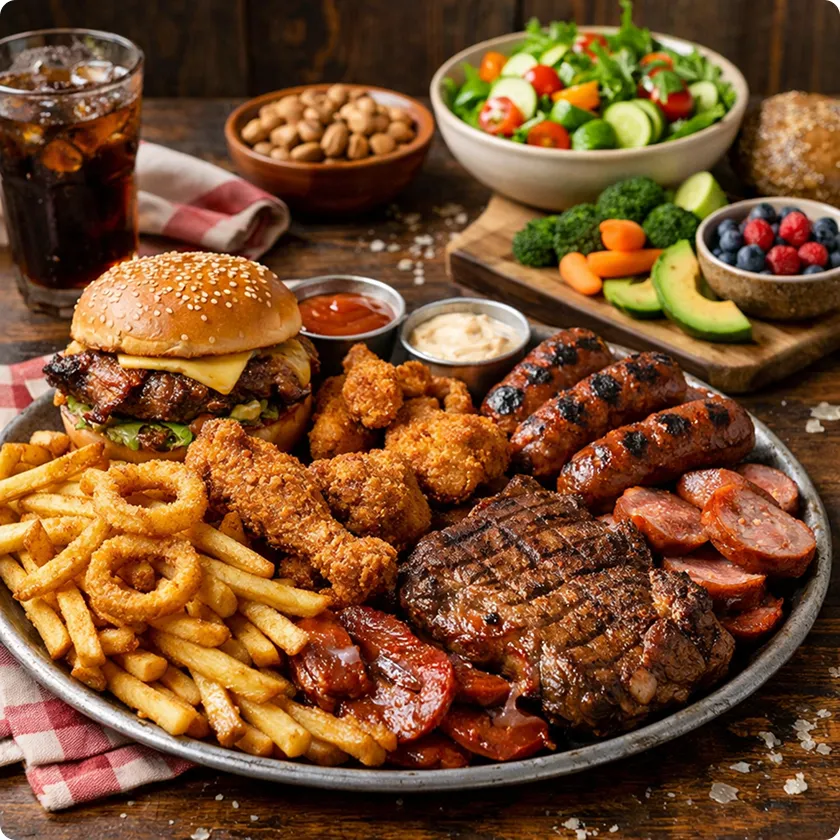
French fries, fried chicken, burgers and other fast foods are usually rich in fat and salt but short on fiber. NIDDK specifically lists fast food among the foods to avoid when constipated (NIDDK). A diet that leans heavily on takeout often lacks vegetables, fruit and whole grains.
Swap: Grill, bake, or steam food at home where you can. When eating out, choose a side salad, vegetables or a bean-based dish instead of fries.
4. Red and Processed Meats
Meat contains no fiber, and processed meats such as hot dogs, bacon, sausages and deli slices are often eaten with refined bread. NIDDK lists meat and processed foods such as hot dogs among low-fiber foods to avoid when constipated (NIDDK). Very high-protein, low-carbohydrate diets can also be low in fiber if they cut out fruit, whole grains and legumes.
Swap: Keep meat portions moderate, and fill the rest of your plate with vegetables. Replace some meat with beans, lentils or chickpeas, which are among the best sources of fiber.
Refined Grains and Sugary Snacks
5. White Bread and Refined Grains
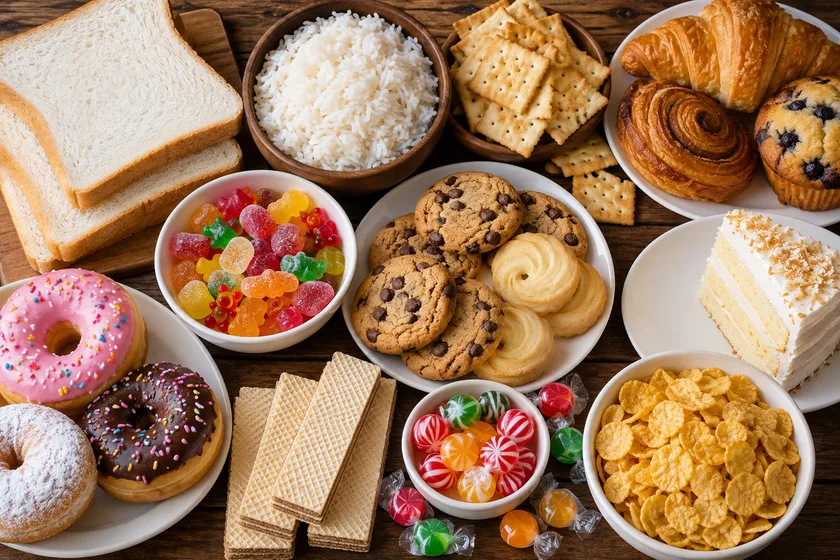
White bread, rolls, bagels and pastries are made from flour that has had the fiber-rich bran removed. Eating them in place of whole grains is a common reason for a low-fiber diet.
Swap: Choose whole wheat, rye or seeded bread, and start the day with oatmeal or a bran cereal. Our list of high fiber breakfast foods has more simple ideas.
6. White Rice and Refined Starches
White rice, white pasta and many crackers are also low in fiber compared with their whole-grain versions.
Swap: Try brown rice, whole-wheat pasta, barley or quinoa, or mix half white and half brown rice while you adjust. Bulking up a dish with vegetables or legumes also helps. For dinner ideas, see our guide to a high fiber dinner.
7. Sugary Snacks and Baked Goods
Candy, cookies, cakes and pastries usually contain little or no fiber. The problem is less about sugar itself and more about these snacks replacing foods that do provide fiber.
Swap: Snack on a handful of nuts, a few prunes, or a whole apple or pear eaten with the skin. Prunes give you fiber plus sorbitol, a sugar alcohol found naturally in the fruit that draws water into the bowel (NHS), though they can cause gas or bloating in some people.
Fruits, Nuts and Other Culprits
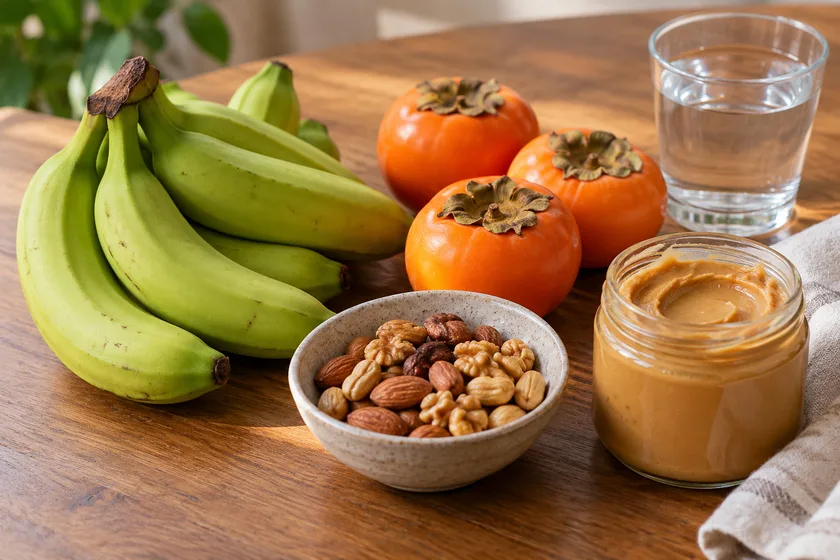
8. Unripe Bananas
Bananas have a mixed reputation. Unripe green bananas contain a lot of resistant starch, and some people find they make stools firmer. As bananas ripen, much of that starch turns into sugar. Ripe bananas still contain fiber and are less likely to cause problems, though everyone reacts differently, and for many people they are a helpful part of a fiber-rich diet.
Swap: Choose ripe yellow bananas, or rotate in other high-fiber fruit such as berries, pears, oranges and kiwi.
9. Large Amounts of Nut Butter Without Fiber-Rich Foods
Peanut butter is not usually a cause of constipation on its own. Natural peanut butter contains some fiber, although smooth versions usually have a little less than chunky peanut butter or whole peanuts, and NIDDK lists nuts such as almonds, peanuts and pecans as good fiber sources (NIDDK). It can still add to symptoms for some people, especially when eaten in large amounts on white bread or crackers, with little else in the way of fiber or fluids.
Swap: Choose a peanut butter made mainly from peanuts, keep portions to 1 to 2 tablespoons, and enjoy it on apple slices or whole-grain toast.
10. Salty Snacks (Chips and Crackers)
Chips, pretzels and most crackers are made from refined grains or potatoes and contain very little fiber. NIDDK lists chips among the low-fiber foods to avoid when constipated (NIDDK).
Swap: Try air-popped popcorn, which is a whole grain, roasted chickpeas, vegetable sticks with hummus, or whole-grain crackers.
Quick Swap Table
| Constipating choice | Higher-fiber swap |
|---|---|
| Cheeseburger and fries | Bean burger on a whole-grain bun with a side salad |
| White toast with jam | Oatmeal with berries or whole-grain toast with nut butter |
| White rice | Brown rice, barley or quinoa |
| Chips | Air-popped popcorn or roasted chickpeas |
| Ice cream | Frozen banana and berry blend |
| Sausage and bacon | Eggs with vegetables, or a lentil or bean dish |
Table 1: Simple higher-fiber swaps for common constipating foods
What About Coffee, Tea and Alcohol?
Coffee stimulates the bowel in many people, and for some it helps rather than hurts. However, NHS advice for constipation includes cutting back on alcohol, and high amounts of caffeine may not suit everyone (NHS). The bigger issue is making sure you drink enough fluids overall, since fiber needs fluid to work well. Water, clear soups and fruit or vegetable juices all count (NIDDK). For more on coffee, see is coffee good for health.
How to Change Your Diet Safely
Add fiber gradually over a few weeks rather than all at once. A sudden jump can cause gas, bloating and cramping. Increase your fluids at the same time, especially if you use a fiber supplement such as psyllium. Basing meals on whole foods, as described in our whole foods list, is one of the simplest ways to raise fiber without counting grams.
When Diet Is Not the Cause
Food is only one cause of constipation. Medicines, inactivity, pregnancy and conditions such as hypothyroidism, diabetes and IBS can also play a part (NIDDK). Common culprits among medicines include opioid pain relievers, iron supplements, some antacids (those containing aluminum or calcium), certain antidepressants and some blood pressure medicines. Do not stop a prescribed medicine on your own. Ask your doctor or pharmacist whether it could be playing a part.
When to See a Doctor
See a doctor if constipation lasts more than three weeks, does not improve with diet changes, or comes with blood in your stool, constant abdominal pain, vomiting, fever, inability to pass gas or weight loss without trying (Mayo Clinic). A lasting change in your bowel habits is also worth checking, especially if you are over 45 or have a family history of bowel cancer.
Call 911 (or your local emergency number) or go to the emergency room if you have severe belly pain with a swollen, hard abdomen, repeated vomiting, or you cannot pass stool or gas at all, since these can be signs of a bowel blockage. Do not take laxatives if you suspect a blockage.
Conclusion
The foods most often linked to constipation are low in fiber: cheese and other full-fat dairy in large amounts, ice cream, fried and fast foods, red and processed meats, white bread and rice, sugary snacks, unripe bananas and salty snacks. You do not need to cut them out completely. Eat them in moderation, pair them with fiber-rich foods, and swap in whole grains, fruits, vegetables and legumes where you can. If constipation continues despite these changes, our how to relieve constipation guide explains the next steps.
Sources
- Eating, Diet, and Nutrition for Constipation (NIDDK)
- Constipation (NIDDK)
- Constipation: Symptoms and Causes (Mayo Clinic)
- Constipation (Cleveland Clinic)
- Constipation (NHS)
FAQ
1. Can cheese cause constipation?
Cheese contains no fiber, and some people find that large amounts make them constipated. Eating smaller portions alongside fiber-rich foods and drinking enough fluids usually helps.
2. Do bananas make you constipated?
Bananas that are still green carry a lot of resistant starch, which can make stools firmer for some people. Ripe bananas contain fiber and usually do not cause constipation.
3. Does peanut butter cause constipation?
Peanut butter is not usually constipating on its own, since peanuts contain some fiber. Problems are more likely when large amounts are eaten with low-fiber foods and too little fluid.
4. Does white bread make you constipated?
White bread is low in fiber, so eating a lot of it in place of whole grains can contribute to constipation. Whole wheat, rye or seeded bread is a better choice.
5. What foods should I avoid when constipated?
NIDDK advises limiting low-fiber foods such as chips, fast food, meat, prepared frozen meals and processed foods like hot dogs. Replace them with fruits, vegetables, whole grains and legumes.
About the author

Health Researcher and Writer
Haider Nadeem is a health researcher and the writer behind Healthy Eats Guide. He writes about health problems he faces or sees people around him face, and turns careful research into practical guides. Articles are researched and drafted with AI assistance, then fact-checked and edited by Haider using cited sources such as USDA, NIH, and peer-reviewed research.
Related blogs
How to Relieve Constipation: 7 Safe Home Remedies
How to relieve constipation with fiber, fluids, activity and a regular toilet routine, plus which laxative types exist and the warning signs that need a doctor.
11 min read

Can Constipation Cause Fever? 7 Causes to Know
Can constipation cause fever? Usually not on its own. Learn which conditions link the two, warning signs, home steps and when to seek urgent care.
9 min read

What Is Constipation? Definition, Types, Causes and Symptoms
What is constipation? Learn the medical definition, the main types from slow transit to IBS-C, common causes and risk groups, and the warning signs that need a doctor.
10 min read
Newsletter
Get practical nutrition guides in your inbox
Clear food-by-food advice and diet tips for everyday eating — no spam, unsubscribe anytime.