
Is Hummus Good for GERD: 6 Evidence-Based Facts
Is hummus good for GERD? Learn how chickpeas, tahini, garlic, lemon, and serving sizes may affect acid reflux, plus tips for choosing a simpler hummus.
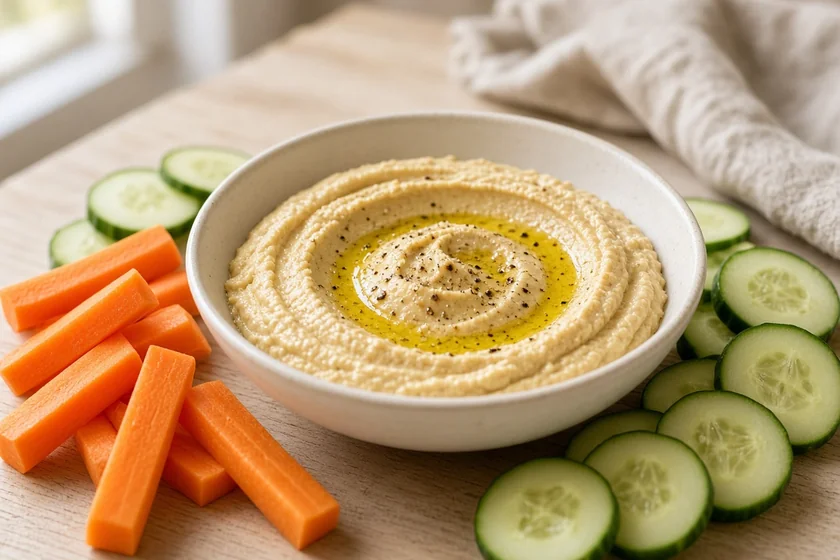
Introduction

Is hummus good for GERD? It depends on the recipe and the portion. Chickpeas, the base of hummus, are a high-fiber legume that is relatively low in fat compared with many prepared dips. Traditional hummus also contains tahini, olive oil, garlic, and lemon juice, which can affect how well some people with GERD tolerate the dip. High-fat foods, citrus, and garlic are commonly linked to reflux symptoms for some people. Hummus isn't a treatment, and a large, garlicky, or lemon-heavy serving can still trigger heartburn.
A small serving of simple hummus may be suitable if you tolerate its ingredients. Start with a modest scoop made with little or no garlic and lemon, go easy on tahini and oil, and finish eating at least 3 hours before lying down if you have nighttime symptoms.
You'll find six facts on chickpeas, fat, garlic, lemon, tahini, and portions.
Fact Set 1: Chickpeas vs. Commercial Hummus
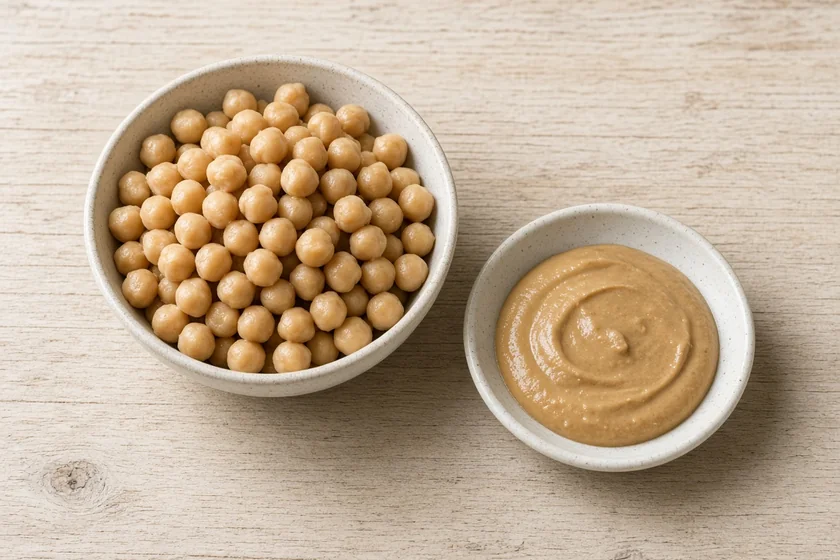
Hummus starts with chickpeas, but additional ingredients may make the finished dip less suitable for some people with GERD.
Fact 1: Chickpeas Are a High-Fiber Legume, but Hummus Isn't Automatically GERD-Friendly
Are chickpeas good for acid reflux? For many people, plain chickpeas can be a reasonable plant-protein option. Cleveland Clinic includes beans and lentils among high-fiber foods that may fit a reflux-friendly plate, and it notes that these foods are also more alkaline than acidic. It does not name chickpeas or hummus specifically, so treat this as a similar pattern rather than a hummus recommendation.
An archived FDA list of approximate food pH values puts chickpeas (garbanzo peas) at about 6.48 to 6.80. This suggests that chickpeas are less acidic than lemon juice. Still, food pH alone cannot establish whether a food will trigger GERD symptoms.
The NIDDK does not name hummus or chickpeas. It focuses on foods commonly linked to GERD symptoms, including high-fat foods, citrus, chocolate, mint, caffeine, alcohol, and spicy foods.
Johns Hopkins Medicine also does not name hummus. So whether hummus is a fit for GERD depends on the whole recipe, not a guarantee. If even a small, simple scoop bothers you, the dip may not be a fit, or the garlic, lemon, fat, or portion may be the issue.
Fact 2: Commercial Hummus Contains More Fat Than Plain Chickpeas
According to USDA FoodData Central, canned, drained chickpeas have about 139 calories, 2.8 grams of fat, 6.4 grams of fiber, and 7.1 grams of protein per 100 grams. Commercial hummus is a different food. The USDA record for commercial hummus (FDC 174289) lists about 237 calories, 17.8 grams of fat, 5.5 grams of fiber, and 7.8 grams of protein per 100 grams.
A typical 2-tablespoon serving of store-bought hummus (about 30 grams) contains about 71 calories and 5.4 grams of fat. Cleveland Clinic's hummus nutrition guide also describes hummus as an added fat that provides fiber and plant protein, and notes that the nutrition can vary by brand. That is nutrition context, not evidence that hummus treats GERD.
| Food (per 100 g) | Calories | Fat | Fiber | Protein |
|---|---|---|---|---|
| Chickpeas, canned, drained | About 139 | About 2.8 g | About 6.4 g | About 7.1 g |
| Hummus, commercial | About 237 | About 17.8 g | About 5.5 g | About 7.8 g |
| Tahini, from roasted sesame kernels | About 595 | About 53.8 g | About 9.3 g | About 17 g |
Table: Approximate USDA FoodData Central values for canned, drained chickpeas (FDC 173800), commercial hummus (FDC 174289), and tahini from roasted and toasted sesame kernels (FDC 170189). Per 100 grams is for comparison, not a typical serving size.
The NIDDK and Johns Hopkins both list high-fat foods among common triggers. A modest scoop can still be reasonable if you tolerate it; a large bowl, especially with extra oil on top, is a different snack.
Fact Set 2: How Garlic, Lemon, and Tahini Can Affect Reflux
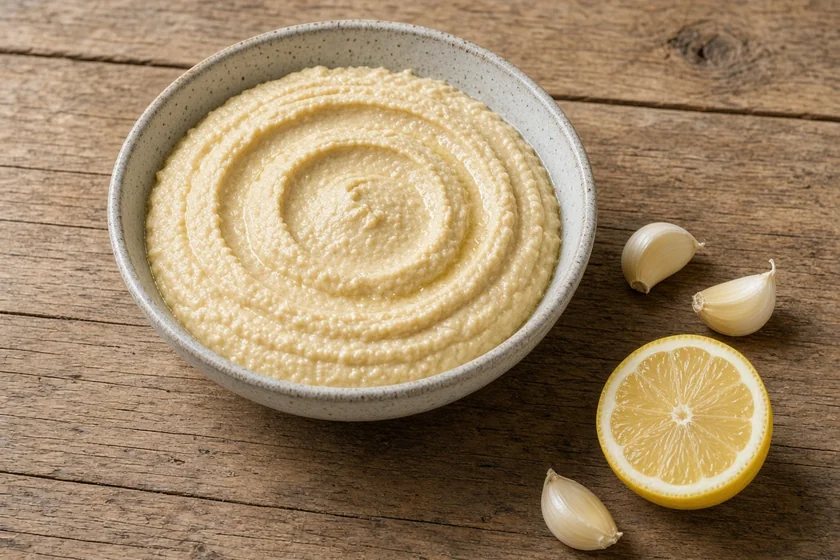
Is hummus without garlic ok for GERD? For many people, garlic and lemon are the first ingredients to look at, and tahini is the main source of fat.
Fact 3: Garlic Is a Common Trigger Ingredient in Traditional Hummus
Traditional hummus often contains garlic. Cleveland Clinic identifies garlic and onions as foods to limit if you have GERD. However, the NIDDK does not include garlic on its list of commonly linked foods. Garlic may bother some people with GERD, but it is not an established trigger for everyone.
Is hummus ok for acid reflux? It often comes down to this ingredient. Some store-bought products are labeled "garlic-free" or "mild." Read the ingredient list instead of going by the flavor description, because some flavored varieties may still contain garlic. If you make hummus at home, leave the garlic out first and see how a garlic-free scoop sits.
Roasted garlic may have a milder flavor, but clinical evidence does not show that roasting makes it less likely to trigger GERD symptoms. Individual tolerance can still vary.
Fact 4: Lemon Juice Is Acidic, and Tahini Is High in Fat
Lemon juice is a standard flavoring in hummus, and citrus is commonly linked to GERD symptoms. The FDA's archived pH list puts lemon juice at about 2.00 to 2.60, which is much more acidic than chickpeas. Adding lemon juice increases the mixture's acidity. Still, the finished hummus's pH depends on the amounts and proportions of its ingredients. If citrus bothers you, try a homemade version with little or no lemon, or choose a commercial hummus made without lemon juice.
Is tahini bad for acid reflux? Not by name. Tahini is a sesame-seed paste, and USDA data put it at about 595 calories and 53.8 grams of fat per 100 grams. That fat, plus olive oil, is why commercial hummus contains more fat than plain chickpeas. Cleveland Clinic notes that people sometimes don't realize how much fat they get from tahini and oil. High-fat foods are commonly linked to GERD symptoms. However, individual responses vary, so larger amounts of tahini or olive oil may make hummus less tolerable for some people.
Spicy hummus and jalapeño flavors can also be a problem. NIDDK and Johns Hopkins both include spicy foods among common triggers. A simple, lightly seasoned dip may be a better starting point if you already know spicy foods or citrus trigger your symptoms.
Fact Set 3: Hummus Portions, Meal Timing, and Symptoms
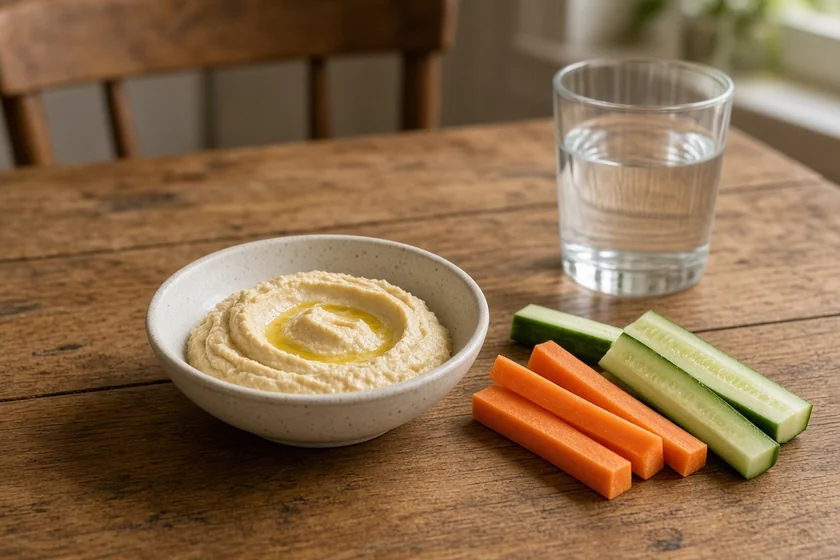
Can hummus cause heartburn? Yes, for some people. The dip isn't a common item on clinical trigger lists, but garlic, lemon, a high-fat scoop, a spicy flavor, or a snack eaten right before bed can still bring on symptoms.
Fact 5: A Small Scoop, Well Timed, Is a Safer Starting Point
There's no official hummus limit for GERD. As an informal portion test, start with 1 to 2 tablespoons of simple hummus and see how you tolerate it. That amount is a practical suggestion, not a clinically established GERD serving size. A party-size bowl with chips is a different meal.
What you dip into the hummus matters too. Carrot sticks, cucumber, and a few plain pretzels are generally lower in fat than fried chips, which Johns Hopkins and Cleveland Clinic identify as potential heartburn triggers. Look at the whole snack, not just the dip. Coffee, soda, chocolate, or alcohol on the side can matter as much as the hummus, and NIDDK lists those items among common GERD-linked triggers.
Timing still matters. Johns Hopkins advises avoiding late-night dinners and bedtime snacks, and it recommends small, frequent meals instead of heavy ones. The NIDDK says eating at least 3 hours before lying down may improve nighttime symptoms. The American College of Gastroenterology (ACG) similarly suggests avoiding meals within 2 to 3 hours of bedtime.
Fact 6: The Best Hummus for Acid Reflux Is a Simple One You Already Tolerate
What is the best hummus for acid reflux? A reasonable starting point is a small serving with limited garlic, lemon, tahini, and added oil, if those ingredients agree with you, eaten well before bed.
Cleveland Clinic's general hummus guide suggests making your own so you can control the ingredients, and checking labels on store-bought tubs. If you blend it at home, start with plain chickpeas, a little tahini or none, a little oil if you want any, and a mild seasoning you already tolerate. Add garlic or lemon later only if a simpler batch sits well.
Keep a short food diary of the brand or recipe, ingredients, portion, accompanying foods, timing, and symptoms. If a garlic-free homemade scoop sits well but a traditional tub does not, the added ingredients may be contributing. If even a small, simple serving bothers you, choose another snack and mention that pattern to your doctor.
The 2022 ACG clinical guideline conditionally suggests avoiding foods that trigger your GERD symptoms, a recommendation based on low-quality evidence. Individual responses vary, so a food diary can help you see which ingredients or portions worsen your symptoms.
When to See a Doctor

Johns Hopkins Medicine advises seeing a doctor if you have heartburn two or more times a week and changes to your diet or eating pattern haven't helped. MedlinePlus notes that GERD can also cause a dry cough, hoarseness, or trouble swallowing.
The NIDDK also advises seeing a doctor for symptoms that could be related to GERD complications or other serious health problems:
- Problems swallowing or pain while swallowing
- Persistent vomiting or loss of appetite
- Blood in the vomit, or vomit that looks like coffee grounds
- Blood in the stool, or stool that looks black and tarry
- Weight loss you cannot explain
Emergency: Call 911 (or your local emergency number) right away if you have chest pain, especially with shortness of breath or pain in your jaw or arm. The American Heart Association notes that heartburn and heart problems can feel alike, so never assume chest pain is just reflux.
Conclusion
So, is hummus good for GERD? A small, simple scoop can be a suitable snack if you tolerate it, but it isn't an established treatment. Chickpeas provide fiber and relatively little fat, while tahini and oil increase the fat content of the finished dip. Garlic and lemon may be problematic if you already react to them. A modest portion, well-timed snacks, and a food diary can help you see which recipes you tolerate.
For other snack ideas, see Is Popcorn Good for Acid Reflux and Are Pretzels Good for Acid Reflux. For a whole-grain breakfast option, see Is Oatmeal Good for Acid Reflux. For meal timing and sleep position, see our GERD relief guide.
Do certain hummus ingredients affect your reflux symptoms? Share your experience in the comments.
Related guides:
- Are almonds good for GERD
Sources
- Eating, Diet, and Nutrition for GER and GERD (NIDDK)
- Symptoms and Causes of GER and GERD (NIDDK)
- GERD Diet: Foods That Help with Acid Reflux (Johns Hopkins Medicine)
- GERD Diet: Foods To Eat and Avoid (Cleveland Clinic)
- Snack Smart: 3 Reasons Hummus Is Good for You (Cleveland Clinic)
- ACG Clinical Guideline for the Diagnosis and Management of Gastroesophageal Reflux Disease (American Journal of Gastroenterology, 2022)
- Approximate pH of Foods and Food Products (U.S. FDA, archived)
- USDA FoodData Central nutrient records used in this article: chickpeas, canned, drained solids 173800, hummus, commercial 174289, tahini, from roasted and toasted sesame kernels 170189
- Gastroesophageal Reflux Disease (MedlinePlus)
- Heartburn or Heart Attack? (American Heart Association)
FAQ
1. Is hummus good for GERD?
It can be, if the recipe and portion agree with you, but it isn't a GERD treatment. Chickpeas are a high-fiber, relatively low-fat starting point. At the same time, garlic, lemon, tahini, and oil can affect how well some people tolerate the dip. Start with a small, simple scoop, well before bed.
2. Can you eat hummus with acid reflux?
A modest serving of simple hummus is a reasonable test. Traditional recipes include garlic and lemon, which bother some people, and commercial hummus is higher in fat than plain chickpeas. A food diary helps show which version agrees with you.
3. Is hummus without garlic ok for GERD?
It may be a better starting point if garlic already triggers your symptoms. Cleveland Clinic includes garlic among foods to limit if you have GERD. However, the NIDDK does not list garlic as a common trigger. Read labels, or make a garlic-free batch at home.
4. Can hummus cause heartburn?
Yes, for some people, especially in a large, high-fat serving, or when the dip is heavy on garlic, lemon, or spicy flavoring. Hummus isn't a common item on clinical trigger lists, but the extras and the timing still matter.
5. Are chickpeas good for acid reflux?
Plain chickpeas may suit some people with acid reflux if they tolerate legumes. They are high in fiber and relatively low in fat. Cleveland Clinic includes beans and lentils among foods that may fit a reflux-conscious eating pattern. Hummus is a different food once tahini, oil, garlic, and lemon are added.
About the author

Health Researcher and Writer
Haider Nadeem is a health researcher and the writer behind Healthy Eats Guide. He writes about health problems he faces or sees people around him face, and turns careful research into practical guides. Articles are researched and drafted with AI assistance, then fact-checked and edited by Haider using cited sources such as USDA, NIH, and peer-reviewed research.
Related blogs

GERD Relief: 7 Proven Tips to Manage Flare-Ups
GERD relief that works: 7 proven tips covering meal timing, trigger foods, weight, sleep position, medicines and surgery, plus warning signs to act on.
9 min read
Are Blueberries Good for GERD: 5 Evidence-Based Facts
Are blueberries good for GERD? See how their pH compares with other fruits, plus fiber, frozen vs. dried berries, oatmeal pairings, and portion tips.
12 min read
Is Popcorn Good for Acid Reflux: 6 Evidence-Based Facts
Is popcorn good for acid reflux? Learn whether air-popped, buttered, and microwave popcorn may affect GERD symptoms, plus tips on portions, toppings, and timing.
12 min read
Newsletter
Get practical nutrition guides in your inbox
Clear food-by-food advice and diet tips for everyday eating — no spam, unsubscribe anytime.