
8 Effective Bodyweight Exercises to Tone Your Body
8 effective bodyweight exercises you can do anywhere, with step-by-step form tips, beginner modifications, a simple weekly plan and safety advice.
Introduction

You do not need a gym membership or expensive equipment to get stronger. Bodyweight exercises use your own body as resistance, so you can train at home, in a hotel room or at the park. They build strength, balance and endurance, and they are easy to scale from beginner to advanced simply by changing angles, tempo or range of motion.
The Physical Activity Guidelines for Americans recommend muscle-strengthening activities that work all major muscle groups on at least two days a week, alongside regular aerobic activity. The eight moves below cover your upper body, lower body and core. Do them as a circuit two or three times a week, and you have a complete strength routine.
How to use this guide
Warm up for about five minutes with marching, arm circles and gentle squats. Start with one or two rounds of each exercise, aiming for controlled repetitions with good form. Rest 30 to 60 seconds between exercises. As moves get easier, add repetitions, rounds or harder variations. If you have a health condition, joint problem or are pregnant, check with your healthcare provider first.
1. Push-ups – Upper-Body Strength
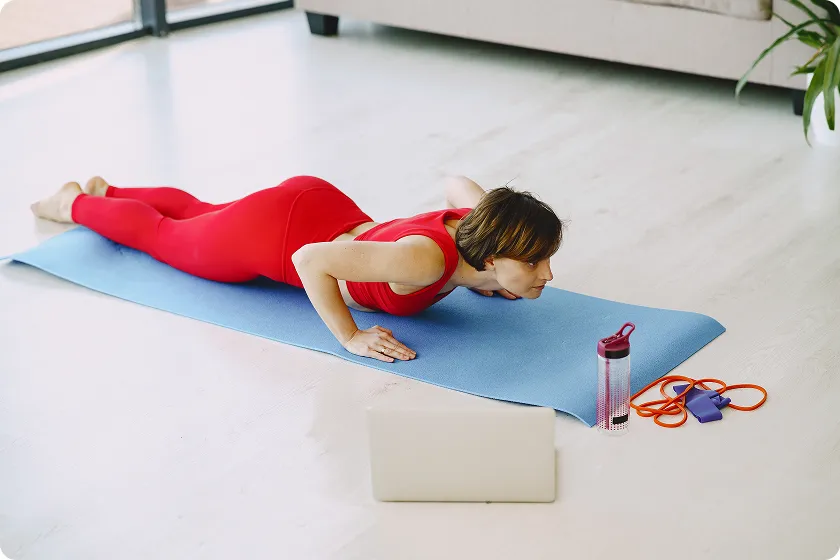
Push-ups strengthen the chest, shoulders, triceps and core at the same time. They are one of the most efficient upper-body exercises you can do.
How to do it:
- Place your hands slightly wider than your shoulders, fingers pointing forward.
- Step your feet back so your body forms a straight line from head to heels.
- Brace your core and lower your chest toward the floor, elbows at a comfortable, moderate angle (roughly 45 degrees is a common cue) rather than flared straight out.
- Press back up to the start without letting your hips sag.
Make it easier: Do push-ups against a wall or counter, or with your knees on the floor. Make it harder: Elevate your feet or slow the lowering phase to three seconds.
2. Squats – Lower-Body Toning
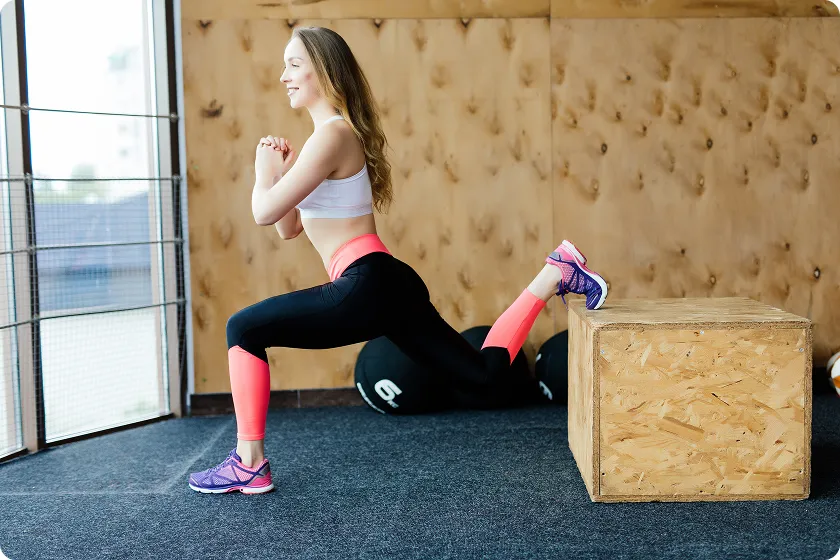
Squats work the thighs, glutes and core and copy the motion you use every time you lower yourself onto a seat and get back up, which makes them valuable at any age.
How to do it:
- Set your feet roughly as wide as your shoulders, with your toes angled a little outward.
- Send your hips backward and bend at the knees, as though lowering onto a chair.
- Keep your chest lifted and knees tracking in line with your toes.
- Lower as far as is comfortable, then push through your heels to stand.
Make it easier: Squat to a chair and stand back up. Make it harder: Try split squats with your back foot raised on a bench or pause at the bottom.
3. Planks – Core Stability
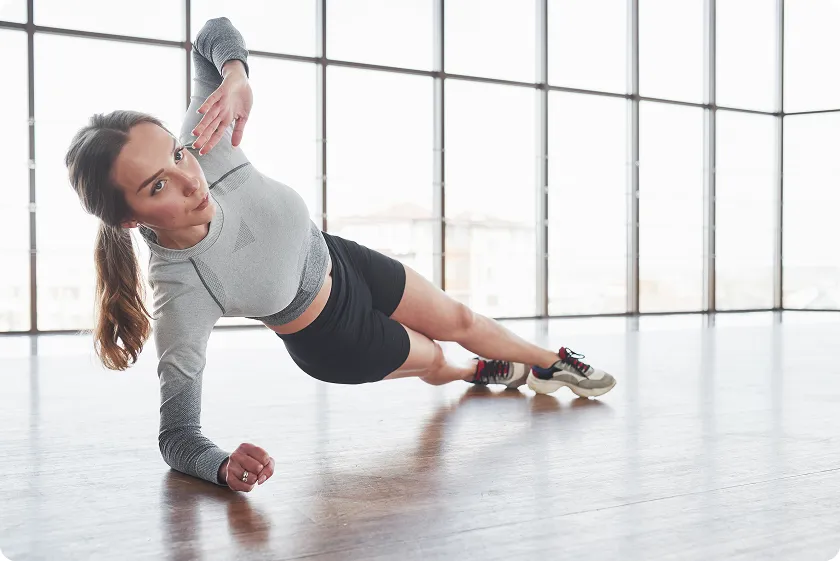
Planks train the deep core muscles that support your spine. A strong core improves posture and helps protect your back during daily tasks.
How to do it:
- Lie face down, then prop yourself on your forearms so your elbows sit directly below your shoulders.
- Extend your legs behind you, toes on the floor.
- Keep a straight line from head to heels, squeezing your glutes and abdominal muscles.
- Stay in position for 15 to 30 seconds, breathing evenly, and lengthen the hold as you get stronger.
Make it easier: Hold the plank on your knees. Make it harder: Try side planks or lift one foot at a time.
4. Reverse Lunges – Leg Sculpting
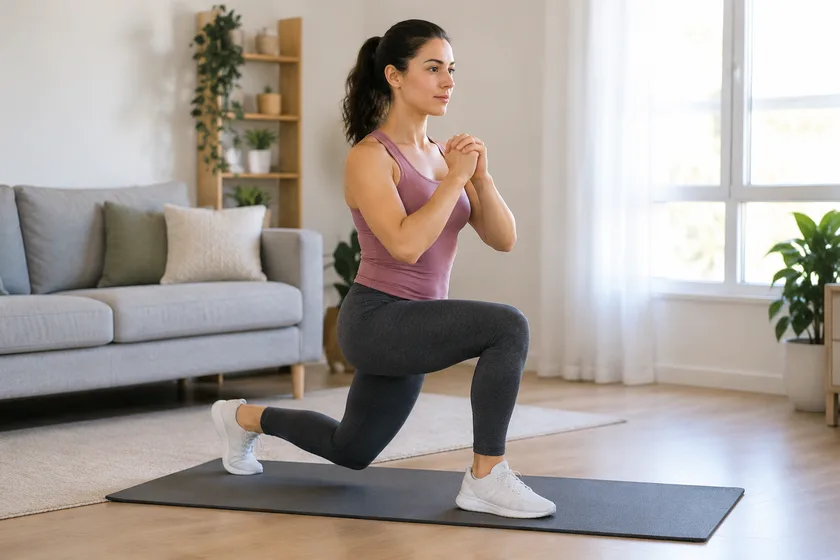
Reverse lunges work each leg separately, improving strength, balance and coordination. Stepping backward is usually easier on the knees than a forward lunge.
How to do it:
- Stand tall with your feet hip-width apart.
- Take a step back with one foot and sink down until each knee forms about a right angle.
- Stack your front knee above your ankle and keep your chest tall.
- Push through your front heel to return to standing, then switch sides.
Make it easier: Hold a wall or chair for balance and take a shorter step. Make it harder: Add a knee drive at the top or slow the tempo.
5. Burpees – Full-Body Blast
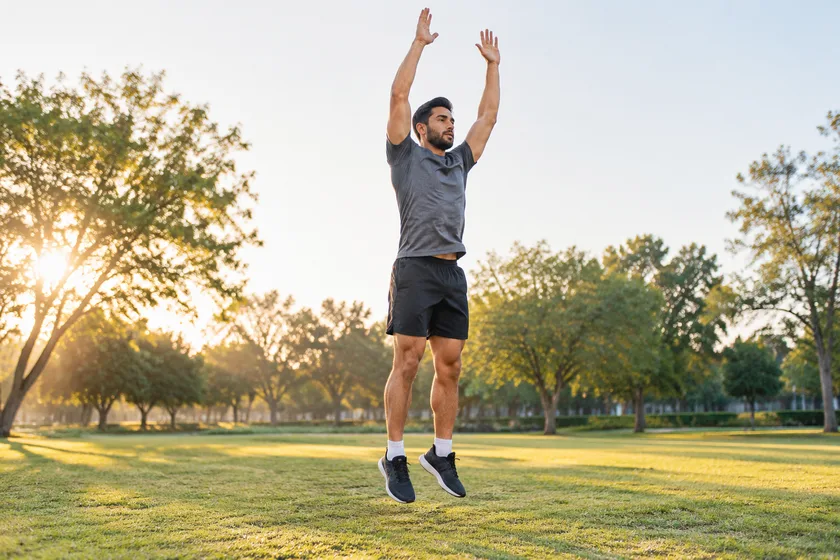
Burpees combine a squat, plank and jump, raising your heart rate quickly while working muscles throughout the body. They are demanding, so build up gradually.
How to do it:
- From standing, squat down and place your hands on the floor.
- Jump or step your feet back into a plank.
- Jump or step your feet back toward your hands.
- Stand up and, if comfortable, add a small jump with arms overhead.
Make it easier: Step instead of jumping and skip the push-up. Make it harder: Add a push-up in the plank position.
6. Mountain Climbers – Cardio Core
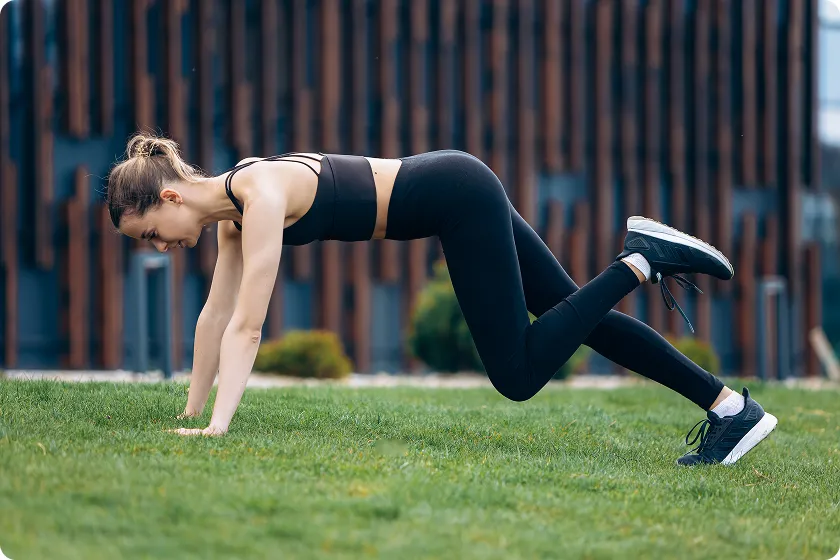
Mountain climbers challenge your core, shoulders and hip flexors while delivering a cardio boost.
How to do it:
- Start in a high plank with hands under shoulders.
- Drive one knee toward your chest, then switch legs.
- Keep your hips level and your back flat.
- Work for 20 to 30 seconds at a pace you can control.
Make it easier: Place your hands on a bench or step and move slowly. Make it harder: Increase speed while keeping form.
7. Superman – Back Strength
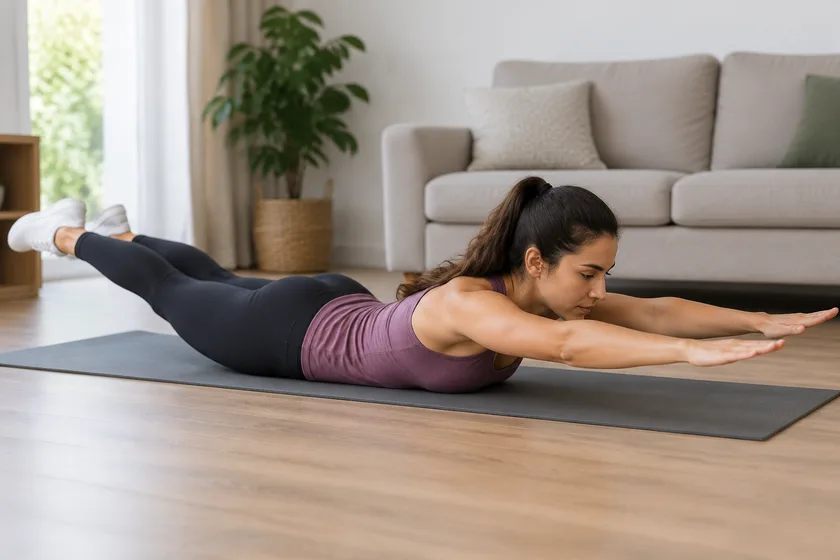
The superman strengthens the muscles along your spine, glutes and shoulders, balancing out exercises that focus on the front of the body. It is a useful move for people who sit for long periods.
How to do it:
- Lie on your stomach, legs long and arms reaching out past your head.
- Gently lift your arms, chest and legs a few inches off the floor.
- Keep your neck neutral by looking at the floor.
- Hold for two to three seconds, then lower with control.
Make it easier: Lift only your arms, or only your legs, at one time. Make it harder: Hold longer at the top.
8. Hip Bridge – Glutes & Hamstrings
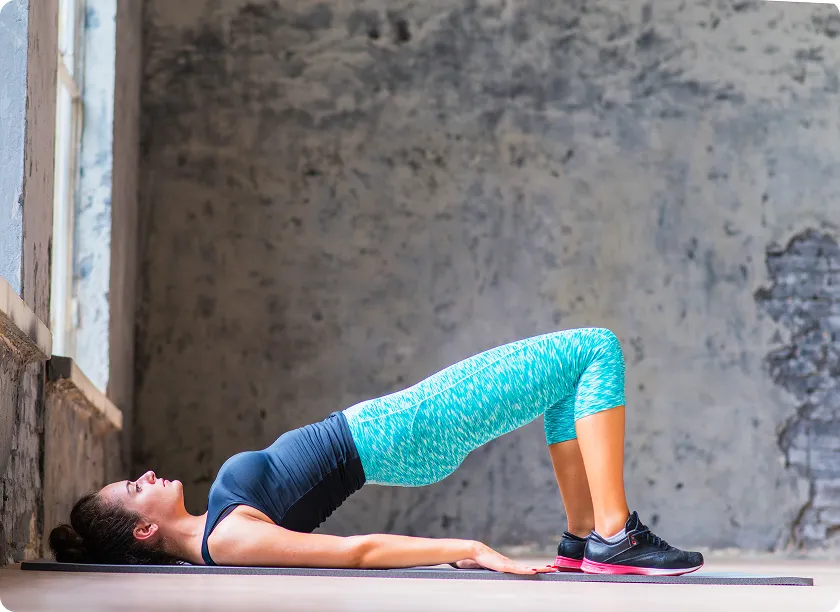
Hip bridges strengthen the muscles of the buttocks and the backs of the thighs, which help support the pelvis and lower back. It is gentle on the joints and suitable for most fitness levels.
How to do it:
- Lie on your back with knees bent and feet flat, hip-width apart.
- Push down through your heels and raise your hips until your shoulders, hips and knees are in one straight line.
- Squeeze your glutes at the top without arching your lower back.
- Lower slowly and repeat.
Make it easier: Reduce the height of the lift. Make it harder: Try single-leg bridges.
Putting It Together: A Simple Weekly Plan
For beginners, perform all eight exercises as a circuit on two or three nonconsecutive days each week. Aim for 8 to 12 repetitions of the dynamic moves and 15 to 30 seconds for planks and mountain climbers. Complete one round at first, building to two or three rounds over several weeks. On other days, add brisk walking, cycling or another aerobic activity to meet the recommended 150 minutes of moderate activity per week.
Progress gradually by changing only one thing at a time, such as adding a few repetitions or one extra round. Mild muscle soreness after a new workout is normal and can last a few days. See a doctor for sharp, severe or worsening pain, marked swelling, or soreness that lasts more than a week. For more structured ideas, see our daily exercise routine for body workouts at home or leg day exercises. Fuel your training with balanced meals; our high-protein meals guide can help.
When to See a Doctor
Get the go-ahead from a healthcare provider before you begin if you have heart disease, high blood pressure, diabetes, joint or back problems, recent surgery, or are pregnant. Stop and seek advice if you notice:
- Sharp or persistent joint pain
- Pain that worsens over several days instead of improving
- Swelling, numbness or tingling in your limbs
- Dizziness or unusual shortness of breath
Emergency: Stop exercising and call 911 (or your local emergency number) if you feel pressure or pain in your chest, pain that moves into your arm or jaw, severe breathlessness, or you faint.
Conclusion
Bodyweight exercises are a convenient, low-cost way to build strength and fitness. Push-ups, squats, planks, reverse lunges, burpees, mountain climbers, supermans and hip bridges work every major muscle group and can be adjusted for any level. Start with good form, progress steadily and combine strength work with regular aerobic activity for the best results.
Sources
- Current Guidelines (Physical Activity Guidelines for Americans, ODPHP)
- Exercise and Physical Fitness (MedlinePlus)
- Strength Exercises (NHS)
- Physical Activity Guidelines for Adults Aged 19 to 64 (NHS)
- Free Fitness Ideas (NHS)
FAQ
1. Can bodyweight exercises build muscle?
Yes. With enough effort and progression, such as harder variations or more repetitions, bodyweight training can build strength and muscle, especially for beginners.
2. How often should I do bodyweight exercises?
Two to three nonconsecutive days a week is a good starting point, in line with guidelines for muscle-strengthening activity on at least two days.
3. Are bodyweight exercises good for weight loss?
They help by building muscle and burning calories, but the best results come from combining them with aerobic activity and balanced eating.
4. What if push-ups are too hard?
Start with wall or counter push-ups, then move to knee push-ups as you get stronger.
5. Do I need to warm up first?
Yes. Five minutes of light movement like marching and arm circles prepares your muscles and joints and lowers injury risk.
About the author

Health Researcher and Writer
Haider Nadeem is a health researcher and the writer behind Healthy Eats Guide. He writes about health problems he faces or sees people around him face, and turns careful research into practical guides. Articles are researched and drafted with AI assistance, then fact-checked and edited by Haider using cited sources such as USDA, NIH, and peer-reviewed research.
Related blogs
Daily Exercise Routine: 7 Bodyweight Exercises at Home
A daily exercise routine you can do at home: 7 bodyweight exercises, a 20 to 30 minute beginner workout, a weekly schedule that meets WHO targets and when to stop or see a doctor.
11 min read
Workout Plan to Lose Weight: 8 Effective Workout Exercises
A beginner-friendly weekly workout plan to lose weight, with 8 key exercises, cardio and strength targets, recovery habits and safety tips.
9 min read
6 Proven Leg Day Exercises for Effective Results
Ten leg day exercises for beginners to advanced lifters, with sets, reps, a weekly plan, warm-up and recovery tips, and form cues to help you train safely.
11 min read
Newsletter
Get practical nutrition guides in your inbox
Clear food-by-food advice and diet tips for everyday eating — no spam, unsubscribe anytime.