
6 Proven Leg Day Exercises for Effective Results
Ten leg day exercises for beginners to advanced lifters, with sets, reps, a weekly plan, warm-up and recovery tips, and form cues to help you train safely.
Introduction

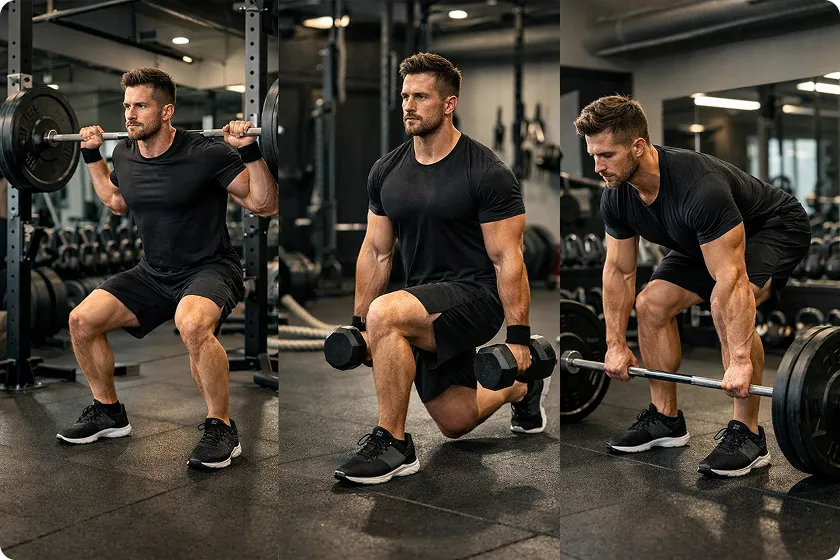
Many people dread “leg day” because they associate it with soreness or complicated routines, yet neglecting your lower body denies you the benefits of strong, powerful legs. Without regular leg day exercises, everyday tasks such as climbing stairs, carrying groceries, or playing sports become harder. Leg workouts help you develop strength, balance, and resilience because your legs house some of your body’s largest muscles.
In this guide, we outline ten proven moves, from body-weight drills to leg exercises with weights. We highlight options for beginners and lower-body exercises for women, and answer questions like how to build leg muscles, how many exercises to do on leg day, and how many leg days you need per week. A well-planned leg session improves posture, powers your favorite sports, and helps you stand taller. Correcting imbalances with leg muscle exercises lowers injury risk and supports daily activities. Whether your goal is to increase leg muscle or move without pain, this article offers evidence-based guidance to get you started.
Why This Topic Matters
Leg strength influences more than you might think. When your lower body is strong, everyday movements feel effortless, and your health improves. We explore why leg training is essential, how it affects daily life, and debunk myths that keep people from training.

Strong Legs for Everyday Life
Your legs support you every time you sit, stand, walk, or run. Without adequate strength in your quads, hamstrings, and glutes, simple tasks become tiring, and your balance suffers. Regular leg strength training improves mobility and posture, so everyday movements feel effortless.
Legs and Long-Term Health
Strong legs are linked with better mobility and independence as you age. Weight-bearing lower-body gym exercises help maintain bone density, and regular muscle-strengthening activity is linked with better heart and metabolic health. Leg-weight workouts and leg-muscle training done with good form may also help lower the risk of falls and some injuries.
Myths About Leg Day
Many think leg training requires dozens of movements or is only for athletes. In reality, a few compound lifts done consistently are enough, and women can safely perform leg exercises with weights to build lean muscle. A balanced strength training leg workout dispels these myths.
Core Strategy: 10 Proven Leg Day Exercises
A solid leg program pairs a warm-up with a mix of compound and accessory movements. Spend 5 to 10 minutes on light cardio and dynamic movements, then choose three to six of the leg day exercises below that suit your fitness level and start with 2 to 3 sets of 8 to 12 reps when appropriate. Allow enough recovery between hard sessions for the same muscles, often around 48 hours, adjusting for intensity and how you feel. Progress by adding weight or trying single-leg variations. These ten movements teach you how to build leg muscles efficiently.
1. Compound Movements
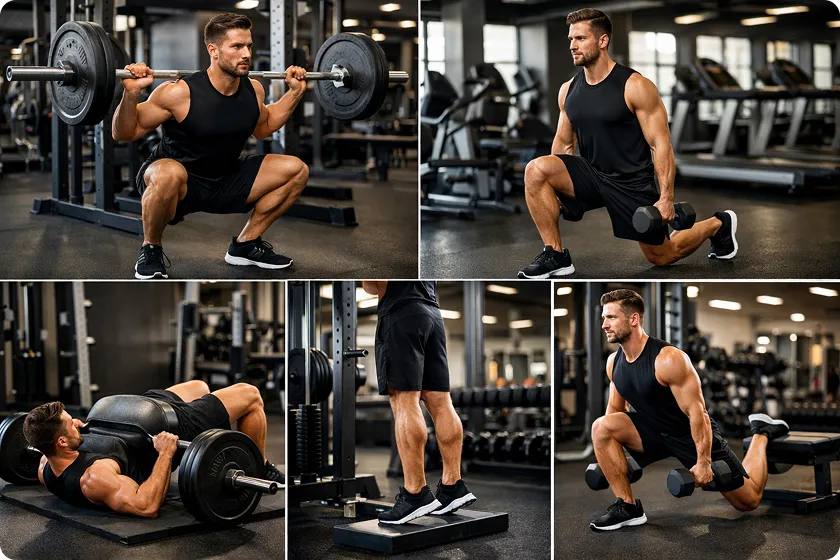
These leg day exercises recruit multiple muscles and improve core stability. Add squats, lunges, and Romanian deadlifts to your leg-lifting routine to build a strong foundation.
- Squat: An essential leg day exercise where you stand with feet hip-width apart, squat until your thighs are parallel, and rise.
- Lunge: A core leg day exercise. Step forward or backward, bend both knees until your front thigh is parallel, and return.
- Romanian Deadlift: This leg day exercise starts with a slight knee bend. Hinge at your hips, lower a weight toward your shins, and stand again.
2. Single-Leg & Accessory Exercises
These leg day exercises address imbalances and strengthen supporting muscles. Step-ups, glute bridges, and calf raises build balance and ankle strength, making them ideal leg exercises for beginners. Add them to improve coordination.
- Step-Up: A must-do leg day exercise. Place one foot on a step, drive through it to lift yourself, and lower with control.
- Glute Bridge: This leg day exercise involves lying with your knees bent, lifting your hips until your body forms a straight line, then lowering slowly.
- Calf Raise: This leg day exercise involves standing with your feet hip-width apart, rising onto the balls of your feet, then lowering your heels gradually.
3. Machine & Isolation Exercises
These leg day exercises let you lift heavy safely and target specific muscles. Leg presses and Bulgarian split squats build strength and stability, while leg extensions and hamstring curls isolate the front and back of your legs. Use them to round out your training.
- Leg Press: A staple leg day exercise. Sit with your back supported and feet flat on the platform. Press until your knees are nearly straight without locking them, then lower slowly to a comfortable depth, keeping your back and hips against the pad and your knees in line with your feet. Around 90° of knee bend is a common reference, not a requirement.
- Hamstring Curl: This leg day exercise, performed on a machine or a ball, involves curling your heels toward your glutes and lowering them slowly.
- Leg Extension: This leg day exercise uses a machine. Extend your legs until almost straight and lower with control.
- Bulgarian Split Squat: A challenging leg day exercise. Place one foot on a bench behind you, lower until your front thigh is parallel, and return.
Table 1: Key exercises at a glance
| Exercise | Main muscles | Equipment |
|---|---|---|
| Squat | Quads, glutes | Body weight or barbell |
| Lunge | Quads, glutes | Body weight or dumbbell |
| Romanian deadlift | Hamstrings, glutes | Dumbbells or barbell |
| Step-up | Glutes, quads | Step or bench |
| Glute bridge | Glutes & core | Body weight |
| Calf raise | Calves | Body weight or dumbbells |
| Leg press | Quads, glutes | Machine |
| Hamstring curl | Hamstrings | Machine/ball |
| Leg extension | Quads | Machine |
| Bulgarian split squat | Quads & glutes | Bench/dumbbells |
Supportive Habits & Tools
Smart habits improve the results of your leg day workouts. A proper warm-up prepares your muscles for heavy loads, while balanced nutrition and a realistic schedule help your leg muscle exercises translate into stronger legs and let you decide how many leg days a week you need. These supportive tools ensure each workout counts, and you stay consistent.
4. Warm-Up and Mobility
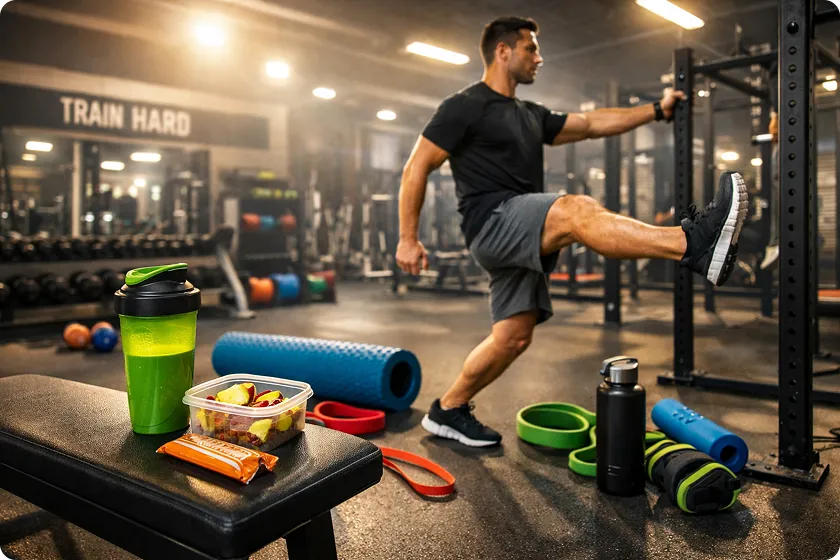
Do 5 to 10 minutes of light exercise to warm up your heart and muscles before doing dynamic drills like walking lunges, hip circles, and leg swings. These drills improve circulation and reduce the risk of injury.
5. Nutrition and Recovery
Consume complex carbs, lean proteins, and healthy fats. Stay hydrated. And get seven to nine hours of sleep. Gentle stretching or walking on rest days promotes circulation and supports muscle recovery.
6. Scheduling and Consistency
Consistency matters more than intensity. If you are new to leg training, start with a manageable workload and build up as your fitness and recovery improve. US guidelines advise adults to train all major muscle groups at least two days a week, so work toward two lower-body sessions with enough recovery between them. Master form before adding weight.
Table 2: Sample weekly plan
| Level | Sessions/week | Ex/session | Sets × reps | Rest |
|---|---|---|---|---|
| Beginner | 1 to 2 | 3 to 4 | 2 to 3 × 8 to 12 | 60 to 90 s |
| Intermediate | 2 | 4 to 5 | 3 to 4 × 8 to 12 | 60 to 90 s |
| Advanced | 2 to 3 | 5 to 6 | 4 × 6 to 10 | 90 to 120 s |
Form Tips to Protect Your Knees and Back
Good technique matters more than the weight on the bar. Keep these cues in mind on every rep:
- Knees track over toes: let your knees follow the direction of your toes rather than caving inward during squats, lunges, and step-ups.
- Neutral spine: brace your core and keep your back flat, especially during Romanian deadlifts. If your lower back rounds, reduce the weight or range of motion.
- Control the lowering phase: lower the weight smoothly instead of dropping or bouncing into the bottom. About 2 to 3 seconds is a useful cue, but the right tempo depends on the exercise and your goal.
- Pain-free range: squat only as deep as you can while keeping good form. Depth can improve with time and mobility work.
- Breathe: breathe in as you lower and breathe out as you push up. Do not hold your breath for long stretches, especially if you have high blood pressure.
- Progress gradually: add weight, reps, or sets once your current workload feels manageable with good form. For load, a common guideline is about 2 to 10% once you can do two extra reps beyond your target in two sessions in a row.
When to See a Doctor
Mild muscle soreness can show up 24 to 72 hours after a new or hard workout and usually eases over the next few days. Get checked by a doctor or physical therapist when pain is severe or getting worse, comes with significant swelling or weakness, or lasts longer than three days, or if you have sharp joint pain, knee swelling, a knee that locks or gives way, or back pain that spreads down your leg with numbness or tingling. Talk to your doctor before starting a new program if you have heart disease, uncontrolled high blood pressure, diabetes, a recent surgery or you are pregnant.
Call 911 (or your local emergency number) if you have chest pain or severe shortness of breath, or if you faint during exercise. Also get emergency care for extreme muscle pain and weakness with dark, tea-colored urine after a hard workout, which can be a sign of rhabdomyolysis.
Conclusion
Training your lower body is simple when you focus on the ten leg day exercises outlined here. These leg day exercises work every major muscle group and adapt to any fitness level, whether you choose body-weight drills or weight-based leg exercises. Combine them with proper warm-ups, balanced nutrition, and a sensible schedule to improve strength, mobility, and overall health. Share this guide and explore our other resources to keep progressing. Strong legs support a strong life, start building yours today.
Sources
- Physical Activity Guidelines for Americans, 2nd Edition (HHS)
- ACSM Position Stand: Progression Models in Resistance Training for Healthy Adults
- Strength Training: Get Stronger, Leaner, Healthier (Mayo Clinic)
- Rhabdomyolysis (MedlinePlus)
FAQ
1. What is leg day, and why is it important?
If you’re wondering what leg day is, it’s a workout that targets your lower body with compound moves like squats, lunges, and deadlifts, plus smaller drills. Training these big muscles uses energy, builds strength, and can improve balance and posture. A regular leg day also supports joint and bone health.
2. How many exercises should I do on leg day?
Aim for three to six moves. Pick two or three big lifts, such as squats, deadlifts, or leg presses, and one or two smaller drills, such as calf raises. Quality beats quantity, master body-weight versions first.
3. How many leg days a week do I need?
If you’re asking how many leg days a week, beginners can start with one manageable session and build toward two, since adult guidelines call for strengthening every major muscle group on two or more days each week. Allow enough recovery, often around 48 hours, between hard sessions. Advanced lifters may include a third day for accessory or mobility work, depending on recovery.
4. How can I strengthen my legs at home?
Do body-weight squats, lunges, step-ups, glute bridges, and calf raises, and make them more complicated with single-leg versions, extra reps, or household weights. Two or three sessions per week, plus good nutrition, support steady progress.
About the author

Health Researcher and Writer
Haider Nadeem is a health researcher and the writer behind Healthy Eats Guide. He writes about health problems he faces or sees people around him face, and turns careful research into practical guides. Articles are researched and drafted with AI assistance, then fact-checked and edited by Haider using cited sources such as USDA, NIH, and peer-reviewed research.
Related blogs

Workout Plan to Lose Weight: 8 Effective Workout Exercises
A beginner-friendly weekly workout plan to lose weight, with 8 key exercises, cardio and strength targets, recovery habits and safety tips.
9 min read
8 Effective Bodyweight Exercises to Tone Your Body
8 effective bodyweight exercises you can do anywhere, with step-by-step form tips, beginner modifications, a simple weekly plan and safety advice.
9 min read
Best Time to Take Creatine: 7 Tips for Optimal Results
Discover the best time to take creatine for maximum gains. Learn whether it's better post or pre-workout, and find out if you should take creatine on rest days. Optimize your routine today!
8 min read
Newsletter
Get practical nutrition guides in your inbox
Clear food-by-food advice and diet tips for everyday eating — no spam, unsubscribe anytime.