
Daily Exercise Routine: 7 Bodyweight Exercises at Home
A daily exercise routine you can do at home: 7 bodyweight exercises, a 20 to 30 minute beginner workout, a weekly schedule that meets WHO targets and when to stop or see a doctor.
Disclaimer: This article is general fitness information, not medical advice. If you have a heart, lung, metabolic, or kidney condition, an injury, symptoms such as chest pain or fainting, or you're pregnant, talk to a doctor before starting a new exercise program.
Introduction

Have you ever promised yourself you'd start exercising tomorrow, only for tomorrow to turn into weeks? You're not alone. Busy schedules, low motivation and not knowing what to do all get in the way.
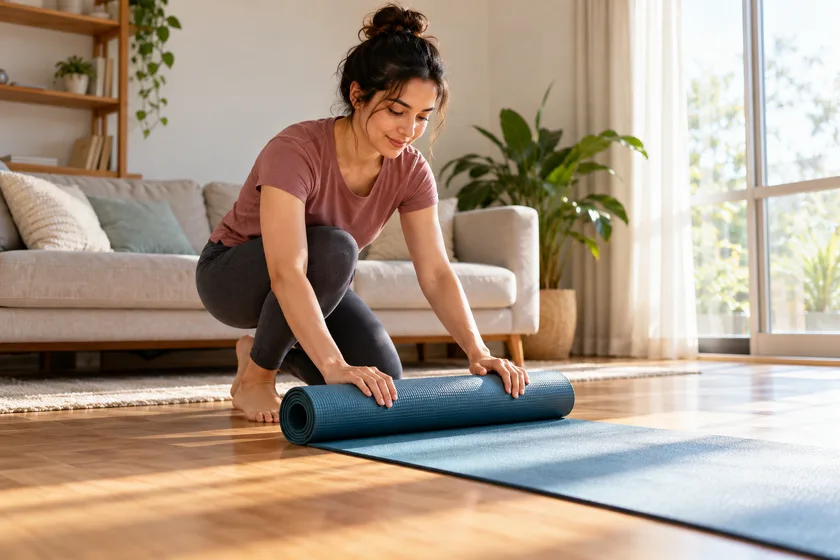
The good news is that a useful routine doesn't need to be long or complicated. This guide gives you seven bodyweight exercises, one beginner workout of 20 to 30 minutes, and a weekly schedule that meets the World Health Organization (WHO) activity targets.
What "daily" means here: a daily routine means moving most days, not working out hard every day. Your plan alternates strength days, cardio days and easier recovery days, such as walking or gentle stretching, so your body has time to adapt.
Why Regular Exercise Matters
Physical health: people who stay active are less likely to develop high blood pressure, heart disease, type 2 diabetes, or certain cancers, and regular movement can improve sleep too (CDC). How much you benefit depends on how much you do and for how long.
Mental health: WHO notes that staying active can ease depression and anxiety symptoms while helping thinking and well-being (WHO, 2020). Endorphins aren't the whole story. Better sleep, a sense of achievement, time outdoors, and social contact likely all play a part.
Longer life: in a 30-year study of more than 116,000 US adults published in Circulation, people who met the guideline of 150 to 299 minutes a week of moderate leisure-time activity had about a 19 to 25% lower risk of death than people who did almost none, and doing 2 to 4 times that amount added only a small further benefit (Lee et al., 2022). This was an observational study that used self-reported activity, so it shows an association, not proof of cause.
How Much exercise Do You Need Each Week?
WHO and the CDC recommend that adults do:
- 150 to 300 minutes of moderate-intensity aerobic activity a week, or 75 to 150 minutes of vigorous activity, or an equivalent mix (1 minute of vigorous activity counts about the same as 2 minutes of moderate activity), and
- strength work that covers every major muscle group, at least 2 days a week (WHO, 2020 and CDC).
Going beyond 300 minutes of moderate activity brings additional benefits, and doing any amount is better than nothing.
| Aspect | Moderate activity | Vigorous activity |
|---|---|---|
| Talk test | You can talk but not sing | You can only say a few words without pausing for breath |
| Effort (0 to 10 scale) | About 5 to 6 | About 7 to 8 |
| Examples | Brisk walking, easy cycling, water aerobics | Jogging, swimming laps, fast or hilly cycling |
The talk test and effort scale come from the CDC (CDC).
Short bouts count as long as they reach at least moderate intensity. For example, three brisk 10-minute walks add up to 30 minutes (CDC). Low-impact options such as swimming, cycling, rowing or an elliptical trainer may suit beginners or people with joint pain.
7 Bodyweight Exercises for a Full-Body Routine
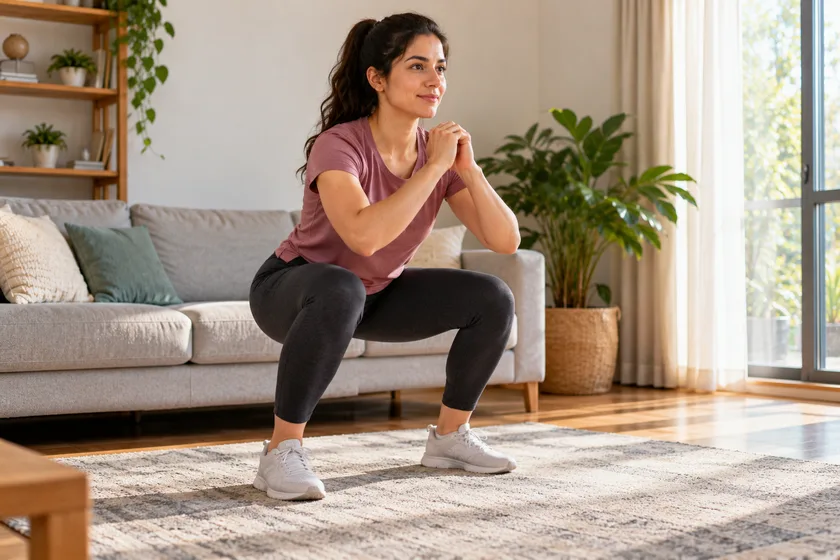
You don't need equipment to train all your major muscle groups. These seven exercises make up the beginner workout below:
- Squat (legs and glutes). Easier version: chair squat, sitting down to a chair and standing back up.
- Push-up (chest, shoulders, arms). Easier versions: wall push-up, then incline push-up on a counter, then knee push-up.
- Glute bridge (glutes and the back of the thighs).
- Reverse lunge (legs and balance). Easier version: hold a chair or wall for support, or do a split squat without stepping.
- Bent-over "W" raise or towel row (upper back). Hinge forward and squeeze your shoulder blades together.
- Plank (core). Easier version: plank with your hands on a bench or wall.
- Jumping jacks (cardio). Low-impact version: step-jacks, stepping one foot out at a time as your arms rise.
Form cues:
- Move slowly and with control.
- Keep your back neutral, not rounded or sagging.
- Keep your knees in line with your toes.
- Breathe steadily: exhale during the effort and don't hold your breath.
The Beginner 20 to 30 Minute Home Workout
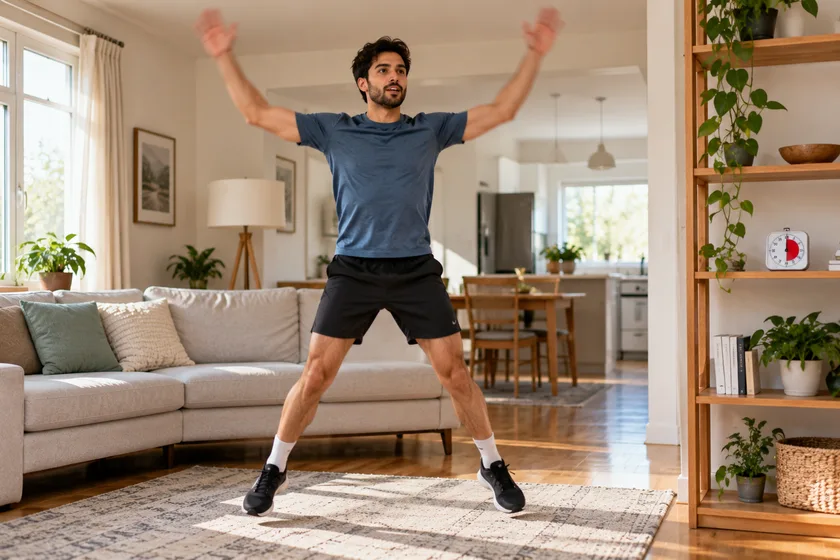
Do this workout 2 to 3 times a week on non-consecutive days.
1. Warm-up (at least 5 to 6 minutes): march in place for 3 minutes, pumping your arms. Then do 60 seconds of heel digs, 30 seconds of knee lifts, 10 shoulder rolls each way and 10 shallow knee bends. This is based on the NHS warm-up (NHS). A warm-up prepares your body for exercise, but it doesn't guarantee you won't get injured.
2. Circuit (2 to 3 rounds, about 12 to 18 minutes):
| Order | Exercise | Reps or time |
|---|---|---|
| 1 | Squat or chair squat | 10 to 12 |
| 2 | Wall, incline or knee push-up | 6 to 10 |
| 3 | Glute bridge | 10 to 12 |
| 4 | Reverse lunge (supported if needed) | 6 to 8 per leg |
| 5 | W raise or towel row | 10 to 12 |
| 6 | Plank (incline if needed) | 15 to 30 seconds |
| 7 | Step-jacks or jumping jacks | 30 seconds |
Take a 15- to 30-second break after each exercise and a 1- to 2-minute break after each round. Aim for an effort of about 5 to 7 out of 10, finishing each set with a few reps still left in reserve.
3. Cool-down (about 5 minutes): walk slowly until your breathing settles. Then gently stretch your thighs, hamstrings, calves, chest and hips, holding each stretch for 20 to 30 seconds. Stretching can help you feel less stiff, but it doesn't guarantee injury prevention.
How to progress: when every round feels easy (about 4 out of 10 or less), change one thing at a time:
- add 2 reps
- add a third round
- move to a harder version, such as a knee push-up instead of an incline push-up
- shorten the rest a little
Inactive people should "start low and go slow," building up gradually (CDC). Muscle soreness or damage isn't needed for progress. Mild stiffness after a new workout is common, but steady improvement over weeks is what counts.
Short on time? On busy days, a brisk 10-minute walk or one round of the circuit still counts toward your weekly total. A bit of activity is better than none.
Prefer the Gym? Beginner Strength Exercises
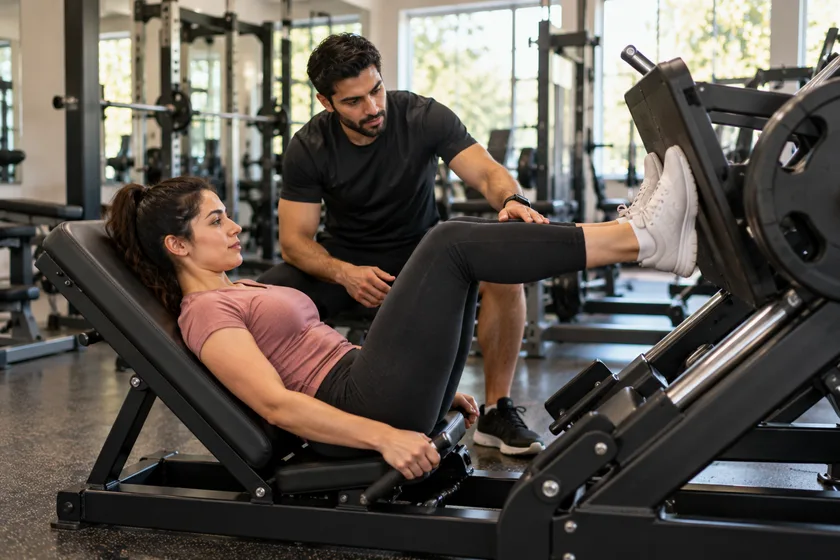
Machines and light dumbbells are an easy way to learn good form. A simple full-body gym session could be 2 sets of 10 to 12 reps of:
- leg press
- chest press
- lat pulldown
- seated row
- dumbbell shoulder press
- plank
You can do this on your strength days instead of the home circuit. For more ideas, see our gym workout routines for women, which suit beginners of any gender.
A Weekly Schedule That Meets the WHO Targets
This beginner week includes about 150 minutes of moderate activity plus 3 strength sessions:
| Day | Activity |
|---|---|
| Monday | Beginner home workout (25 to 30 min) |
| Tuesday | Brisk walk or easy cycle (45 min, moderate, can be split into shorter bouts) |
| Wednesday | Beginner home workout or gym session (25 to 30 min) |
| Thursday | Brisk walk (45 min, can be split) plus gentle stretching |
| Friday | Beginner home workout (25 to 30 min) |
| Saturday | Longer brisk walk, swim or bike ride (60 min, moderate) |
| Sunday | Rest or light movement such as an easy walk or mobility work |
Tuesday, Thursday and Saturday add up to 150 minutes of moderate activity. Use the talk test to check you're working at least moderately. As you get fitter, you can work toward 300 minutes, or swap some walks for jogging or interval sessions. High-intensity work is optional, not required.
Staying Consistent
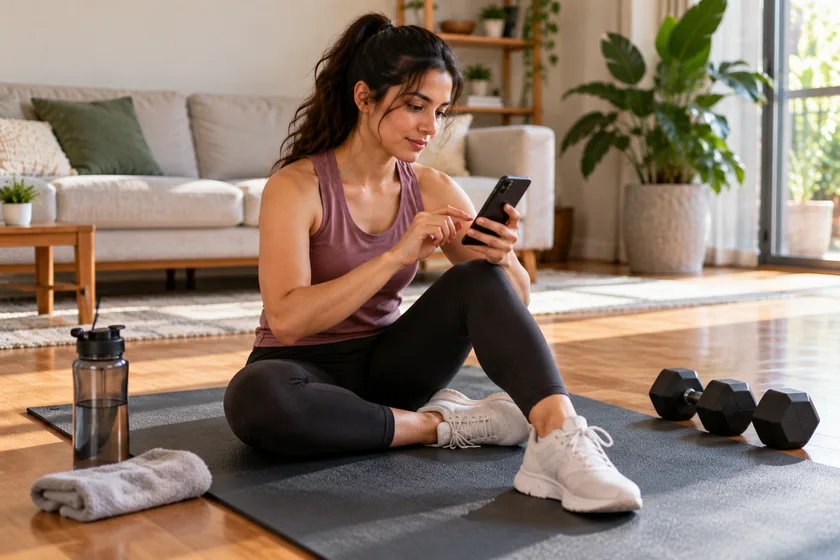
- Set small goals: for example, "Three home workouts and two walks this week."
- Track your progress: use a notebook or app. Measure more than the scale, for example your push-up count, your plank time, or how easy stairs feel. Posture and flexibility are worth improving, but they don't burn fat on their own. Fat loss depends mainly on your overall activity and diet.
- Choose activities you enjoy: dancing, hiking, cycling or group classes all count.
- Find support: training with a friend, a club or an online group helps many people stay accountable and enjoy it more.
Recovery, Sleep and Nutrition
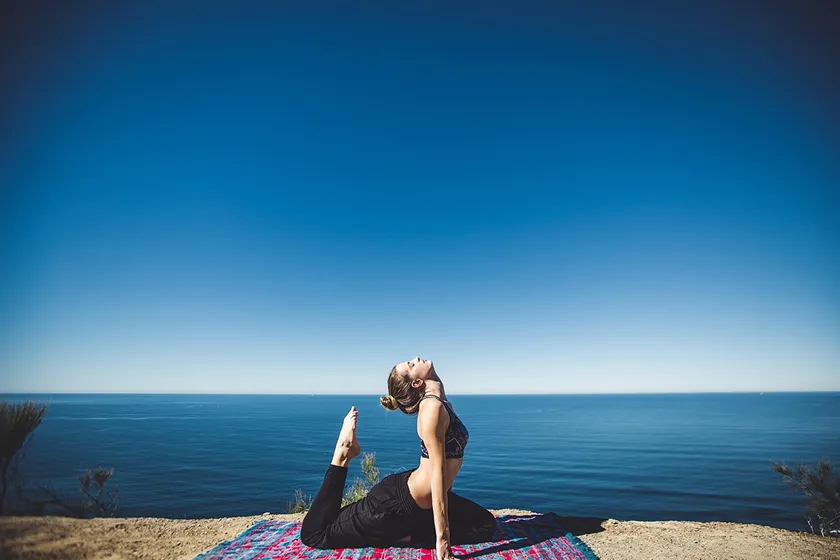
Rest days and easier days help your body recover and adapt. Most adults need 7 or more hours of sleep a night. Eat balanced meals with protein, whole grains, fruit and vegetables, and drink water through the day. Results are slower and harder to come by if you're consistently short on sleep or food.
When to See a Doctor

Physical activity is safe for almost everyone when you build up gradually (CDC). Stop exercising and get medical help if you have:
- chest pain or pressure
- faintness or dizziness
- severe or unusual breathlessness
- a racing or irregular heartbeat
- pain that is sharp or getting worse
Stop immediately and call 911 (or your local emergency number) if you have chest pain or pressure, pain spreading to your arm, jaw or back, fainting or sudden weakness on one side of your body.
See a doctor or physical therapist if joint pain, swelling or pain that changes how you move lasts more than a week, or if you notice severe muscle pain with dark urine after a hard session.
Medical clearance isn't needed for most healthy adults without symptoms. Check with a doctor first if you have symptoms like those above, a known heart, metabolic or kidney condition, a recent injury or operation, or you're pregnant (NHS and Mayo Clinic).
Conclusion
A daily exercise routine works best when it's simple: move most days, do the beginner workout two or three times a week, add brisk walks to reach 150 minutes, and take easy days when you need them. Start with the easier versions, progress one step at a time, and stop if anything feels wrong.
Sources
- WHO 2020 Guidelines on Physical Activity and Sedentary Behaviour (British Journal of Sports Medicine)
- Physical Activity Guidelines for Americans, 2nd Edition (HHS)
- Benefits of Physical Activity (CDC)
- Long-Term Leisure-Time Physical Activity Intensity and Mortality (Circulation, 2022)
- How to Warm Up Before Exercising (NHS)
- Fitness Program: 5 Steps to Get Started (Mayo Clinic)
FAQ
1. Is it okay to exercise every day?
Yes, if you vary the intensity. Alternate strength or harder cardio days with easy walks or gentle stretching so your body can recover.
2. How long should a beginner workout take?
About 20 to 30 minutes, including a warm-up and cool-down, is a practical start. Short brisk bouts during the day also count toward your weekly total.
3. Can I get fit at home without equipment?
Yes. Bodyweight exercises such as squats, push-ups, bridges, lunges and planks train all major muscle groups, and brisk walking covers your aerobic activity.
4. Do I need to feel sore for a workout to work?
No. Soreness isn't a sign of progress, and steady improvements in reps, rounds or ease of movement over weeks matter more.
5. Is it better to work out in the morning or evening?
The best time is whichever you can stick to. Some people feel more energized in the morning, while evenings fit others' schedules better.
6. When should I stop exercising and get help?
Stop if you feel chest pain, dizziness, unusual breathlessness or a racing heartbeat. Stop immediately and call 911 (or your local emergency number) if you have chest pain.
About the author

Health Researcher and Writer
Haider Nadeem is a health researcher and the writer behind Healthy Eats Guide. He writes about health problems he faces or sees people around him face, and turns careful research into practical guides. Articles are researched and drafted with AI assistance, then fact-checked and edited by Haider using cited sources such as USDA, NIH, and peer-reviewed research.
Related blogs
7 Proven Ways to Stay Active Throughout the Day
How to stay active throughout the day: 7 proven ways to move more at home and at work, from movement snacks to short strength routines, plus safety tips.
14 min read
Upper Body Workout for Men: 7 Moves for Strength and Shape
Upper body workout for men: seven essential moves, from push-ups to rows and presses, with form cues, sets and reps, a weekly plan, and safety tips for building strength.
14 min read
8 Effective Bodyweight Exercises to Tone Your Body
8 effective bodyweight exercises you can do anywhere, with step-by-step form tips, beginner modifications, a simple weekly plan and safety advice.
9 min read
Newsletter
Get practical nutrition guides in your inbox
Clear food-by-food advice and diet tips for everyday eating — no spam, unsubscribe anytime.