
5 Proven Gym Workout Routines for Women to Try Today
5 gym workout routines for women, from a full-body beginner plan to an upper/lower split and a two-day minimalist option, with progression and safety tips.
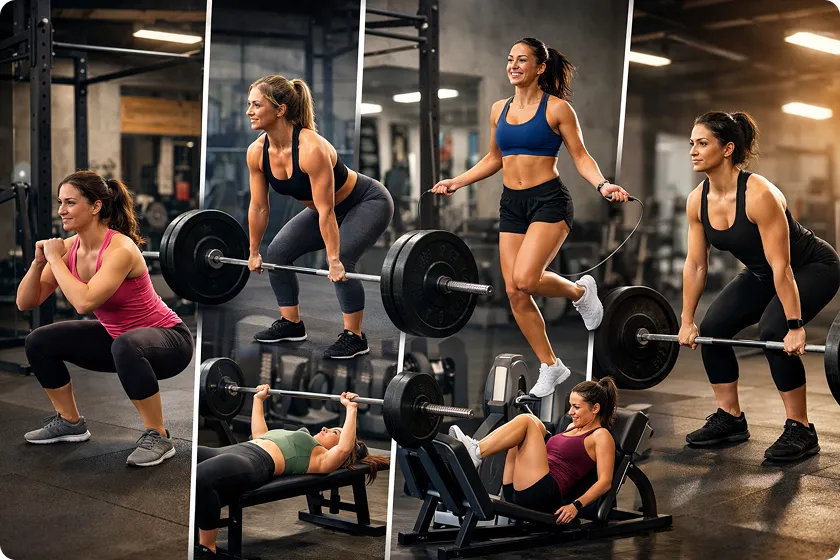
Introduction

If you have ever walked into the gym thinking, "What am I doing today?", what you are missing is a plan. A structured gym workout routine helps you train your whole body, track progress and stay motivated. Strength training offers women many benefits: it builds muscle and helps maintain bone density, which can lower the risk of osteoporosis (though no exercise can guarantee prevention), supports a healthy metabolism, improves balance and can boost mood and confidence.
The Physical Activity Guidelines for Americans recommend that adults do muscle-strengthening activities for all major muscle groups on at least two days a week, plus 150 to 300 minutes of moderate aerobic activity. The five routines below meet those guidelines in different ways. Pick the one that fits your schedule and goals, then repeat it consistently for six to eight weeks before changing.
Table 1. Five options for a gym workout routine for women (pick what you repeat). Columns show the routine, main goal, days per week, session length and focus.
| Full-body beginner (A/B) | Learning + confidence | 3 | 45–60 min | Whole-body basics |
|---|---|---|---|---|
| Upper/lower split | Strength + shape | 4 | 50–70 min | More weekly volume |
| Push/pull/legs | Clear structure | 3 (or 6) | 45–70 min | Movement patterns |
| Strength + cardio hybrid | Health + stamina | 5 | 35–60 min | 3 lift + 2 cardio |
| Two-day minimalist | Very busy schedules | 2 | 60–75 min | Big lifts only |
Key principles for every routine
- Warm up: Spend five minutes on easy cardio and dynamic stretches, then do one light set of your first exercise.
- Movement patterns: Include a squat, a hip hinge, a push, a pull and a core exercise each week.
- Effort: Finish most sets with one or two repetitions left in reserve. You do not need to train to failure.
- Progression: Add repetitions first, then increase the weight once you reach the top of your rep range with good form.
- Recovery: Allow about 48 hours before training the same muscles hard again as a starting point; recovery needs vary.
Full-body beginner routine
Routine 1: Full-body A/B workouts on three nonconsecutive days, such as Monday, Wednesday and Friday.
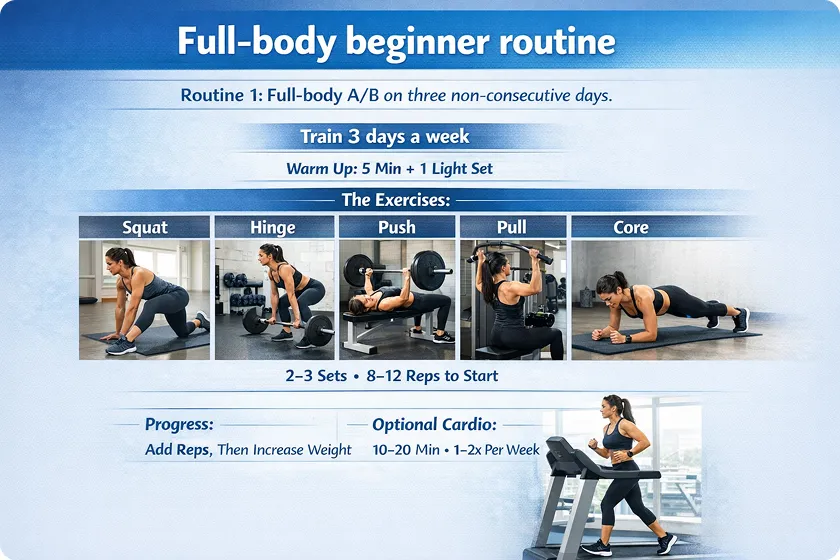
This routine is ideal if you are new to the gym or returning after a break. Practicing the same basic lifts several times a week helps you learn good technique quickly and builds confidence.
Alternate two workouts. Workout A might include goblet squats, dumbbell Romanian deadlifts, dumbbell bench press, seated cable rows and planks. Workout B could include leg press, glute bridges or hip thrusts, an overhead dumbbell press, lat pulldowns and dead bugs. Do two to three sets of 8 to 12 repetitions for each exercise.
Keep a simple log of weights and reps so you can see progress. Cardio is optional at this stage; 10 to 20 minutes of brisk walking or cycling once or twice a week is a good start.
Upper and lower split routine
Routine 2: Upper/lower split across four days.
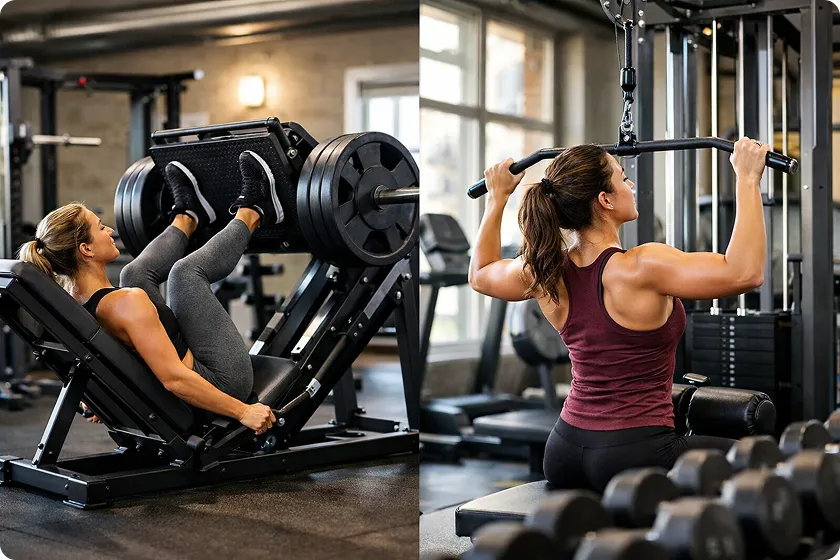
Once you are comfortable with the basics, an upper/lower split lets you do more total work each week without making sessions longer. Training each muscle group twice a week is a practical approach for building strength and muscle, as long as overall volume, progression, food and recovery are in place.
A common schedule is lower body on Monday, upper body on Tuesday, rest on Wednesday, lower body on Thursday and upper body on Friday. Lower days include a squat or leg press, a hip hinge such as a Romanian deadlift, hamstring curls and a core exercise. Upper days include a pressing exercise, a row, a lat pulldown and shoulder work like lateral raises.
Keep your main lifts the same for six to eight weeks so you can measure progress. If soreness regularly lasts beyond 48 to 72 hours, reduce one accessory set rather than skipping sessions. Easy walking on rest days aids recovery. For more lower-body ideas, see our guide to leg day exercises.
Push, pull, legs routine
Routine 3: Push/pull/legs, three days a week, or six days for advanced lifters.
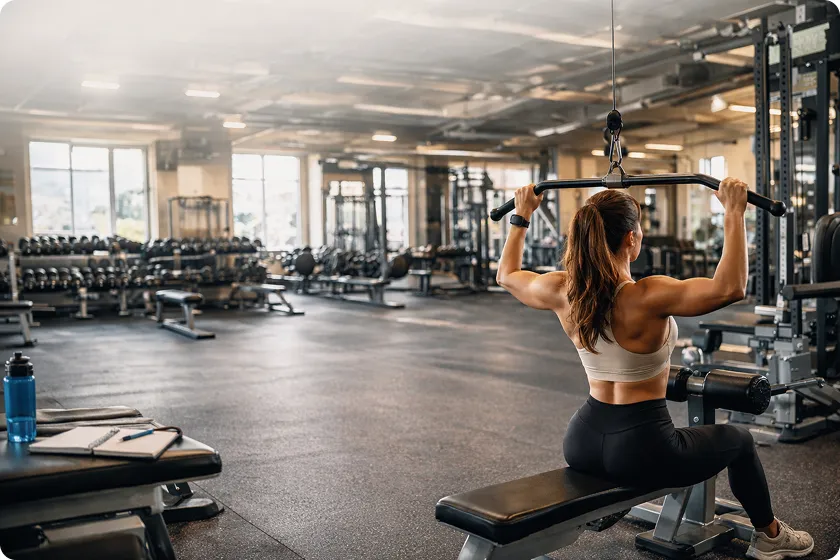
Push/pull/legs divides training by movement: push days for the chest, shoulders and triceps; pull days for the back and biceps; and leg days for the lower body. The clear structure reduces wandering between machines and makes sure no muscle group is skipped.
Run it on Monday, Wednesday and Friday, with three main exercises plus one accessory each day:
- Push: bench or machine press, incline dumbbell press, shoulder press, triceps pushdowns
- Pull: lat pulldown, seated row, rear-delt flyes, biceps curls
- Legs: squat or leg press, hip thrust, leg curl, calf raises
Track your first two lifts each day so progress is easy to see. If you add cardio, keep it easy and avoid hard sessions right before leg days.
Strength plus cardio hybrid routine
Routine 4: Three strength days plus two cardio days.
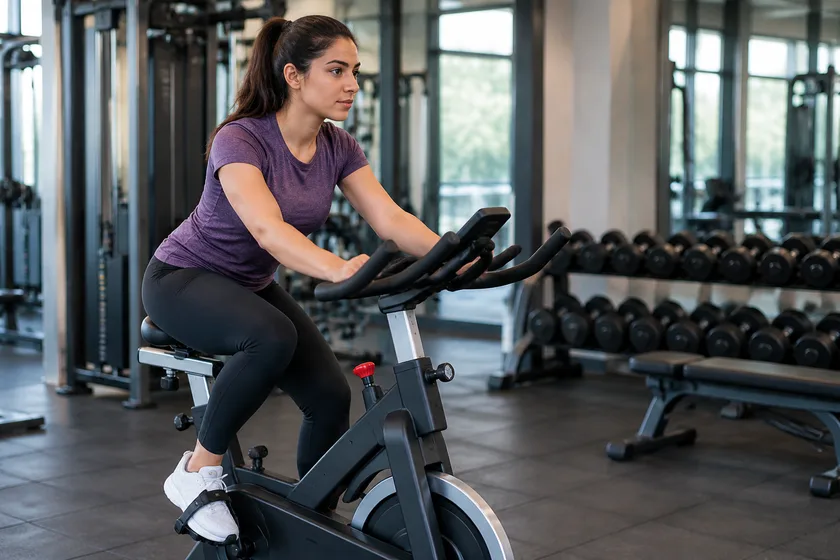
This plan focuses on overall health and stamina while still building strength. It closely matches the national guidelines, which recommend both aerobic and muscle-strengthening activity each week.
A simple week looks like strength, cardio, strength, cardio, strength, with weekends off or for light activity. Strength days use full-body workouts with a squat, hinge, push, pull and core move, two to three sets of 8 to 12 reps each. Cardio days include 25 to 40 minutes of steady activity, such as cycling, brisk walking on an incline or rowing, or 6 to 10 rounds of hard-easy intervals.
Choose a form of cardio you enjoy, since enjoyment helps you stick with it. Keep cardio moderate so it supports rather than drains your strength training. Pair this plan with balanced meals; our high-protein meals guide can help with recovery.
Two-day minimalist routine
Routine 5: Two full-body sessions per week.
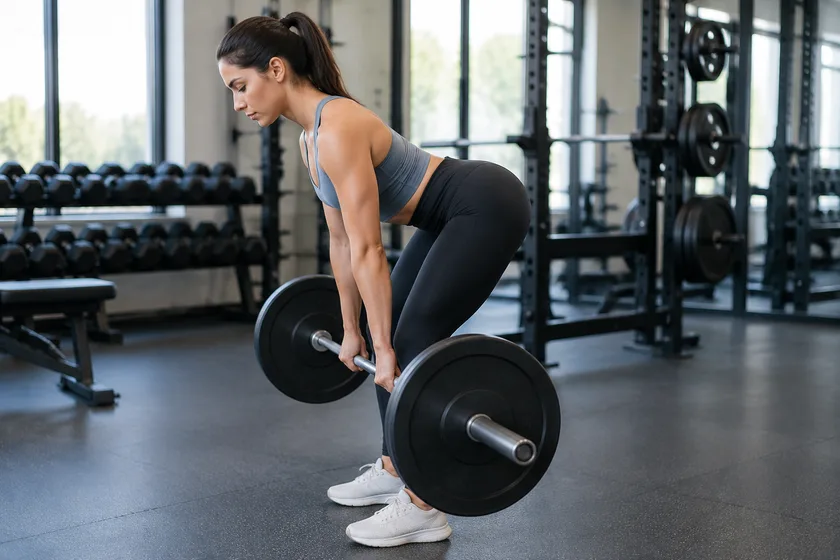
When life is busy, two well-planned sessions can still build and maintain strength, because the guidelines call for muscle-strengthening on at least two days a week. This is also a good restart plan after a break.
Focus on big compound lifts that work several muscles at once: squat or leg press, deadlift or Romanian deadlift, a press, a row or pulldown and a loaded carry or plank. Do three sets of 6 to 12 reps and allow 60 to 75 minutes, including warm-up and rest. Space the sessions at least two days apart, and add daily walks for extra activity.
Nutrition, Sleep and Recovery
Training gives your muscles the signal to grow, but food and rest allow it to happen. Include protein at each meal, such as eggs, yogurt, fish, chicken, beans or tofu, and eat plenty of vegetables, fruit and whole grains. Drink water before and during workouts. Most adults need seven or more hours of sleep a night for good recovery. Women who are pregnant or postpartum should get guidance from their healthcare provider on safe exercise, and those approaching menopause may especially benefit from strength training for bone health.
When to See a Doctor
Check with a healthcare provider before starting a new program if you are pregnant, have recently given birth, or have heart disease, high blood pressure, diabetes, osteoporosis or joint problems. Seek advice if you notice:
- Joint pain that persists or worsens after workouts
- Sharp pain during an exercise
- Pelvic pain, leaking urine or heaviness during lifting
- Unusual fatigue or missed periods with heavy training
Emergency: Stop exercising and call 911 (or your local emergency number) if you have chest pain or pressure, severe shortness of breath, fainting, or sudden weakness or numbness on one side of the body.
Conclusion
The best gym workout routine for women is the one you can follow consistently. Beginners can start with a full-body A/B plan, intermediate lifters may prefer an upper/lower split or push/pull/legs, and busy schedules fit a hybrid or two-day plan. Cover all major movement patterns, progress gradually, prioritize recovery and enjoy the strength and confidence that regular training brings.
Sources
- Current Guidelines (Physical Activity Guidelines for Americans, ODPHP)
- Getting Active (Office on Women's Health)
- Exercise and Physical Fitness (MedlinePlus)
- Strength Exercises (NHS)
- Physical Activity Guidelines for Adults Aged 19 to 64 (NHS)
FAQ
1. How often should women work out at the gym?
Aim for strength training on at least two days a week and 150 to 300 minutes of moderate aerobic activity, spread across the week.
2. Will lifting weights make women bulky?
Not usually. Building large muscles takes years of targeted training and eating. Most women gain strength and a firmer, toned look.
3. What is the best gym routine for beginners?
A full-body routine three times a week, focused on basic squat, hinge, push, pull and core exercises, is an excellent start.
4. How long until I see results?
Many people notice strength gains within a few weeks and visible changes after two to three months of consistent training and good nutrition.
5. Should I do cardio or weights first?
If strength is your priority, lift first. If you do cardio first, keep it light so it does not reduce your lifting performance.
About the author

Health Researcher and Writer
Haider Nadeem is a health researcher and the writer behind Healthy Eats Guide. He writes about health problems he faces or sees people around him face, and turns careful research into practical guides. Articles are researched and drafted with AI assistance, then fact-checked and edited by Haider using cited sources such as USDA, NIH, and peer-reviewed research.
Related blogs

Recreational Soccer Benefits: 7 Reasons to Play Today
Seven evidence-based benefits of recreational soccer, from heart fitness and blood pressure to bone strength and social connection, plus a safe beginner weekly plan.
10 min read

Workout Plan to Lose Weight: 8 Effective Workout Exercises
A beginner-friendly weekly workout plan to lose weight, with 8 key exercises, cardio and strength targets, recovery habits and safety tips.
9 min read
Gym Workout Routine for Men: 9 Tips and a 3-Day Plan
A gym workout routine for men who are starting out: 9 strength training tips, a 3-day full-body beginner plan, progression rules, cardio, recovery and nutrition basics.
13 min read
Newsletter
Get practical nutrition guides in your inbox
Clear food-by-food advice and diet tips for everyday eating — no spam, unsubscribe anytime.