
Symptoms of Heart Failure in Women: 7 Essential Signs
Symptoms of heart failure in women include fatigue, breathlessness, swelling and a lingering cough. Learn the 7 key signs, why HFpEF matters for women, and when to get emergency care.
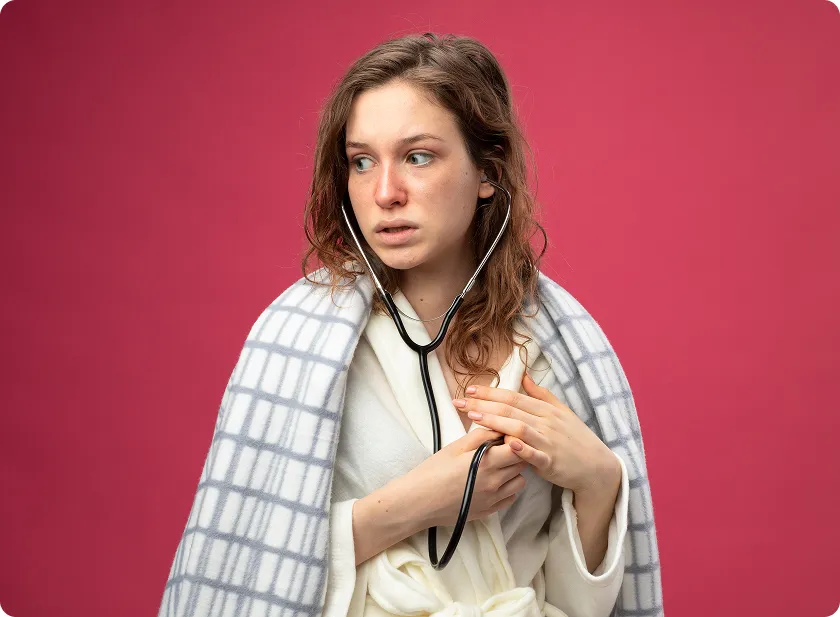
Introduction

Heart failure does not mean the heart has stopped. It means the heart cannot pump enough blood and oxygen to meet the body's needs (CDC). Nearly 6.7 million US adults have heart failure, and it is a long-term condition that usually gets worse without treatment.
The symptoms of heart failure in women often develop gradually and can be easy to explain away as stress, aging or being run down. Women are also more likely than men to have a type called heart failure with preserved ejection fraction (HFpEF), in which the heart muscle is stiff rather than weak. Below are seven common symptoms, the emergency signs that need a call to 911 (or your local emergency number), and what to expect from diagnosis and treatment.
When to Call 911 (or your local emergency number)
Emergency: Call 911 (or your local emergency number) right away if you have chest pain, fainting or severe weakness, a fast or irregular heartbeat with shortness of breath, chest pain or fainting, or sudden severe shortness of breath while coughing up white or pink foamy mucus (Mayo Clinic).
These symptoms can have causes other than heart failure, including a heart attack, so do not try to diagnose yourself. Women are more likely than men to have heart attack symptoms other than chest pain, such as shortness of breath, nausea, or pain in the jaw, neck or back, so take these seriously too.
Heart Failure in Women: What Is Different?
Heart failure can affect the left side of the heart, the right side, or both. Doctors also describe it by ejection fraction (EF), the share of blood the main pumping chamber pushes out with each beat (Mayo Clinic):
- HFrEF (reduced ejection fraction): EF is 40% or lower. The heart muscle is weak and cannot squeeze well.
- HFmrEF (mildly reduced ejection fraction): EF is 41% to 49%, a middle group that shares features of both types.
- HFpEF (preserved ejection fraction): EF is 50% or higher, but the heart muscle is stiff and does not fill properly between beats.
HFpEF is more common in women, especially older women with high blood pressure, obesity, diabetes or atrial fibrillation. Because the EF can look "normal," HFpEF can be missed if symptoms are not taken seriously. Women may also have symptoms that are less "textbook," such as fatigue, nausea and reduced exercise tolerance.
1. Fatigue That Goes Beyond Normal Tiredness

The fatigue linked to heart failure does not lift with rest. The American Heart Association describes a tired feeling all the time and difficulty with everyday activities such as shopping, climbing stairs or carrying groceries (American Heart Association).
This happens because the heart cannot pump enough blood to meet the body's needs, so the body diverts blood away from less vital organs, including the limb muscles, toward the heart and brain. Women often dismiss this level of exhaustion, which is one reason it goes unaddressed.
What to watch for: Ongoing fatigue that is getting worse over time and feels out of proportion to your activity.
2. Breathlessness During Everyday Activities

Shortness of breath is one of the most common heart failure symptoms. When the heart cannot keep up, blood backs up in the veins that return blood from the lungs, and fluid can leak into the lungs (American Heart Association). Breathlessness often appears during activity first, but it can also happen at rest, when lying flat, or when bending over (Mayo Clinic). Some people wake suddenly at night short of breath and need several pillows to breathe comfortably.
What to watch for: Breathlessness that appears at rest, worsens when lying down, wakes you at night, or has crept into activities that never used to wind you.
3. Swelling in the Feet, Ankles, Legs or Belly

When the heart does not empty properly, blood returning from the body backs up in the veins, forcing fluid into the tissues. This swelling, called edema, often starts in the feet and ankles and can spread up the legs or into the belly (American Heart Association). It frequently comes with weight gain.
Mild swelling after a long day or a flight is common. Heart-related swelling tends to be persistent, may leave a dent when you press the skin, and often comes with other symptoms on this list.
What to watch for: Shoes or rings that suddenly feel tight, visible ankle puffiness, skin that dimples when pressed, or rapid weight gain.
4. A Heartbeat That Feels Off

To make up for reduced pumping, the heart often beats faster. You may feel palpitations, a racing pulse or a throbbing sensation (American Heart Association). Irregular rhythms such as atrial fibrillation can also cause or worsen heart failure (Mayo Clinic).
What to watch for: A racing or irregular heartbeat, especially at rest, with dizziness, or more often than before. If it comes with chest pain, fainting or shortness of breath, call 911 (or your local emergency number).
5. A Persistent Cough or Wheezing

A cough that lingers, brings up white or pink, blood-tinged mucus, or comes with wheezing can be caused by fluid in the lungs (American Heart Association). It is often mistaken for a cold, asthma, allergies or reflux.
What to watch for: A wet or persistent cough that is worse when lying down. Sudden severe breathlessness with pink, foamy mucus is an emergency.
6. Stomach Discomfort, Nausea or Loss of Appetite

The digestive system receives less blood in heart failure, and fluid can build up in the belly and liver. This can cause a feeling of fullness, nausea, bloating and lack of appetite (American Heart Association; Mayo Clinic). Because these symptoms overlap with common stomach problems, they are often blamed on something else.
What to watch for: Unexplained nausea, early fullness or bloating, particularly alongside other symptoms on this list.
7. Mental Fog, Confusion or Memory Lapses

Changes in blood levels of substances such as sodium, along with reduced blood flow, can cause memory loss and disorientation. A relative or caregiver may notice this first (American Heart Association).
What to watch for: New difficulty concentrating, increased forgetfulness or confusion, especially alongside other symptoms.
Quick Reference: Symptoms at a Glance
| Symptom | What it may feel like |
|---|---|
| Fatigue | Persistent exhaustion, not relieved by rest |
| Shortness of breath | With activity, at rest, lying flat or waking at night |
| Swelling | Puffy feet, ankles, legs or belly, often with weight gain |
| Irregular heartbeat | Racing, fluttering or pounding in the chest |
| Persistent cough | Wet cough or wheezing, sometimes with white or pink mucus |
| Stomach issues | Fullness, bloating, nausea or poor appetite |
| Cognitive changes | Trouble concentrating, memory lapses, confusion |
Table 1: Common heart failure symptoms (American Heart Association)
Causes and Risk Factors
Coronary artery disease and heart attack are major causes of heart failure, alongside high blood pressure, diabetes, heart valve disease and cardiomyopathy (Mayo Clinic). Other causes and risk factors include (CDC; Mayo Clinic):
- High blood pressure, which is especially linked with HFpEF
- Diabetes and obesity
- Heart valve disease and irregular heartbeats such as atrial fibrillation
- Cardiomyopathy and myocarditis, including peripartum cardiomyopathy, a rare form that develops late in pregnancy or after birth
- Some cancer treatments and certain medicines, such as NSAIDs
- Sleep apnea, smoking and heavy alcohol use
How Heart Failure Is Diagnosed
If you have symptoms, your doctor will examine you and may order:
- Blood tests, including BNP or NT-proBNP, hormones that rise when the heart is under strain
- Echocardiogram, an ultrasound that shows how well the heart pumps and fills and measures ejection fraction
- Electrocardiogram (ECG) to check heart rhythm
- Chest X-ray to look for fluid in the lungs or an enlarged heart
Doctors often describe heart failure in four stages, from Stage A (at risk, with no symptoms or heart damage) through Stage D (advanced heart failure that needs specialized care). Treatment aims to stop or slow progression between stages.
Living With Heart Failure: Monitoring Your Symptoms
Treatment usually combines medicines, reducing sodium, staying active and tracking symptoms daily (CDC). Weigh yourself every morning after using the toilet and before breakfast. Call your healthcare professional right away if your symptoms suddenly get worse, you develop a new symptom, or you gain 5 pounds (2.3 kilograms) or more within a few days (Mayo Clinic). Follow the specific action plan from your care team if it gives a different limit. For food guidance, see our heart failure diet guide.
Conclusion
Heart failure in women rarely announces itself dramatically. It more often shows up as exhaustion, a lingering cough, shoes that no longer fit or breathlessness at night. If you recognize yourself in these symptoms, talk to your doctor and ask directly whether your heart could be involved. Know the emergency signs, and call 911 (or your local emergency number) for chest pain, fainting, severe weakness or sudden severe breathlessness. Keeping blood pressure in check also lowers your risk; our guide to understanding blood pressure readings explains the numbers.
Sources
- Heart Failure Signs and Symptoms (American Heart Association)
- Heart Failure: Symptoms and Causes (Mayo Clinic)
- About Heart Failure (CDC)
- Heart Failure (NHLBI)
FAQ
1. What are the first signs of heart failure in women?
Early signs often include unusual fatigue, shortness of breath with everyday activities and swelling in the feet or ankles. These can develop gradually, so they are easy to dismiss.
2. When should I call 911 (or your local emergency number) for heart failure symptoms?
Call 911 (or your local emergency number) for chest pain, fainting or severe weakness, a fast or irregular heartbeat with breathlessness, or sudden severe shortness of breath with pink, foamy mucus. These need emergency care.
3. Is heart failure different in women than in men?
Women are more likely to have heart failure with preserved ejection fraction, where the heart is stiff rather than weak. Their symptoms may also be less typical, such as fatigue and nausea.
4. How much weight gain is a warning sign?
Mayo Clinic advises calling your healthcare professional if you gain 5 pounds or more within a few days. Your care team may give you a different limit in your action plan.
5. Can heart failure be reversed?
It depends on the cause. Some forms improve a great deal with treatment of the cause, medicines and lifestyle changes, while others are managed long term, and early treatment improves the outlook.
About the author

Health Researcher and Writer
Haider Nadeem is a health researcher and the writer behind Healthy Eats Guide. He writes about health problems he faces or sees people around him face, and turns careful research into practical guides. Articles are researched and drafted with AI assistance, then fact-checked and edited by Haider using cited sources such as USDA, NIH, and peer-reviewed research.
Related blogs
Heart Failure Diet: 10 Foods for Better Heart Health
A heart failure diet built on 10 essential low-sodium foods, plus label-reading tips, potassium and fluid cautions, a sample meal plan and warning signs to report.
16 min read
Heart Blockage Treatment: 7 Proven CAD Medications
Heart blockage treatment explained: 7 proven CAD medications, stents and bypass, the stages of coronary artery disease, key tests and heart attack warning signs.
12 min read

Heart Numbers and What They Mean: 7 Signs of a Strong Heart
Heart numbers and what they mean: healthy ranges for heart rate, blood pressure, cholesterol, oxygen, ejection fraction, blood sugar and waist size, plus red flags.
12 min read
Newsletter
Get practical nutrition guides in your inbox
Clear food-by-food advice and diet tips for everyday eating — no spam, unsubscribe anytime.