
Non-HDL Cholesterol High: 5 Ways to Understand and Manage It
Non-HDL cholesterol high? Learn the calculation (total minus HDL), healthy targets in mg/dL and mmol/L, what a high result means, and 5 proven ways to lower it.

Introduction

Seeing a high non-HDL cholesterol result on a blood test can feel alarming, especially if you feel perfectly fine. That is part of the difficulty with cholesterol: it often causes no obvious symptoms, so a routine lipid panel may be the first sign that your risk needs attention. Non-HDL cholesterol is the cholesterol carried by all particles that are not HDL, including LDL, VLDL, and other plaque-forming particles, which is why it can provide a broader view of risk than LDL alone.
The reassuring part is that a high result is not a final verdict. Once you understand what non-HDL cholesterol in blood test reports is, how the non-HDL cholesterol calculation works and what a realistic non-HDL cholesterol healthy range looks like for you, the next step becomes much easier to plan. Many people improve their numbers with steady lifestyle changes, and some also need medicines plus repeat testing to track progress properly.
This guide explains what high non-HDL cholesterol means, how to calculate non-HDL cholesterol, what a good level for non-HDL cholesterol is, and the five proven actions that matter most when elevated non-HDL cholesterol appears on your report. The aim is simple: help you understand the number, act early and know what to discuss at your next review.
Why a high result matters
A high number matters because non-HDL cholesterol reflects the cholesterol carried by particles most closely linked to plaque build-up in arteries. It is also practical because it is part of a routine lipid panel and, in most cases, fasting is not required. That makes it useful for both day-to-day clinical care and longer-term follow-up.

It counts more than LDL alone.
LDL is only one part of the picture. Non-HDL cholesterol includes LDL, VLDL, and other atherogenic particles, so it can capture risk that LDL alone may miss. This is one reason clinicians often look closely at non-HDL cholesterol numbers when triglycerides, weight, or blood sugar are also part of the story.
High results are usually silent.
Most people do not feel any different when non-HDL cholesterol is high. A raised result is usually found on a routine non-HDL cholesterol blood test rather than because symptoms appeared. That is why acting early matters: the number may be giving you a warning before any heart or stroke problem develops.
Higher numbers usually mean higher risk.
When more plaque-forming cholesterol is circulating in the blood, cardiovascular risk usually rises over time. Reviews and meta-analyses consistently show that non-HDL cholesterol is a meaningful risk marker and that lowering it tracks with better coronary outcomes. In plain English, a higher result usually means more cholesterol is available to contribute to artery narrowing.
How to understand your numbers
Before trying to fix the result, make sure you know how the lab arrived at it and which target actually applies to you. A good number for a low-risk adult is not always the right target for someone with diabetes, a past heart attack or a very strong family history. The units matter too, because UK reports often use mmol/L while some lab guides use mg/dL.
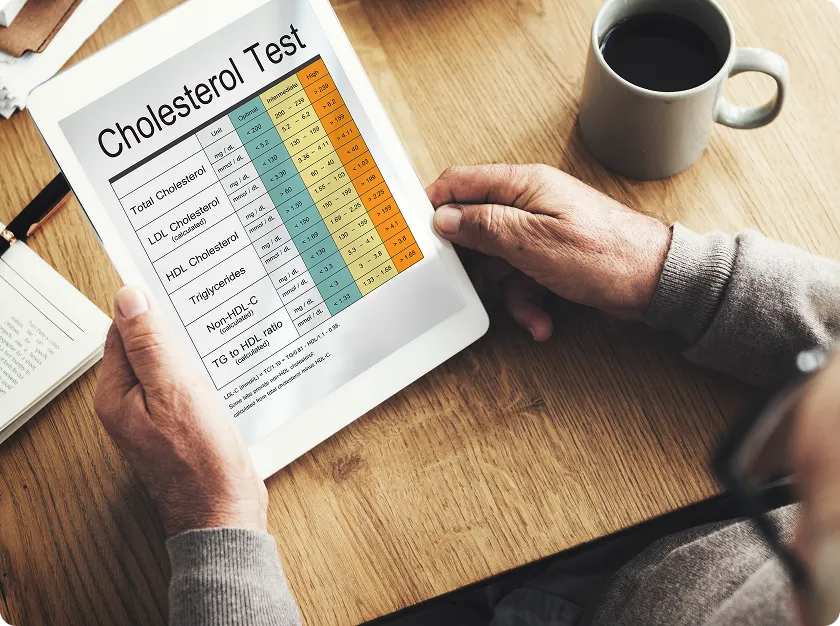
What is non-HDL cholesterol on blood test reports?
On a full lipid panel, total cholesterol, HDL cholesterol and triglycerides are measured first. Your non-HDL cholesterol is then calculated from the same panel, so it is not usually a separate specialist test. This is why the non-HDL cholesterol blood test is so practical in routine care: it is simple, widely available, and easy to repeat.
How to calculate non-HDL cholesterol
The formula for non-HDL cholesterol is straightforward: total cholesterol minus HDL cholesterol. Your non-HDL result is 4.4 mmol/L if your total cholesterol is 5.8 mmol/L and your HDL is 1.4 mmol/L. Your non-HDL result is 120 mg/dL if your HDL is 60 mg/dL and your total cholesterol is 180 mg/dL.
| Total cholesterol | HDL | Calculation | Non-HDL |
|---|---|---|---|
| 5.8 mmol/L | 1.4 mmol/L | 5.8 − 1.4 | 4.4 mmol/L |
| 180 mg/dL | 60 mg/dL | 180 − 60 | 120 mg/dL |
Table 1: Example of the non-HDL cholesterol calculation
What is a good level for non-HDL cholesterol?
If you are wondering what a good level for non-HDL cholesterol is, the answer depends on your risk. In the US, the non-HDL target is usually set 30 mg/dL above your LDL target. That means below 130 mg/dL if your LDL goal is below 100 mg/dL, and below 100 mg/dL if your LDL goal is below 70 mg/dL, which applies to many people with heart disease or very high risk (Cleveland Clinic). For children and teens, below 120 mg/dL is considered healthy, and a pediatrician should review higher results (Cleveland Clinic).
In the UK, the NHS general guide for healthy adults is a non-HDL level below 4 mmol/L (NHS). UK doctors also use treatment goals from NICE guidance, such as a fall of more than 40% after starting a statin, or 2.6 mmol/L or less for people who already have cardiovascular disease.
| Situation | mg/dL (US) | mmol/L (UK) |
|---|---|---|
| Healthy adult, general guide | Below 130 | Below 4.0 |
| Higher risk or heart disease | Below 100 | 2.6 or less (with existing CVD) |
| Children and teens | Below 120 healthy | Not covered here |
| Very high, needs specialist review | Discuss with your doctor | Above 7.5 |
Table 2: Common non-HDL cholesterol targets. To convert, 1 mmol/L equals about 38.67 mg/dL.
Your own target should come from your doctor, who will consider your age, blood pressure, diabetes, smoking, family history and any past heart attack or stroke.
Triglycerides, LDL and ApoB
Non-HDL cholesterol is especially useful when triglycerides are high, because extra triglyceride-rich particles are counted in non-HDL but not in LDL. Some doctors also order an apolipoprotein B (ApoB) test, which counts the number of plaque-forming particles directly (Cleveland Clinic). Most people do not need to fast for a standard lipid panel, but your doctor may ask you to if your triglycerides were high before (MedlinePlus).
What causes high non-HDL cholesterol?
Common contributors include a diet high in saturated and trans fats, low activity, excess weight, smoking and heavy drinking. Medical causes include type 2 diabetes, an underactive thyroid, kidney or liver disease and some medicines. Inherited conditions such as familial hypercholesterolemia can cause very high levels even in young, active people, so a very high result or a strong family history of early heart disease should prompt a specialist review (NHLBI).
Five proven ways to manage it
If non-HDL cholesterol is high, the goal is steady improvement rather than a perfect number next week. The best plan usually combines daily habits with sensible follow-up and, for some people, prescribed treatment. These five actions are practical, evidence-based and realistic enough to use in everyday life.

1. Swap saturated fat for healthier fats
Start with the foods you eat most often. Replacing butter, cream, fatty meat and pastries with olive or rapeseed oil, nuts, seeds, fish, and higher-fibre staples is one of the clearest dietary steps for better cholesterol control. A simple example is swapping a fried breakfast for porridge with fruit, or using olive oil instead of butter when cooking.
2. Add more fibre and whole foods
Fibre, particularly soluble fibre from fruits, vegetables, beans, lentils, and oats, aids in the management of cholesterol. Foods such as oats, beans, lentils, nuts and fruit are highlighted in public health guidance. Older US therapeutic lifestyle guidelines estimated that 5 to 10 grams of soluble fibre a day may lower LDL by roughly 3% to 5%, although the effect varies from person to person and is not guaranteed. In reality, it's simple to start with one bowl of oats and one bean dish each day.
3. Move more and manage weight
Frequent exercise improves cholesterol balance and facilitates weight management. If you are currently inactive, begin with brisk walking, cycling, or swimming and gradually increase your activity to at least 150 minutes of moderate activity or 75 minutes of strenuous activity per week. If being overweight is one of the reasons your non-HDL cholesterol is high, losing even a small amount of extra weight can help.
4. Stop smoking and go easy on alcohol
Smoking damages blood vessels and makes them more likely to collect fatty deposits, so stopping is one of the most useful heart-health changes you can make. Alcohol can also push cholesterol and triglycerides in the wrong direction when intake is high. If you drink, keep within national guidance (in the UK, no more than 14 units a week spread over several days) and build in drink-free days.
5. Review medicines and retest
If lifestyle changes are not enough, review the result with your GP or nurse instead of guessing. For many higher-risk adults, statins are the main medicine used to lower cholesterol; other options can include ezetimibe, sometimes with bempedoic acid, or injectable treatments such as alirocumab, evolocumab and inclisiran. After treatment starts or changes, repeat testing helps show whether you are moving towards your target; UK NICE guidance suggests a check at about 2 to 3 months, while US ACC/AHA guidance recommends a repeat lipid test 4 to 12 weeks after starting or changing treatment.
When to See a Doctor
Ask your doctor about a cholesterol test if you have not had one in the last five years, or sooner if you have diabetes, high blood pressure, obesity, kidney disease or a family history of early heart disease. Book a review if your non-HDL is above your target on two tests, if it is very high (for example above 7.5 mmol/L or around 190 mg/dL or more), or if close relatives had a heart attack or stroke at a young age. High cholesterol has no symptoms, but its complications do: call 911 (or your local emergency number) for chest pain or the sudden signs of stroke described in our guide to stroke symptoms in women.
If you are prescribed a statin, our statin intensity chart explains the different doses.
Conclusion
A high non-HDL cholesterol result is a prompt to act early, not a reason to panic. Once you understand the non-HDL cholesterol calculation, what elevated non-HDL cholesterol means and what a realistic, non-HDL cholesterol healthy range looks like for your level of risk, you can make steady progress. Start with food swaps, fibre, movement, weight, smoking and alcohol habits, then review whether you also need treatment and a repeat test.
Sources
- Non-HDL Cholesterol (Cleveland Clinic)
- Cholesterol Levels (NHS)
- Blood Cholesterol (NHLBI)
- Cholesterol Levels (MedlinePlus)
FAQ
1. What does high non-HDL cholesterol mean?
It means too much cholesterol is being carried in LDL, VLDL and related particles that can build up in artery walls as plaque. Your doctor will interpret it alongside blood pressure, diabetes, smoking and family history.
2. How do you calculate non-HDL cholesterol?
Subtract your HDL cholesterol from your total cholesterol, using the same units. For example, 180 mg/dL total minus 60 mg/dL HDL gives a non-HDL of 120 mg/dL.
3. What is a good level for non-HDL cholesterol?
For many adults, the goal is below 130 mg/dL in the US or below 4 mmol/L in the UK. People with heart disease or very high risk usually aim lower, such as below 100 mg/dL.
4. Is the non-HDL cholesterol blood test different from a standard lipid test?
Usually no. Non-HDL cholesterol is calculated from the same standard lipid panel that measures total cholesterol, HDL and triglycerides.
5. Do I need to fast before a non-HDL cholesterol test?
Usually not, because non-HDL cholesterol is not much affected by a recent meal. Your doctor may still ask you to fast if your triglycerides were high before.
About the author

Health Researcher and Writer
Haider Nadeem is a health researcher and the writer behind Healthy Eats Guide. He writes about health problems he faces or sees people around him face, and turns careful research into practical guides. Articles are researched and drafted with AI assistance, then fact-checked and edited by Haider using cited sources such as USDA, NIH, and peer-reviewed research.
Related blogs
Heart Failure Diet: 10 Foods for Better Heart Health
A heart failure diet built on 10 essential low-sodium foods, plus label-reading tips, potassium and fluid cautions, a sample meal plan and warning signs to report.
16 min read
Heart Blockage Treatment: 7 Proven CAD Medications
Heart blockage treatment explained: 7 proven CAD medications, stents and bypass, the stages of coronary artery disease, key tests and heart attack warning signs.
12 min read
Statin Intensity Chart: 6 Essential Dosage Insights
Statin intensity chart for low, moderate and high intensity statins, with doses by drug and why 20 mg atorvastatin counts as moderate intensity.
8 min read
Newsletter
Get practical nutrition guides in your inbox
Clear food-by-food advice and diet tips for everyday eating — no spam, unsubscribe anytime.