
5 Gua Sha Benefits: What the Evidence Says
What gua sha can and cannot do for your skin and muscles: 5 benefits, what the research shows, how to use a gua sha tool safely and who should avoid it.
Introduction

If you have watched a beauty tutorial and wondered whether the gua sha benefits promoted online are real, you are not alone. Many people deal with morning puffiness, tight shoulders or dull-looking skin and want a simple, low-cost way to feel better. Gua sha, a traditional scraping technique that uses a smooth-edged tool, has become one of the most popular at-home rituals for the face and body.
This guide separates realistic expectations from hype. It explains where gua sha comes from, five commonly reported benefits, what the limited research actually shows, how to use a facial gua sha tool safely and when to talk to a doctor. The goal is to help you decide whether gua sha deserves a place in your self-care routine.
Why This Topic Matters
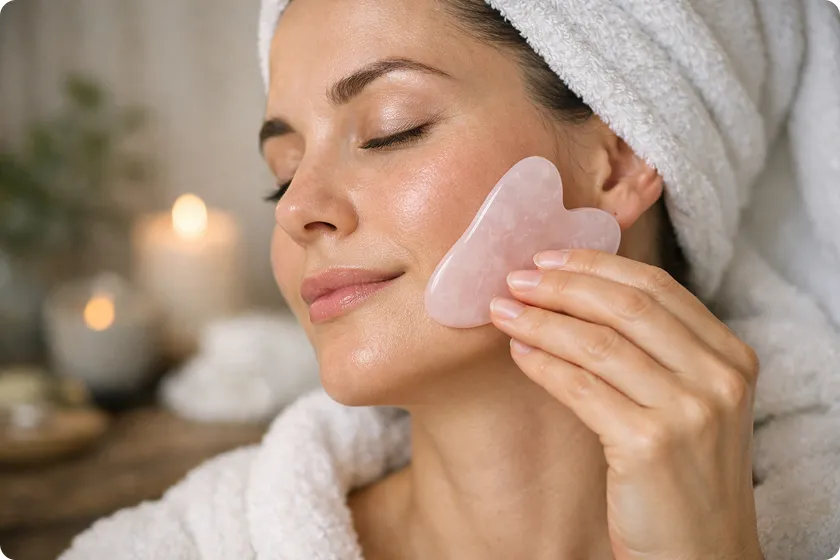
Gua sha has roots in traditional Chinese medicine, where practitioners used firm scraping strokes on the back, neck and limbs to ease pain and stiffness. The National Center for Complementary and Integrative Health notes that many traditional Chinese medicine practices have not been well studied in rigorous trials, and gua sha is no exception. Body gua sha is typically done with firm pressure and often leaves temporary red or purple marks called petechiae. Facial gua sha, the version popular on social media, uses much lighter pressure and should not leave marks.
Because the tools are inexpensive and widely sold, it is easy to try gua sha without professional guidance. Understanding the realistic benefits and the safety basics helps you avoid bruising, skin irritation and disappointment.
Benefit #1: Boosts Microcirculation and Skin Radiance
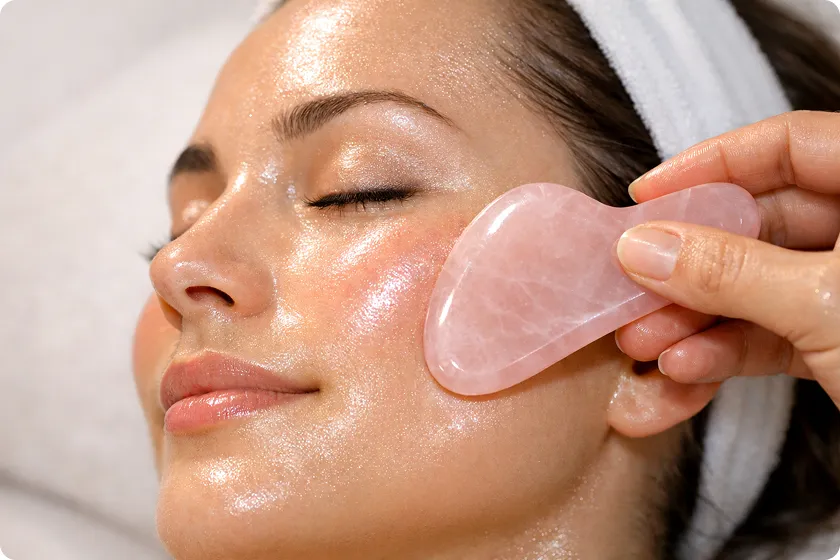
One of the best-documented effects of gua sha is a short-term increase in local blood flow. A small pilot study in healthy volunteers found that gua sha increased microcirculation in the treated area for several minutes after treatment. This may explain the rosy, refreshed look many people notice right after a facial session.
How to make it work: Apply a facial oil or moisturizer so the tool glides without tugging. Hold the tool almost flat against your skin and stroke outward from the center of your face toward your ears and down the sides of your neck. Use light pressure; you should feel gentle stretch, not pain.
Benefit #2: Reduces Inflammation and Facial Puffiness
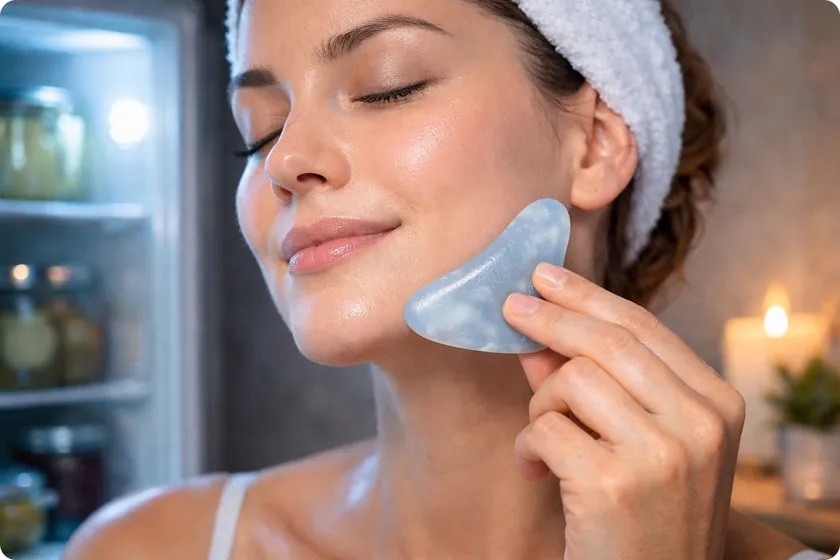
Many users report that gua sha helps reduce morning puffiness around the eyes and cheeks. Gentle strokes may help move excess fluid toward the lymph nodes, similar to manual lymphatic massage. Researchers have also explored whether body gua sha triggers anti-inflammatory activity, but these findings come from small studies and are not proof of a lasting effect on facial skin.
Practical tip: Keep strokes very light near the delicate under-eye area and sweep from the inner corner toward the temples. Chilling the tool in the refrigerator may add a soothing, de-puffing effect. If puffiness is persistent or one-sided, see a doctor, as it can signal allergies, thyroid problems or kidney issues.
Benefit #3: Relieves Muscle Tension and Pain
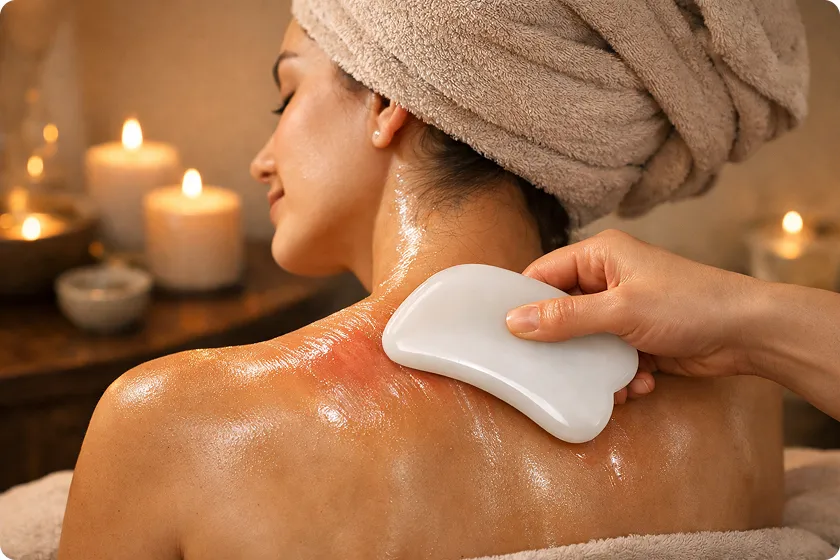
The strongest evidence for gua sha relates to body pain rather than beauty. A randomized pilot study in people with chronic neck and low back pain found that a single gua sha treatment reduced pain intensity compared with a control group. Other small trials have reported short-term improvements in neck pain. Larger, longer studies are still needed, but gua sha may be a reasonable complementary option alongside exercise and medical care.
Action steps: For tight shoulders or upper back, apply a body-safe oil and use the tool with moderate pressure along the length of the muscle. Body gua sha is best learned from a licensed practitioner, since firmer pressure can cause bruising. Avoid scraping over the spine, bony areas or injured tissue.
Benefit #4: Sculpts the Jawline and Minimizes Double Chin
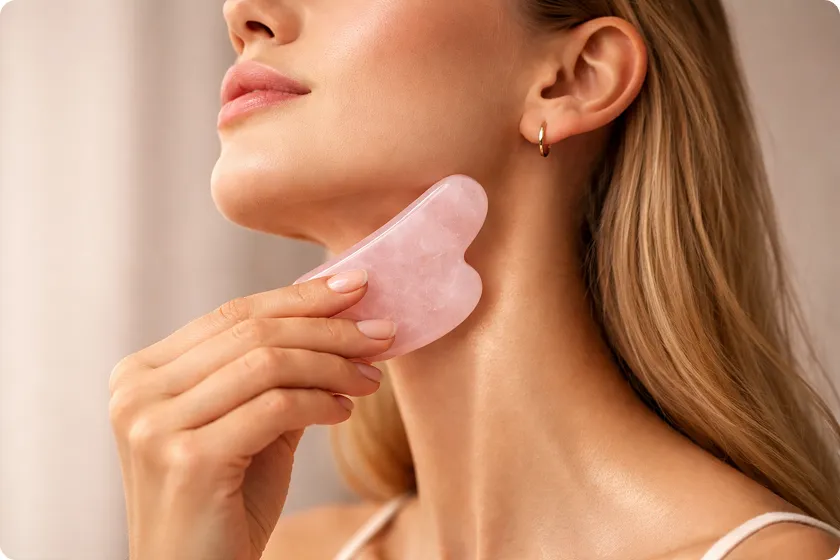
Many people use gua sha to make the jawline look more defined. Any contouring effect is temporary and comes from reduced fluid and relaxed muscles, not from burning fat. No massage tool can remove fat under the chin. Still, a few minutes of gentle strokes along the jaw can leave the face looking less puffy for a few hours.
Technique: Start at the center of your chin and glide the notched edge of the tool along your jawline toward your ear. Repeat three to five times on each side, then sweep down the side of your neck. Keep pressure light and avoid the front of the throat.
Benefit #5: Supports Collagen and Skin Elasticity
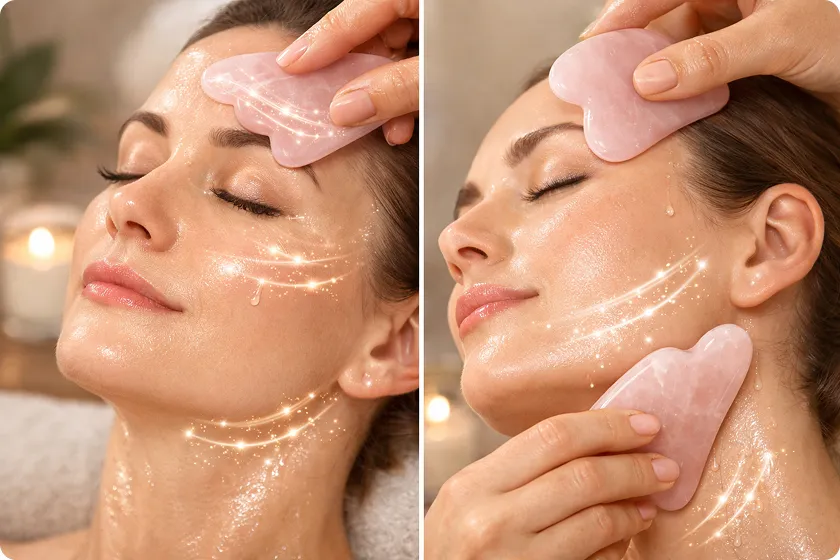
Some advocates claim gua sha stimulates collagen and elastin production. This idea is based on the possibility that mechanical stimulation and improved circulation support skin cells, but it has not been proven in well-designed human studies. Treatments with stronger evidence for skin aging include daily broad-spectrum sunscreen, not smoking and topical retinoids recommended by a dermatologist.
What you can expect: Think of gua sha as a relaxing ritual that may make skin look fresher in the short term, not as an anti-aging treatment. For more on evidence-based routines, see our guides to mature skin care and skin care for oily skin.
Table: Five Gua Sha Benefits and the Evidence
This table summarizes each commonly claimed benefit and what the current evidence suggests.
| Benefit | Explanation |
|---|---|
| Improves microcirculation | Small studies show gua sha briefly increases blood flow in the treated area. |
| Reduces inflammation & puffiness | Gentle strokes may help move fluid and temporarily reduce morning puffiness; evidence is limited. |
| Relieves muscle tension & pain | Traditional gua sha techniques ease muscle stiffness, improve range of motion and may help relieve headaches and back pain. |
| Sculpts jawline & reduces double chin | Any contouring effect is temporary and comes from reduced puffiness; gua sha does not remove fat. |
| Supports collagen & skin elasticity | Proposed but not proven in human studies; sunscreen and retinoids have stronger evidence. |
How to Use a Gua Sha Tool Safely
Follow these steps for a gentle facial routine:
- Start with clean skin and clean hands.
- Apply a few drops of facial oil or a rich moisturizer.
- Hold the tool at a low angle, nearly flat against your skin.
- Use light, upward and outward strokes, repeating each area three to five times.
- Keep sessions short, about five minutes, a few times a week.
- Wash the tool with mild soap and water after each use and let it dry.
Avoid gua sha on broken skin, active acne, sunburn, rashes, cold sores or recent cosmetic injections or procedures. People who bruise easily, take blood thinners or have a bleeding disorder should check with a doctor first. Stop if you notice pain, bruising or irritation.
When to See a Doctor
Talk to a healthcare provider or dermatologist if you have:
- Bruising, broken blood vessels or skin irritation after gua sha
- Persistent facial swelling, especially on one side
- Ongoing neck or back pain that does not improve
- A skin condition such as rosacea, eczema or severe acne
- A bleeding disorder, or you take blood-thinning medicine
Emergency: Call 911 (or your local emergency number) for sudden facial swelling with difficulty breathing or swallowing, or sudden facial drooping or weakness, which may signal a severe allergic reaction or stroke.
Conclusion
Gua sha can be a soothing self-care practice that briefly boosts circulation, may ease puffiness and can help relieve muscle tension. Claims about permanent jawline sculpting or collagen building are not supported by strong evidence. Use light pressure, keep your tools clean, avoid irritated skin and pair gua sha with proven habits like sun protection for the best results.
Sources
- The effect of Gua Sha treatment on the microcirculation of surface tissue: a pilot study (PubMed)
- Randomized controlled pilot study of gua sha in neck and low back pain (PubMed)
- Skin Conditions (MedlinePlus)
- Traditional Chinese Medicine: What You Need To Know (NCCIH)
- Massage Therapy: What You Need To Know (NCCIH)
FAQ
1. What is gua sha?
Gua sha is a traditional Chinese technique that uses a smooth-edged tool to stroke or scrape the skin. Facial gua sha uses light pressure, while body gua sha is firmer.
2. Does gua sha really work?
Small studies show it briefly increases blood flow and may ease neck and back pain. Claims about lasting facial changes are not well supported.
3. Can gua sha get rid of a double chin?
No. It cannot remove fat. It may temporarily reduce puffiness, making the jawline look more defined for a few hours.
4. How often should I use gua sha on my face?
A few times a week for about five minutes is enough for most people. Use light pressure and stop if your skin becomes irritated.
5. Who should avoid gua sha?
Avoid it on broken, sunburned or inflamed skin. People who take blood thinners, bruise easily or have bleeding disorders should ask a doctor first.
About the author

Health Researcher and Writer
Haider Nadeem is a health researcher and the writer behind Healthy Eats Guide. He writes about health problems he faces or sees people around him face, and turns careful research into practical guides. Articles are researched and drafted with AI assistance, then fact-checked and edited by Haider using cited sources such as USDA, NIH, and peer-reviewed research.
Related blogs
3 Types of Skin Cancer: Essential Facts You Must Know
3 types of skin cancer explained: how basal cell, squamous cell and melanoma look, the ABCDEs, diagnosis, treatment, survival and simple prevention steps.
10 min read

Skin Allergy: 7 Essential Signs You Shouldn’t Ignore
Skin allergy signs to know: redness, itching, spreading rashes, hives, peeling and discoloration, how common rashes compare and when a reaction needs urgent care.
15 min read

Laundry Routine for Skin Health: 6 Tips for Sensitive Skin
Itchy after laundry day? Six dermatologist-backed laundry tips for eczema and sensitive skin, from fragrance-free detergent to extra rinses, plus when to see a doctor.
9 min read
Newsletter
Get practical nutrition guides in your inbox
Clear food-by-food advice and diet tips for everyday eating — no spam, unsubscribe anytime.